


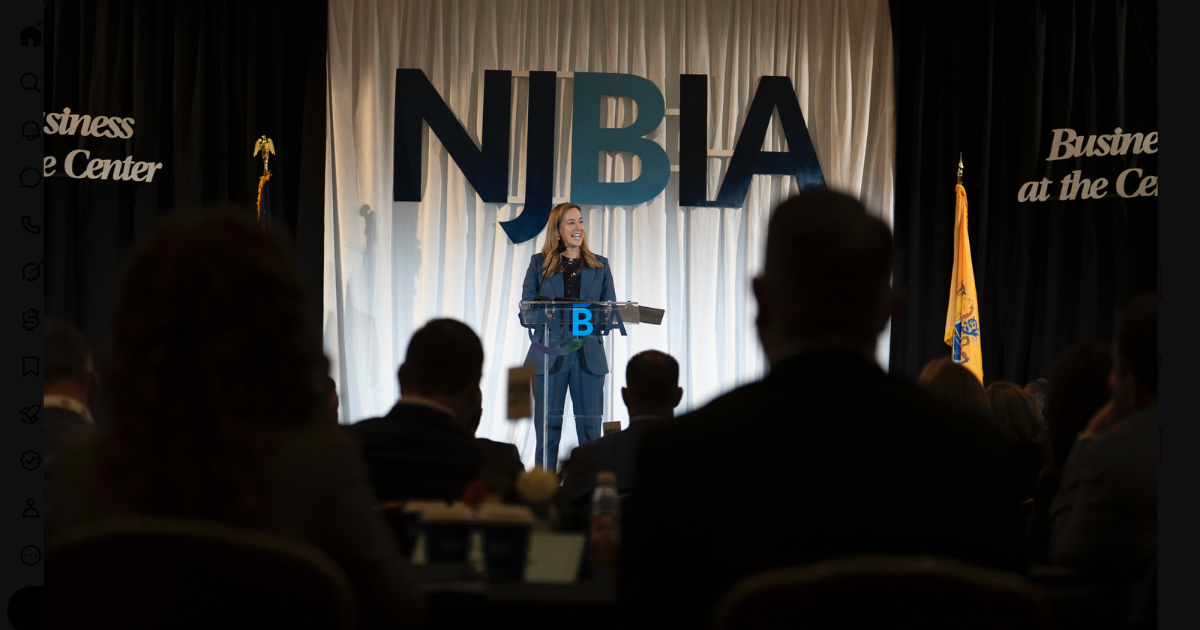
NEW JERSEY, October 29, 2026 — Governor Mikie Sherrill outlined her administration’s energy priorities at the New Jersey Business & Industry Association’s (NJBIA) Energy and Environment Policy Conference in Woodbridge on Wednesday, emphasizing efforts to lower electricity costs, expand energy production, and support businesses adopting new technologies.
The governor highlighted solar and nuclear power as important components of New Jersey’s future energy strategy, along with efforts to simplify government regulations and encourage private-sector investment.
The two-day conference, held October 27–28, brought together state officials, energy industry representatives, business leaders, and environmental policy experts to discuss energy affordability, reliability, and economic development.
Solar and Nuclear Energy Among State Priorities
Sherrill emphasized the importance of expanding New Jersey’s energy resources to meet growing electricity demand while addressing concerns about rising utility bills.
Her administration is pursuing greater investment in solar and nuclear power, two technologies expected to play significant roles in the state’s long-term energy planning.
Nuclear energy already supplies a substantial share of New Jersey’s electricity, while solar development has continued to expand across residential, commercial, and utility-scale projects.
The administration sees a diversified energy supply as one way to strengthen reliability and address future electricity costs.
However, expanding electricity generation requires infrastructure investment, regulatory approvals, and long-term planning. The financial effects of these initiatives on household utility bills remain to be determined.
Reducing Regulatory Delays
Another priority discussed by the governor was simplifying the permitting process for energy and infrastructure projects.
Sherrill said her administration has been working to reduce administrative delays that can increase construction costs and discourage investment.
These efforts include reorganizing teams within state agencies and improving coordination between departments responsible for reviewing projects.
State officials believe faster permitting decisions could help businesses move forward with investments while maintaining environmental protections.
Supporting Businesses and New Technologies
The governor also highlighted programs intended to help New Jersey businesses adopt cleaner and more efficient technologies.
These include assistance for companies purchasing electric vehicles, installing energy-efficient equipment, and investing in technologies designed to reduce energy consumption.
Sherrill also pointed to the importance of supporting startups and encouraging innovation in New Jersey’s technology and energy sectors.
The administration views these initiatives as opportunities to support economic development while reducing long-term operating costs for businesses.
Energy Affordability Remains a Major Concern
Electricity prices have become an important issue for New Jersey residents and businesses, particularly as demand for power increases and utilities continue investing in infrastructure.
The NJBIA conference examined several factors influencing the state’s energy future, including natural gas, nuclear power, solar energy, environmental regulations, and the reliability of the regional electricity grid.
Industry representatives and policymakers also discussed the challenges of balancing environmental goals with affordable and dependable energy supplies.
While Sherrill described lowering energy costs as a central objective, the conference did not establish that the proposed initiatives would produce immediate reductions in electricity bills.
Looking Ahead
The Sherrill administration plans to continue working with state agencies, utility providers, and private businesses to expand energy resources, encourage investment, and improve regulatory efficiency.
The governor has presented energy affordability as an important part of her broader economic agenda, linking reliable electricity supplies to business growth and household expenses.
For New Jersey residents, the key question will be whether these policies eventually translate into measurable savings on monthly energy bills.
The administration’s stated goal is to make New Jersey’s energy system more affordable, reliable, and capable of supporting economic growth in the years ahead.
Sources: New Jersey Business & Industry Association (NJBIA), Energy and Environment Policy Conference, October 27–28, 2026; Governor Mikie Sherrill’s public remarks.
By NJ RADAR Team