


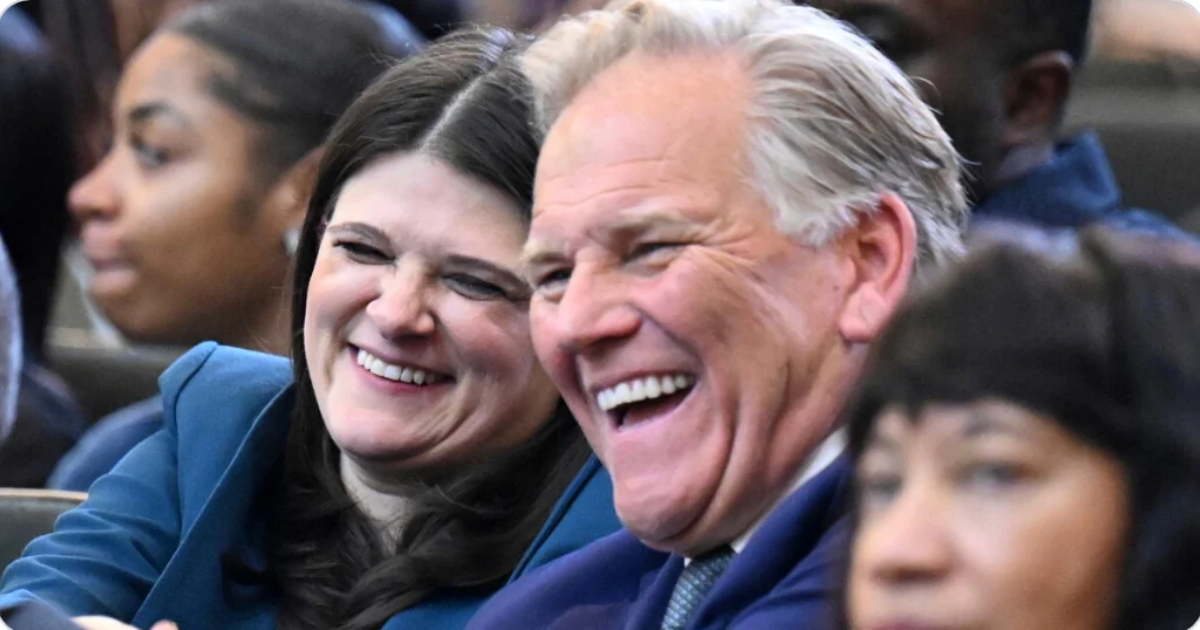
DETROIT, Michigan — November 1, 2026 — Just two days before the U.S. midterm elections, Democratic Congresswoman Haley Stevens made an unexpected appearance alongside Republican Senate candidate Mike Rogers at a Detroit church, following a public dispute with Abdul El-Sayed, the Muslim Democratic nominee who defeated her in the August primary.
The appearance at Perfecting Church on Sunday drew national attention because Stevens had originally been expected to join El-Sayed and Democratic Congressman Jim Clyburn at a separate church event intended to demonstrate party unity ahead of the November 3 election.
Instead, Stevens appeared with El-Sayed’s Republican opponent, raising new questions about divisions within Michigan’s Democratic Party and the influence of disagreements over Israel on the Senate campaign.
A Primary Defeat That Left Political Divisions
On August 4, 2026, Abdul El-Sayed defeated Haley Stevens in Michigan’s Democratic primary for the U.S. Senate.
El-Sayed, a physician and former public health official, campaigned on healthcare reform, economic affordability, and progressive policies.
Stevens, a sitting congresswoman, entered the primary with support from prominent Democratic figures and substantial financial backing from political groups, including an AIPAC-affiliated super PAC.
Despite that support, El-Sayed secured the Democratic nomination.
Stevens subsequently endorsed him, but the two did not appear together regularly during the general election campaign.
Their disagreements became particularly visible over U.S. policy toward Israel and the war in Gaza.
A Planned Show of Unity Falls Apart
Democratic Congresswoman Debbie Dingell helped arrange a November 1 appearance that was supposed to bring Stevens and El-Sayed together at a Detroit church alongside Congressman Jim Clyburn.
The event was intended to demonstrate unity among Democrats after a competitive primary.
However, the plans collapsed as public disagreements between Stevens and El-Sayed intensified.
Dingell confirmed that she personally asked Stevens not to attend, explaining that the controversy had become a distraction from the planned church service.
The decision meant Stevens would not appear alongside El-Sayed at the previously planned event.
Only hours later, she was seen at Perfecting Church with Republican candidate Mike Rogers.
An Unexpected Appearance With Mike Rogers
According to reports from the Associated Press, Axios, and The Washington Post, Stevens appeared alongside Rogers at Sunday’s church service in Detroit.
Video recorded at the event showed Stevens greeting and embracing Rogers.
She also spoke positively about his stated commitment to supporting Black-owned businesses.
The appearance was particularly notable because Rogers is competing directly against El-Sayed in the November 3 election.
Stevens has not formally announced an endorsement of Rogers and had previously reaffirmed her support for El-Sayed.
Nevertheless, her public appearance alongside the Republican nominee became a significant political development in the final days of the campaign.
Disagreement Over Israel at the Center of the Conflict
One of the main sources of tension between Stevens and El-Sayed has been their differing positions on Israel.
Stevens has been a strong supporter of Israel and has criticized El-Sayed’s statements on the issue.
The latest dispute involved an advertisement produced by an independent political organization, not El-Sayed’s campaign, that linked American support for Israel to rising grocery prices.
Stevens characterized the advertisement as antisemitic and urged El-Sayed to condemn it.
El-Sayed said his campaign had not produced the advertisement and that he disagreed with its content.
The disagreement also extended to a campaign advertisement featuring conservative commentator Tucker Carlson, which Stevens criticized.
Although El-Sayed rejected the outside advertisement’s message, the dispute had already disrupted plans for a joint Democratic appearance.
Stevens’ Fiancé Publicly Supports the Republican Candidate
The controversy grew further when Stevens’ fiancé, attorney Jason Turkish, announced that he intended to vote for Mike Rogers rather than Abdul El-Sayed.
Turkish cited concerns about El-Sayed’s statements regarding Israel and antisemitism.
His decision attracted attention because Stevens had publicly supported the Democratic nominee.
While a candidate’s political position and a family member’s voting preference are separate matters, the announcement added another dimension to the tensions surrounding the campaign.
The Significance of El-Sayed’s Candidacy
Abdul El-Sayed’s campaign carries historical significance beyond Michigan.
If elected, he would become the first Muslim to serve in the United States Senate.
His candidacy also reflects debates within the Democratic Party over foreign policy, economic priorities, and the influence of political donors.
The conflict with Stevens has brought those differences into public view at a particularly sensitive moment in the election calendar.
However, disagreement over Israel or opposition to El-Sayed should not automatically be interpreted as evidence of religious prejudice. Such an allegation would require additional evidence beyond the reported political dispute.
Two Days Before the Election
Michigan voters will choose between Abdul El-Sayed and Mike Rogers on November 3 in a race for the Senate seat being vacated by Democrat Gary Peters.
The dispute has complicated efforts by Democratic leaders to present a united message during the closing days of the campaign.
Stevens’ appearance alongside Rogers is an unusual development because it brings a prominent Democratic congresswoman into a public event with the Republican candidate running against her party’s nominee.
It also illustrates how unresolved primary rivalries and disagreements over foreign policy can continue to influence a general election campaign.
Whether Stevens’ appearance will affect voters remains unknown. What is clear is that the public disagreement has placed questions of party unity, political loyalty, and policy differences at the center of Michigan’s Senate race just two days before Election Day.
Sources: Associated Press, November 1, 2026; Axios; The Washington Post; Michigan Advance
By NJ RADAR Team