


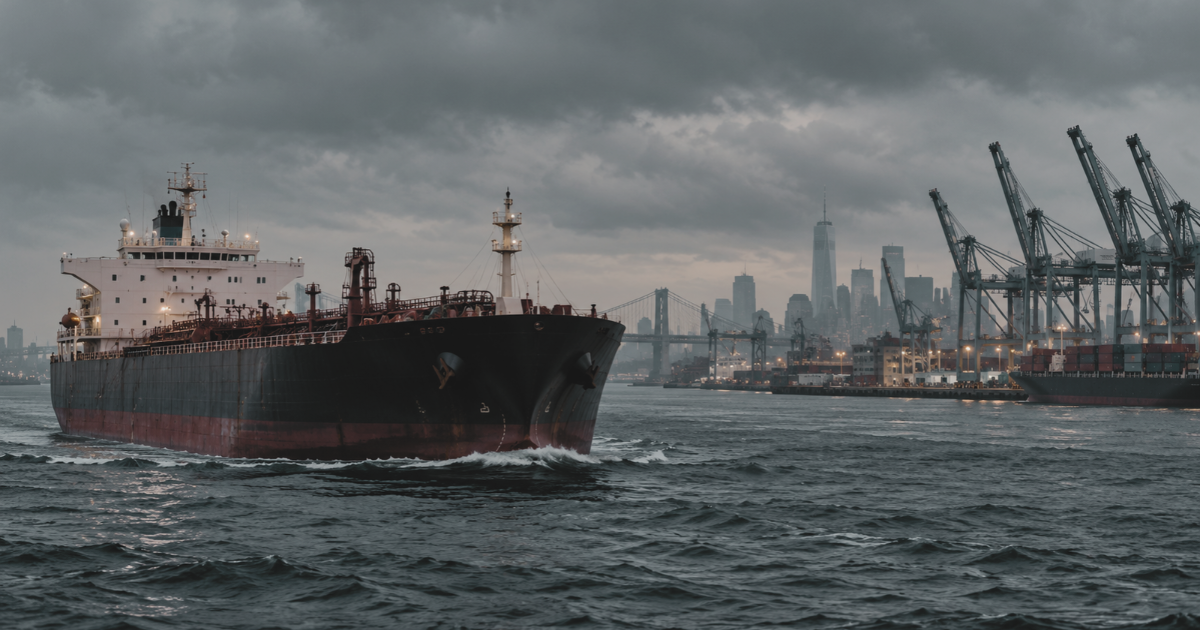
Sherrill challenges Trump’s Russian fuel agreement as a tanker carrying approximately 40,000 metric tons of diesel could arrive at the Port of New York and New Jersey on November 7.
NEW JERSEY — October 29, 2026 — New Jersey Governor Mikie Sherrill is considering ways to prevent Russian diesel from entering the state’s ports, escalating a growing political and legal dispute over President Donald Trump’s agreement with Russian President Vladimir Putin.
The governor’s warning comes as the Malta-flagged tanker Agioi Fanendes, carrying approximately 40,000 metric tons of ultra-low-sulfur diesel, travels across the Atlantic after departing Russia’s Baltic port of Primorsk on October 22.
Shipping data initially identified the Port of New York and New Jersey as the vessel’s destination, with an expected arrival date of November 7, just four days after the U.S. midterm elections.
However, the shipping company later stated that the tanker was awaiting instructions and that New York had not been confirmed as its final destination.
Sherrill Calls the Agreement Illegal
In a statement reported by the Financial Times, Governor Sherrill criticized the Trump administration’s decision to temporarily ease sanctions on Russian diesel.
“Trump’s diesel deal with Putin is corrupt and illegal, and I am evaluating options to stop it from arriving at a port in New Jersey,” Sherrill said.
Her statement introduces a new dimension to the controversy: whether a state governor can prevent a shipment authorized by the federal government from being unloaded at a major American port.
The governor has not announced a formal prohibition, and the legal authority available to New Jersey remains uncertain.
Why Is Russian Diesel Coming to the United States?
Earlier this month, Trump announced an agreement with Putin intended to increase diesel supplies and reduce fuel prices ahead of the November 3 elections.
The administration subsequently issued a temporary sanctions authorization permitting certain transactions involving Russian petroleum products.
Russian energy imports have faced restrictions since the country’s full-scale invasion of Ukraine in 2022. Critics of the new agreement argue that allowing Russian fuel into American markets could undermine those restrictions and provide additional revenue to Moscow.
The Trump administration maintains that its authorization is legally valid and intended to address energy costs.
Opposition Grows in Congress
The arrangement has drawn objections from both Democratic lawmakers and some Republicans.
Democratic Senator Richard Blumenthal has demanded that shipping companies recall tankers transporting Russian diesel toward American ports.
In an October 27 letter, Blumenthal specifically identified Agioi Fanendes and raised concerns about the legality of its proposed delivery.
The senator cited the Ending Importation of Russian Oil Act, signed into law in 2022, which prohibits imports of Russian petroleum products.
The dispute now centers partly on whether the Trump administration’s temporary authorization can legally permit transactions that critics say remain prohibited under federal law.
American Buyers Remain Reluctant
Despite reported discounts, American energy companies have shown limited interest in purchasing the Russian diesel.
According to the Financial Times, potential buyers are concerned about legal risks, political controversy, reputational damage and possible congressional investigations.
Energy industry sources have suggested that some shipments could eventually be diverted to other destinations, including Brazil.
Meanwhile, Russia is preparing to expand diesel export quotas, potentially increasing the volume available for international shipments.
What Happens Next?
The tanker Agioi Fanendes was originally expected to reach the New York area on November 7. Whether it will actually enter the Port of New York and New Jersey remains unclear.
No confirmed buyer has been publicly identified, and the vessel’s final destination has not been established.
For New Jersey, the issue is no longer simply an international energy agreement. It has become a question involving federal authority, state government, existing sanctions and the responsibilities of businesses operating through one of America’s busiest port systems.
Governor Sherrill’s warning adds new political pressure to the controversial agreement, but the central question remains unanswered: will Russian diesel actually be unloaded in New Jersey, or will the growing opposition force the shipment to change course?
Sources: Financial Times (October 29, 2026); Reuters (October 23 and 29, 2026); Office of U.S. Senator Richard Blumenthal (October 27, 2026); S&P Global Energy (October 23, 2026).
By NJ RADAR Team