


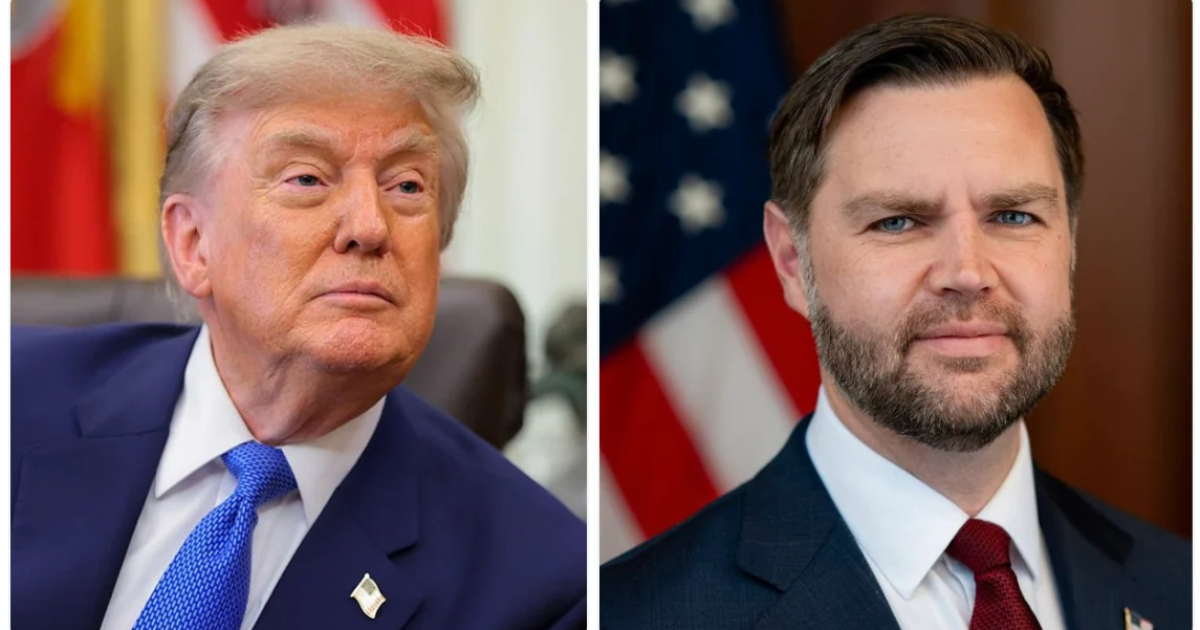
President Donald Trump acknowledges that the war with Iran contributed to the Republican midterm defeat but insists he would make the same decision again, while Vice President JD Vance identifies the conflict as a major reason Republicans lost control of Congress.
WASHINGTON, D.C. — November 4, 2026 — President Donald Trump has acknowledged that the war with Iran contributed to Republicans’ sweeping defeat in the 2026 midterm elections, while Vice President JD Vance has publicly identified the conflict as the principal reason voters turned against the Republican Party.
The statements came Wednesday, one day after Democrats won control of both the U.S. House of Representatives and the Senate, dramatically shifting the balance of power in Washington.
In an unusually direct assessment of the election results, Vance argued that the administration’s military involvement in Iran, rising living costs, and U.S. relations with Israel had alienated voters who supported Trump in the 2024 presidential election.
Trump subsequently indicated that he largely agreed with Vance’s analysis but continued defending his decision to launch military operations against Iran.
Trump Acknowledges the Political Cost of War
Speaking to The Wall Street Journal about the Republican defeat, Trump acknowledged that the Iran conflict had played a role in the election outcome.
“Iran was a piece of it,” the president said.
His statement represented a significant acknowledgment that the administration’s foreign policy decisions had affected domestic political support.
However, Trump did not characterize the war as the only reason Republicans lost.
He also rejected the suggestion that the election results had changed his view of the military campaign.
“I did the right thing. I would have done it again,” Trump said, defending the decision to attack Iran.
Later, when asked about Vance’s assessment, Trump indicated that the vice president’s comments were largely accurate.
The president’s response highlighted a distinction between acknowledging the political consequences of a decision and expressing regret about making it.
JD Vance: The War Was the Main Reason Republicans Lost
Vance offered a more forceful explanation in a lengthy statement published on X on Wednesday.
“The reason we lost is the war,” he wrote.
The vice president argued that the Republican Party had failed to retain the coalition that delivered Trump’s victory in 2024.
According to Vance, the central problem was not simply insufficient Republican turnout.
Instead, he said that a significant number of Americans who supported Trump and Vance in 2024 voted for Democratic candidates in the 2026 midterms.
He also questioned whether the political consequences of continuing the conflict had been justified.
Vance’s comments represented one of the clearest public disagreements within the administration over the political consequences of the war.
Although he did not directly accuse Trump of making the wrong decision, his statement placed responsibility for the Republican defeat on a conflict initiated under the administration.
Four Issues Vance Says Republicans Must Address
The vice president identified several issues that he believes Republicans must confront to regain support among voters.
First, he argued that the United States must bring the war with Iran to an end.
Second, he called for greater attention to household expenses, inflation, and the cost of living.
Third, Vance emphasized the need to restore an America First approach to national policy.
Fourth, he argued that the United States should reconsider aspects of its relationship with Israel.
His comments concerning Israel were particularly notable because the country has remained a central American ally throughout the conflict.
Vance suggested that the administration’s policies in the Middle East had become increasingly unpopular with parts of the Republican electoral coalition.
The vice president’s assessment indicated that disagreements over foreign policy could become an important issue within the Republican Party ahead of the 2028 presidential election.
Democrats Take Control of Both Chambers of Congress
The Trump administration’s statements followed a major Republican defeat in Tuesday’s congressional elections.
Democrats won enough seats to secure control of both the House of Representatives and the Senate, ending Republican majorities in the two chambers.
The results included Democratic victories in several states and districts traditionally considered favorable to Republicans.
The election outcome will significantly affect Trump’s ability to advance legislation during the remaining two years of his presidency.
Beginning in January 2027, Democrats will control congressional committees, determine legislative priorities, and exercise greater oversight of the administration.
The Senate will also gain significant influence over presidential nominations and federal judicial appointments.
Trump will remain president, but his administration will face a Congress controlled by the opposing party.
The Iran War and Rising Living Costs
The war with Iran has become a major political and economic issue in the United States.
Military operations, regional instability, and disruptions affecting energy markets have contributed to public concerns about fuel prices and broader economic conditions.
Higher energy costs can affect transportation, manufacturing, agriculture, and the prices consumers pay for everyday goods.
Throughout the midterm campaign, Democrats criticized the administration’s handling of the conflict and argued that the government should focus more attention on domestic affordability.
Republicans defended national security policies while attempting to address voters’ concerns about inflation and household expenses.
Vance’s statement suggests that senior administration officials now recognize the extent to which these issues may have contributed to electoral losses.
However, determining the precise influence of the war requires analysis of voter surveys, turnout patterns, and election results.
The statements by Trump and Vance represent their political interpretations rather than conclusive evidence that the conflict was the sole cause of the Republican defeat.
Israel Becomes Part of the Republican Debate
One of the most significant elements of Vance’s statement was his call to reconsider American relations with Israel.
The United States has maintained a close military, diplomatic, and strategic partnership with Israel for decades.
However, the conflict involving Iran has intensified disagreements over how American military resources should be used and what obligations Washington should assume in the Middle East.
Vance’s comments suggest that some Republican voters are questioning whether the administration’s foreign policy remains consistent with its stated America First priorities.
The issue could create additional divisions within the party as Republicans assess their electoral losses and begin preparing for the next presidential election cycle.
At the same time, support for Israel remains an important position among many Republican lawmakers and voters.
Any substantial change in U.S.-Israel relations would therefore require decisions extending beyond Vance’s election-night assessment.
What Does This Mean for the Future of the War?
The comments also raise questions about the future direction of American military operations against Iran.
According to Reuters, U.S. officials have continued considering the possibility of further major military action.
Vance’s public criticism could strengthen arguments within the administration for ending the conflict or reducing American involvement.
Trump, however, has maintained that his original decision was justified by national security concerns.
The two positions highlight competing priorities: the president continues to defend the strategic rationale for the war, while the vice president has emphasized its political and electoral costs.
It remains unclear whether the election results will produce a substantial change in military policy.
Republican Party Faces a Difficult Political Reckoning
The midterm defeat has created pressure on Republican leaders to explain why the party lost support only two years after Trump’s presidential victory.
Vance’s statement points toward a broader debate about the future direction of the Republican Party.
Some Republicans may argue for changes in foreign policy and greater emphasis on domestic economic concerns.
Others may continue defending the administration’s military decisions while focusing on campaign strategy, voter turnout, and congressional leadership.
The outcome of that debate could shape Republican politics for years.
Vance’s unusually direct comments have already attracted attention because of his position as vice president and his potential role in the party’s political future.
Trump Defends His Decision Despite Election Losses
The president’s response ultimately contained two messages.
First, Trump acknowledged that the war with Iran contributed to the Republican election defeat.
Second, he maintained that the military campaign was the correct decision and that he would make it again under the same circumstances.
Vance, meanwhile, emphasized that Republicans must recognize the consequences of the conflict if they hope to rebuild their electoral coalition.
The difference between the two statements provides an early indication of the political debate likely to follow the 2026 midterm elections.
With Democrats preparing to take control of Congress, the Trump administration now faces mounting pressure over the Iran war, economic conditions, and the future direction of American foreign policy. The president has acknowledged the political cost of the conflict, but he has not retreated from his decision to wage it.
Sources: Reuters, November 4, 2026; Axios, November 4, 2026; Jewish Telegraphic Agency, November 4, 2026; Fox News, November 4, 2026.
By NJ RADAR Team