


TRENTON, NJ – Governor Mikie Sherrill has signed New Jersey’s Fiscal Year 2027 budget, marking the first state budget of her administration since taking office earlier this year.
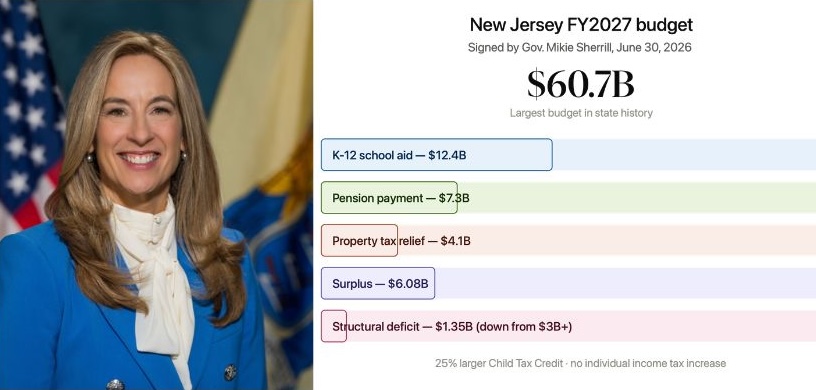
The $60.7 billion spending plan is the largest budget in New Jersey history and reflects the governor’s priorities of affordability, fiscal responsibility, education, and support for working families.
For most New Jersey families, the biggest impact of the new budget will likely be felt through two areas: property taxes and, for households with children, the annual Child Tax Credit. According to the administration, the budget focuses on property tax relief, public education, mental health programs, and financial support for residents while addressing the state’s long-term fiscal challenges.
What the Budget Means for Everyday Residents
The new budget includes:
- More than $4.1 billion in property tax relief programs — the largest amount in state history.
- A 25% increase in the Child Tax Credit for eligible families.
- Additional funding for children’s mental health programs and affordability initiatives.
- Continued investment in public education and state services.
Behind the Numbers
The state will make a full $7.3 billion pension payment, continuing the practice of fully funding the pension system.
Public schools will receive a record $12.4 billion in K-12 school aid, providing additional support for districts across New Jersey.
The administration also says the state’s structural deficit has been reduced from more than $3 billion to approximately $1.35 billion since Governor Sherrill took office in January.
“This budget runs toward our toughest problems, not away from them,” Governor Mikie Sherrill said.
A Focus on Fiscal Responsibility
The administration says it reduced or eliminated nearly $2 billion in planned expenditures while identifying additional revenue through changes to corporate tax policy.
According to state officials, these steps were taken to strengthen New Jersey’s financial position without increasing personal income taxes on residents.
Changes to Property Tax Relief
One of the most closely watched parts of the budget involves the Stay NJ property tax relief program.
The budget changes eligibility requirements by lowering the income cap and reducing the maximum benefit, while continuing funding for programs including ANCHOR and Senior Freeze.
State officials say the changes are intended to better target assistance and keep the program financially sustainable. For some residents who currently rely on Stay NJ, the changes may affect eligibility.
Mixed Reaction From Lawmakers
Supporters say the budget protects key priorities, including education, pensions, and tax relief, while avoiding broad-based tax increases.
Critics argue that some spending reductions and changes to existing tax relief programs could affect certain residents. Some lawmakers and residents have also raised concerns about the budget process and the amount of time available to review the final document before the vote.
A Defining Moment for the New Administration
As the first budget signed by Governor Mikie Sherrill, the Fiscal Year 2027 spending plan sets the tone for her administration and outlines the priorities expected to shape New Jersey in the coming years.
The budget represents the governor’s first major opportunity to define her approach to affordability, education, and the state’s financial future.
Sources
Office of the Governor of New Jersey
New Jersey Monitor
WRNJ Radio