


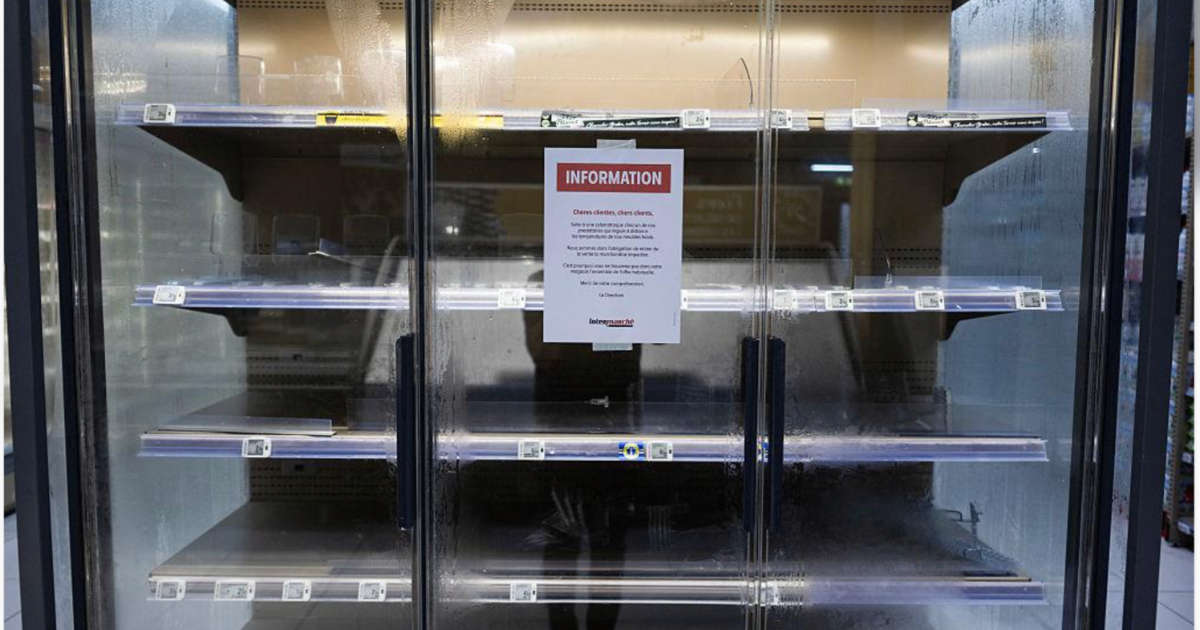
EUROPE — November 2, 2026 — Supermarkets across several European countries were hit by suspected cyberattacks targeting refrigeration and freezer systems on Monday, causing temperatures to rise dramatically and forcing retailers to discard large quantities of spoiled food.
The incidents affected stores in Sweden, Belgium, Luxembourg, Estonia, and Ireland, raising concerns about the vulnerability of essential food infrastructure to cyberattacks.
In some locations, hackers reportedly changed refrigeration settings to 50 degrees Celsius (122 degrees Fahrenheit), temperatures far above those required to preserve fresh and frozen products.
The incidents followed a large-scale cyberattack in France last month that affected hundreds of supermarkets and resulted in substantial financial losses.
Supermarkets Across Europe Report Refrigeration Failures
In Sweden, supermarket chains ICA and Coop reported problems with refrigeration equipment at several locations.
An ICA store in Sjöbo, southern Sweden, said its refrigerators and freezers had been hacked, with temperature settings changed to 50°C.
Employees were forced to remove spoiled products from sale.
At another ICA store in Stockholm, large quantities of refrigerated and frozen food were discarded after equipment malfunctioned.
Coop reported similar problems at six stores in central Sweden.
In Belgium, approximately 40 Delhaize supermarkets experienced refrigeration disruptions overnight.
The company described the situation as an information technology incident affecting cooling systems.
Carrefour Belgium reported that 15 of its more than 700 stores had been affected, although it described the impact as limited.
Several stores in Luxembourg also reported disruptions.
In Ireland, supermarket operator Musgrave confirmed refrigeration problems at 13 SuperValu stores.
Hackers Target Refrigeration Systems in Estonia
Estonia also reported a cyberattack involving supermarket refrigeration equipment.
According to Estonian public broadcaster ERR, attackers accessed a computer controlling cooling equipment at a Selver supermarket and changed a temperature setting to 50°C.
However, technicians responded within approximately ten minutes.
The actual temperature inside the affected equipment increased by only a few degrees before normal operation was restored.
The company reported no significant damage to food products.
The incident demonstrates how quickly connected refrigeration systems can be manipulated, even when operators successfully prevent major losses.
Millions of Euros in Food Losses
The latest incidents follow a much larger attack in France during October.
French authorities reported that hackers remotely accessed refrigeration systems at hundreds of supermarkets, disrupting temperature controls and causing extensive food spoilage.
Some systems were reportedly placed into prolonged defrost cycles, delaying the detection of rising temperatures.
Affected retailers were forced to discard fresh meat, dairy products, frozen foods, and other perishable goods.
French supermarket operators reported losses amounting to millions of euros.
The incidents also raised concerns about possible equipment damage and fires linked to malfunctioning refrigeration systems.
The total financial losses from Monday’s attacks across Europe have not yet been independently established.
How Can Hackers Control Supermarket Freezers?
Modern supermarkets increasingly use internet-connected refrigeration systems.
These systems allow technicians to monitor temperatures remotely, identify equipment failures, and adjust operating settings without visiting individual stores.
Although this technology improves efficiency, it can also create security vulnerabilities if connected devices are not adequately protected.
Cybercriminals may exploit outdated software, poorly secured remote-access systems, or equipment that no longer receives security updates.
Once inside a system, attackers may be able to change temperature settings, interfere with alarms, or activate defrost cycles.
For supermarkets, even a few hours of refrigeration failure can result in significant financial losses because perishable food must be maintained within strict temperature limits.
A Growing Threat to Food Supply Chains
Cybersecurity experts warn that attacks on refrigeration equipment represent a broader risk to modern food distribution networks.
The same types of digital controls used in supermarkets are also found in warehouses, refrigerated transportation systems, food processing facilities, and distribution centers.
A successful attack against larger portions of that infrastructure could interrupt food storage and distribution.
Unlike conventional data theft, interference with industrial equipment can cause immediate physical damage and destroy essential goods.
The incidents show that cyberattacks are no longer limited to stolen passwords, financial records, or confidential information.
They can directly affect everyday services and products on which millions of people depend.
However, authorities have not reported a nationwide food shortage resulting from the latest incidents.
European Authorities Investigate
Cybersecurity authorities in the affected countries are monitoring the incidents and examining how the refrigeration systems were compromised.
Sweden’s cybersecurity authorities have highlighted risks involving older industrial control systems and equipment that remains exposed to unauthorized remote access.
In France, investigators have also examined vulnerabilities in refrigeration controllers and software used by major retailers.
Authorities have not publicly identified the individuals or groups responsible for the latest attacks.
It also remains unclear whether the incidents in different countries were coordinated or involved the same attackers.
Could Similar Attacks Happen in the United States?
The incidents offer a warning for retailers and food distributors beyond Europe.
American supermarkets, warehouses, and transportation companies also rely on connected refrigeration and industrial control systems.
Although the latest reported attacks have primarily affected European retailers, similar technical vulnerabilities could exist wherever refrigeration equipment is remotely accessible and insufficiently secured.
Cybersecurity specialists recommend keeping equipment software updated, restricting remote access, monitoring unusual system changes, and maintaining procedures for responding to refrigeration failures.
These measures are particularly important in industries where operational disruptions can rapidly destroy perishable products.
A New Dimension of Cybersecurity
The European supermarket incidents demonstrate how cyberattacks can move beyond digital networks and interfere directly with physical infrastructure.
Food refrigeration may appear to be a routine part of supermarket operations, but the systems responsible for maintaining safe temperatures are increasingly connected to the internet.
When those systems are compromised, the consequences can include destroyed food, financial losses, disrupted business operations, and potential risks to the broader supply chain.
As European authorities investigate the attacks, the incidents raise an urgent question for governments and businesses worldwide: Are essential food distribution systems adequately protected against cyber threats that can cause real-world damage?
Sources: Reuters, November 2, 2026; Associate; November 2, 2026; ERR Estonia, November 2, 2026;
By NJ RADAR Team