

License plate-reading cameras are spreading across New Jersey as police departments praise them as powerful crime-fighting tools. But a growing number of residents are asking a different question: if these cameras can follow a suspect’s vehicle, what stops someone from using them to follow the rest of us?
NEW JERSEY — That question has become harder to dismiss after a series of cases across the country in which law enforcement officers were accused of misusing Flock Safety’s vast license-plate camera network to track people for personal reasons — including former romantic partners.
The controversies have now pushed Flock Safety to announce major changes to its system, including shorter data-retention periods, mandatory auditing tools and tighter rules governing police searches.
For New Jersey residents, where Flock cameras have become increasingly visible along local roads, the national scandals are adding fuel to an already growing debate about privacy.
Cameras That Record Cars Even When No Crime Has Occurred
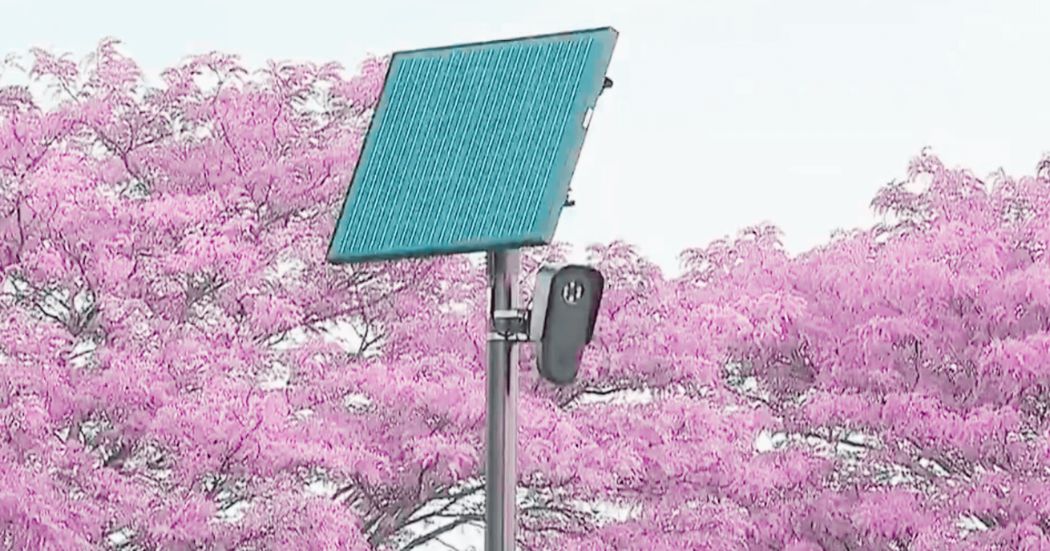
Flock cameras are not traditional traffic cameras designed simply to catch speeding or red-light violations.
They automatically photograph vehicles passing through their field of view and collect information that can include license plates and identifying characteristics of a vehicle. According to News 12 New Jersey, the cameras collect information about every vehicle that passes them, regardless of whether the driver has committed a traffic violation. (newjersey.news12.com)
Police departments argue that this makes the technology extremely useful.
Investigators can search for vehicles connected to stolen cars, missing persons, wanted suspects and serious crimes, potentially locating a vehicle much faster than with traditional police work.
But the same capability that makes the system powerful for law enforcement is precisely what worries privacy advocates.
A system capable of finding where a suspect’s vehicle traveled can potentially reveal where an ordinary person traveled as well.
Officers Accused of Using Cameras to Track Women They Knew
Recent cases have shown that the possibility of personal misuse is not merely theoretical.
In North Carolina, a police officer was arrested after authorities alleged that she used Flock license-plate readers to track her boyfriend’s ex-wife.
In Florida, Haines City police officer Christopher Goodson was arrested after investigators alleged that he searched his estranged wife’s vehicle in the Flock database 717 times between September 2024 and June 2026. According to the arrest affidavit, she was not the subject of a criminal investigation during that period.
The Washington Post also documented other alleged cases involving law enforcement officers using license-plate-reader networks to monitor former partners. In Wisconsin, an officer was accused of checking whether an ex-girlfriend had visited an abortion clinic; in Kansas, a police chief was accused of using the system to track an ex-partner before appearing at her location.
According to a Washington Post investigation cited by CBS News, police officers were accused in dozens of cases of improperly using access to Flock’s license-plate camera network — in some instances allegedly to track civilians, including former wives and girlfriends. Flock’s network includes more than
In his first network television interview addressing the controversy, Flock CEO Garrett Langley told CBS News that the company is introducing new safeguards, saying, “We listen and we learn. And we’ll continue to move forward.”
These are allegations involving individual officers, not evidence that police departments generally use Flock cameras this way.
But for people already uncomfortable with the expansion of automated surveillance, the cases illustrate what can happen when powerful tracking technology is accessed for the wrong reasons.
Flock Says It Is Changing the Rules
The backlash has become significant enough that Flock Safety is now tightening its safeguards.
CEO Garrett Langley announced that the company will make auditing tools mandatory rather than optional. The system is intended to identify unusual or potentially improper searches and allow agencies to investigate suspicious activity.
Flock is also moving to require searches to be connected to case codes, with certain emergency searches subject to additional review.
Perhaps the biggest change is data retention.
The company says it plans to reduce its default retention period from 30 days to seven days, although data associated with specific investigations may be preserved longer.
Until now, Flock’s own published policies have generally described 30 days as the standard retention period in most communities.
The company is also giving communities more control over which other law-enforcement agencies can access their data.
New Jersey Residents Are Already Pushing Back
The debate is no longer confined to privacy organizations or technology experts.
Residents across New Jersey have increasingly questioned the cameras appearing along local streets.
In South Jersey, activists recently organized DeFlock South Jersey, part of a broader movement challenging automatic license-plate readers and calling for greater transparency about where cameras are installed, who can access the information and how the data is shared.
News 12 has also reported growing disagreement among New Jersey residents over the technology, with supporters emphasizing crime prevention while opponents warn about the creation of a surveillance network capable of documenting ordinary travel.
On social media, the concern is often expressed more directly: Are we being watched?
That question should not automatically be interpreted as evidence that a particular resident is being individually monitored. The cameras generally capture vehicles passing locations rather than assigning police officers to follow random motorists.
But the documented misuse cases show why some residents no longer view concerns about access and oversight as purely hypothetical.
Public Safety or a Network That Knows Where You Went?
That is ultimately the difficult question surrounding Flock cameras.
A license-plate reader can help police find a stolen vehicle within minutes.
It may help locate a missing child.
It may provide a crucial lead after a violent crime.
But a network capable of searching millions of vehicle movements can also become extraordinarily revealing if access is abused.
Where someone drives can disclose much more than a license plate.
It can reveal visits to a doctor, a mosque or church, a political meeting, an attorney, a romantic partner, a workplace — or simply someone’s daily routine.
And unlike a police officer physically following a vehicle, automated systems can search enormous amounts of stored information almost instantly.
That distinction is at the center of the privacy debate.
The Technology Is Staying. The Fight Is Over the Rules.
Flock’s new safeguards suggest that even the company recognizes stronger controls are necessary.
But critics argue that technological safeguards alone cannot replace clear laws, independent oversight and transparency about how surveillance systems are used.
Supporters counter that removing the cameras could deprive police of a tool that has helped solve serious crimes.
For New Jersey communities, the debate therefore may no longer be simply whether Flock cameras should exist.
The more important questions may be:
Who is allowed to search them?
For what reason?
Who checks whether that reason was legitimate?
And perhaps most importantly:
Who watches the people who have the power to watch everyone else?
Sources: CBS News / CBS Mornings; News 12 New Jersey; CBS News Philadelphia; Flock Safety; The Washington Post; ABC News; The Verge; additional reporting on documented Flock misuse cases.
By NJ RADAR Team
[…] says a specially designed visual pattern was able to confuse the artificial intelligence used by a Flock surveillance camera, allowing a car to remain visible on video while escaping normal automated detection. The […]