


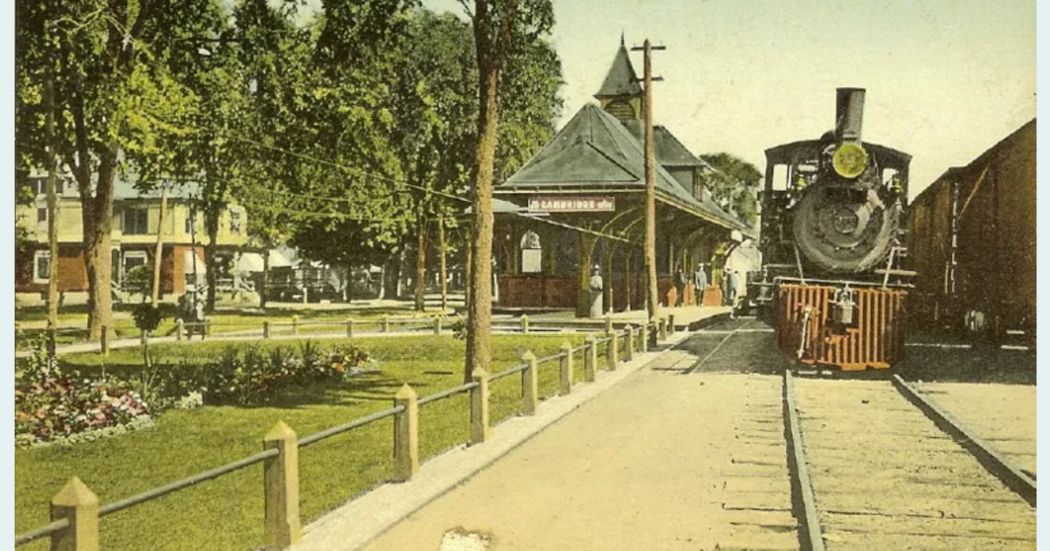
CAMBRIDGE, NY — More than a century after passengers once hurried through its doors to catch a train, a historic railroad station in upstate New York is once again bringing people together — this time for music, food, art and community events.
The Cambridge Depot, built in 1902 as a Delaware and Hudson passenger station, has survived the rise and decline of passenger rail, years of changing uses and periods of uncertainty. Today, the building has entered a new chapter while retaining much of the character that made it a landmark in the first place.
From Railroad Hub to Community Landmark
Rail service had been shaping Cambridge since the mid-1800s. The village’s first passenger depot opened in 1852, but as Cambridge grew into a busier commercial and industrial center, a larger station was needed.
The current depot opened in 1902.
At the height of passenger service, six trains with four coaches each traveled the Washington Branch of the Delaware and Hudson Railroad every day. The trains did more than transport goods and residents — they brought visitors and prominent speakers into the small Washington County community.
Among those who arrived in Cambridge by train were Mark Twain and Susan B. Anthony, who came to speak at nearby Hubbard Hall, the historic opera house and community arts center.
Eventually, passenger trains disappeared. Freight service continued, and the tracks through Cambridge still occasionally carry trains today, but the old depot itself began a long period of transformation.
Over the decades, the building served several different purposes, including a dress shop, an antique business and later a brewery.
One Woman Decided the Building Was Worth Saving
When the previous tenant left in late 2024, longtime Cambridge resident Sara Kelly saw both an opportunity and a risk.
Kelly had admired the historic building for years and worried that, in the wrong hands, it might lose the community-centered character it had developed.
In January 2025, she purchased the depot, investing much of her savings in the project and turning what she jokingly calls her “retirement job” into something closer to a full-time adventure.
Today, the old train station is once again busy.
Instead of travelers waiting for the next train, visitors now come for live music, trivia nights, local artwork, food and community gatherings. Sunday song circles bring musicians together, while the building also serves as an informal gallery for local artists.
And although its purpose has changed, much of the building itself has not.
Keeping the Past Visible
Kelly has made necessary repairs, including work on the heating system, windows and brickwork, but she has been careful not to erase the depot’s history.
The original wooden floors remain. So do historic windows, high ceilings and many of the architectural details dating back to the early 20th century.
According to Kelly, most of the building remains essentially untouched from 1902.
That preservation may be the most remarkable part of the story.
Across America, countless old train stations have been demolished, abandoned or left to deteriorate after passenger service disappeared. Cambridge chose another path.
More than 120 years after it first opened, the depot is still doing something remarkably similar to what it did in 1902.
It is bringing people together.
The trains may no longer stop there, but the station has found a reason to stay.
Source: Times Union; Cambridge Valley Community Development and Preservation Partnership.
By NJ RADAR Team