


TEHRAN, IRAN — November 3, 2026 — Iranian state television has broadcast emergency instructions advising citizens how to protect themselves in the event of a nuclear explosion, as escalating tensions between Iran, the United States, and Israel raise concerns about the possibility of further military confrontation in the Middle East.
The unusual public safety message, reported by several regional news organizations on Tuesday, provides detailed guidance on surviving the immediate effects of a nuclear blast and reducing exposure to radioactive fallout.
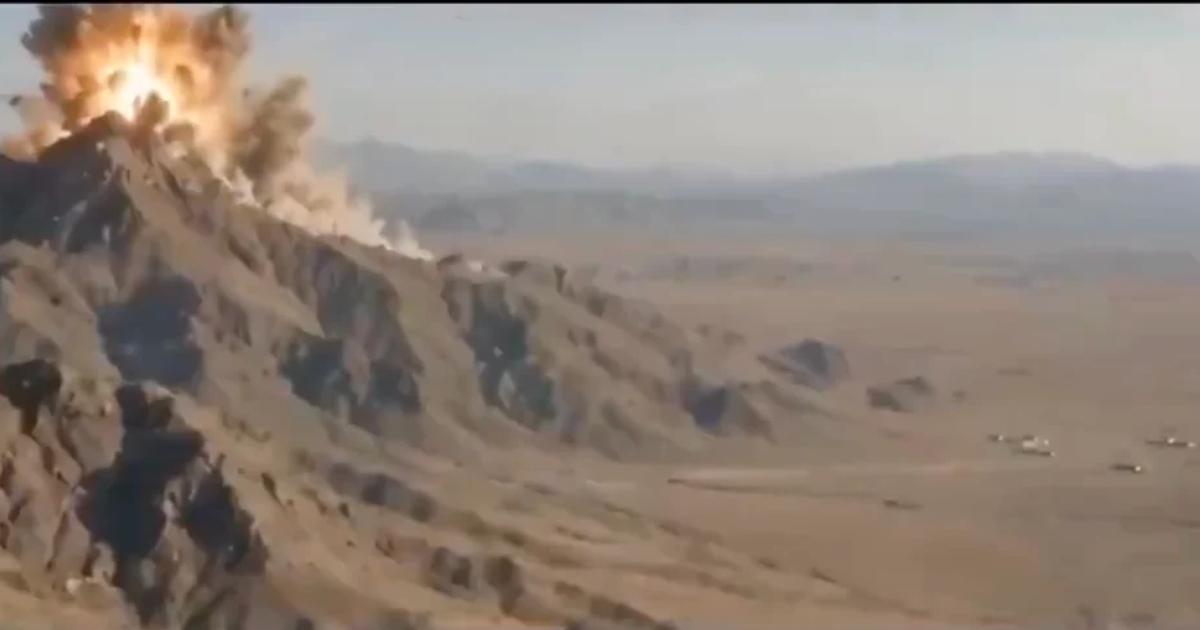
The broadcast includes dramatized scenes of an explosion near a residential area, followed by instructions on seeking shelter, protecting the body, removing potentially contaminated clothing, and remaining indoors.
Although the message has attracted international attention, there has been no verified announcement that a nuclear attack is imminent.
Iranian Television Tells Citizens How to Survive a Nuclear Explosion
According to reports published on November 3, the televised instructions advise people not to look directly at the intense flash produced by a nuclear explosion.
Individuals caught outdoors are instructed to seek protection behind a solid barrier, lie flat on the ground, and cover their heads and faces to reduce injuries from heat, flying debris, and the blast wave.
Once the initial shock wave has passed, citizens are advised to enter the nearest suitable building rather than remain outside to observe or record the incident.
The instructions also warn against using vehicles as shelters because cars generally provide inadequate protection against radioactive fallout.
The broadcast emphasizes that taking immediate protective action could significantly reduce exposure to the dangers associated with a nuclear explosion.
Basements and Interior Rooms Recommended
Once inside a building, residents are advised to move to a basement or an interior room away from windows, exterior walls, and the roof.
These locations offer greater protection against radioactive particles that could settle on buildings and surrounding areas after an explosion.
The instructions recommend closing doors and windows and switching off ventilation systems that draw outside air into the building.
The purpose is to reduce the possibility of radioactive material entering indoor spaces.
Residents are also encouraged to identify suitable shelters and evacuation routes in advance, rather than attempting to make those decisions during an emergency.
How to Reduce Radioactive Contamination
The broadcast includes specific recommendations for people who may have been exposed to radioactive dust.
Individuals are advised to carefully remove their outer clothing without shaking it, place contaminated items in a sealed plastic bag, and keep the bag away from other people.
They should then wash exposed skin using lukewarm water and soap.
Showering and washing the hair with ordinary shampoo, without conditioner, can help remove radioactive particles.
If a shower is unavailable, exposed areas of the face, hands, and body should be cleaned using water or wet wipes.
These precautions are consistent with recommendations issued by the U.S. Centers for Disease Control and Prevention, which explains that removing an outer layer of clothing can eliminate up to 90% of radioactive contamination.
Residents Told to Remain Sheltered for at Least 24 Hours
One of the most important elements of the Iranian broadcast concerns the period immediately following a nuclear explosion.
Citizens are advised to prepare to remain inside a secure shelter for at least 24 hours.
During that period, they should rely on bottled water and packaged food when available and avoid unnecessary exposure to the outside environment.
However, the instructions emphasize that remaining indoors for 24 hours does not automatically mean conditions will be safe afterward.
Residents should follow official emergency announcements and leave their shelters only when authorities determine that evacuation or movement is safe.
If a building catches fire or becomes structurally unsafe, people should move to a more secure location.
Similar sheltering recommendations are included in emergency preparedness guidance published by the U.S. Federal Emergency Management Agency and the CDC.
Why Is Iran Broadcasting These Instructions Now?
The timing of the message comes amid renewed international concern over possible military escalation involving Iran.
Iran’s nuclear program has long been a source of confrontation with the United States and Israel.
Disagreements over uranium enrichment, inspections, regional military activity, and sanctions have contributed to repeated diplomatic crises and armed confrontations.
Recent discussions surrounding potential attacks on Iranian nuclear facilities have further intensified public concern.
The Iranian broadcast has therefore raised questions about whether authorities are preparing the population for a possible escalation.
However, the existence of emergency instructions does not establish that Iranian officials possess specific intelligence about an impending nuclear attack.
Governments sometimes distribute civil defense information as a precaution during periods of increased military tension.
A Nuclear Strike Is Different From an Attack on a Nuclear Facility
An important distinction must be made between a nuclear weapon being used against a country and a conventional military attack targeting a nuclear facility.
A nuclear strike involves the detonation of a nuclear weapon, producing an enormous explosion and potentially widespread radioactive fallout.
A conventional strike against a nuclear facility involves non-nuclear weapons and may still create serious environmental and radiological dangers, depending on the materials present and the damage caused.
These are different scenarios, and the consequences cannot be treated as identical.
The Iranian television guidance specifically addresses survival procedures associated with a nuclear explosion.
It does not, by itself, confirm that nuclear weapons are about to be used.
International Concerns Continue to Grow
The public broadcast comes at a sensitive moment for international security.
Any major military confrontation involving Iran could have consequences extending well beyond the country itself, including disruptions to regional transportation, international energy markets, and diplomatic relations.
The possibility of damage to nuclear infrastructure also raises concerns about environmental contamination and risks to civilians.
International observers will be watching for additional statements from Tehran, Washington, and other governments regarding military developments and diplomatic efforts.
As of November 3, the publicly reported broadcast provides emergency preparedness advice rather than confirmation of an imminent nuclear strike.
A Warning That Raises Questions but Does Not Confirm an Attack
Iran’s decision to circulate nuclear emergency instructions has attracted attention because of the seriousness of the scenario described.
The guidance offers practical advice intended to reduce civilian casualties if an extreme emergency occurs.
At the same time, the broadcast highlights the atmosphere of uncertainty surrounding the continuing confrontation between Iran and its regional and international adversaries.
The instructions should not be interpreted as proof that nuclear weapons will be used or that a specific attack has been scheduled.
For now, the central development is that Iranian television has publicly presented nuclear survival guidance to civilians, reflecting heightened security concerns while leaving unanswered whether the regional tensions will lead to further military escalation.
Sources: Sabq, November 3, 2026; Alsharq+, November 3, 2026; Veto, November 3, 2026; CDC – Radiation Emergency Preparedness; FEMA – Nuclear Explosion Safety Guidance.
By NJ RADAR Team