


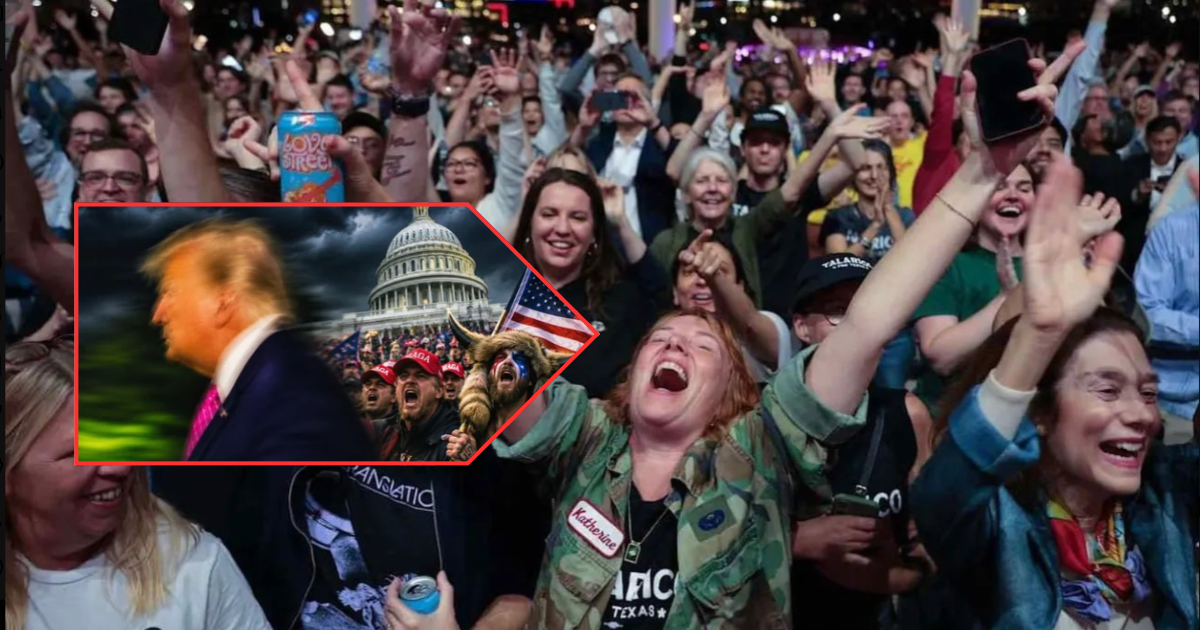
From Europe to Asia and the Middle East, world leaders respond to the Democratic takeover of Congress and consider what the political shift means for international relations.
WASHINGTON, D.C. — November 4, 2026 — The Democratic Party’s sweeping victory in the 2026 U.S. midterm elections has triggered reactions around the world, with European leaders welcoming the political shift, Russia expressing concern, Iran interpreting the results as a rejection of war, and Asian governments emphasizing the importance of maintaining stable relations with Washington.
Democrats won control of both the U.S. House of Representatives and the Senate in Tuesday’s elections, ending Republican control of Congress and creating a divided government for the remaining two years of President Donald Trump’s second term.
From Brussels and Madrid to Moscow, Tehran, Beijing, and Tokyo, governments are evaluating what the change in Washington could mean for international trade, security alliances, energy prices, and ongoing conflicts.
Europe Welcomes Change but Remains Cautious
Spanish Prime Minister Pedro Sánchez was among the most outspoken international leaders responding to the results.
In a message posted on X, Sánchez argued that American voters had rejected policies that, in his view, contribute to economic hardship, social division, sexism, and climate denial.
His remarks reflected longstanding disagreements with Trump over international affairs and domestic political priorities.
Norwegian Prime Minister Jonas Gahr Støre described the election as a significant political signal indicating a change in direction among American voters.
He suggested that the new congressional majority could bring greater alignment between Washington and European governments on climate policy, environmental protection, foreign affairs, and international development.
Germany’s Defense Minister Boris Pistorius congratulated Democrats on their victory while emphasizing that Germany would continue working with the Trump administration as well as both political parties in Congress.
European officials nevertheless cautioned that the results do not automatically resolve disputes over trade, tariffs, defense spending, or American foreign policy.
Ukraine Sees Potential for Stronger Support
The election results attracted particular attention in Ukraine, where the future of American military and financial assistance remains a major concern.
The Kyiv Independent described the Democratic takeover of Congress as a political setback for Trump and a potentially favorable development for Ukraine.
Some European politicians expressed hope that Democratic control could strengthen congressional support for Ukraine and improve coordination with European allies.
However, the election does not guarantee an immediate change in American policy.
Trump remains president and retains significant authority over diplomacy, military decisions, and the executive branch.
Congress, meanwhile, can influence foreign assistance through legislation, funding decisions, oversight, and political pressure.
Russia Expresses Concern About Democratic Leadership
Russia responded cautiously to the Democratic victories.
Deputy Foreign Minister Sergei Ryabkov said Democratic leaders have traditionally maintained a strongly critical position toward Moscow.
He emphasized that Russia would not change its foreign policy simply because of an election in another country.
Kremlin spokesperson Dmitry Peskov expressed hope that Trump would continue diplomatic efforts related to the war in Ukraine, noting that the president remains in office.
Russian state media offered competing interpretations of the result, including suggestions that renewed congressional opposition could complicate Trump’s relations with European governments.
The reactions reflect uncertainty in Moscow about whether Democratic control will increase pressure on Russia or produce greater political confrontation in Washington.
Iran Interprets Election Results as a Rejection of War
Iranian officials drew a different conclusion from the Democratic victories.
Iranian Parliament Speaker Mohammad Bagher Ghalibaf interpreted the election as a message from American voters opposing the ongoing military conflict.
In a statement on X, he declared that Americans had said “NO TO WAR.”
Iranian media also connected Republican losses to the economic effects of the conflict, including higher energy prices and pressure on American households.
The conflict involving Iran became a major issue during the campaign, alongside inflation, affordability, and concerns about American foreign policy.
However, Ghalibaf’s interpretation remains a political assessment. Election results alone cannot establish that every voter supported the same position on the conflict.
Israel Watches the Political Shift Closely
In Israel, the Democratic takeover of Congress has raised questions about future U.S. policy toward the Middle East.
The results come amid political uncertainty following Israel’s recent parliamentary elections, in which Prime Minister Benjamin Netanyahu’s coalition lost its majority.
Israeli opposition figures argued that the American results could weaken Netanyahu’s political position and complicate relations with Washington.
At the same time, American support for Israel involves longstanding diplomatic, military, and legislative relationships extending across both major U.S. parties.
The outcome may change the tone of congressional debates, but its practical effects will depend on future legislation and decisions by the White House.
China and Japan Emphasize Stability
China adopted a restrained diplomatic position.
A spokesperson for the Chinese Foreign Ministry described the election as an internal American matter and reaffirmed Beijing’s willingness to maintain communication and cooperation with Washington.
China indicated that it would continue pursuing a stable bilateral relationship despite disagreements over trade, technology, and security.
Japan also emphasized continuity.
Chief Cabinet Secretary Minoru Kihara reaffirmed that the U.S.-Japan alliance remains central to Japanese foreign and security policy, regardless of which party controls Congress.
Taiwan’s Foreign Ministry similarly stressed its commitment to maintaining cooperation across American political parties, particularly on security, technology, and trade.
These responses illustrate how governments in Asia are prioritizing institutional relationships rather than publicly endorsing one American political party.
International Media Describe a Major Political Setback for Trump
International newspapers prominently featured the Democratic victories on Wednesday.
France’s Libération characterized the outcome as a “blue wave,” while Britain’s Daily Mail used the expression “blue tsunami.”
The Times of India described the election as a difficult result for Trump.
In Canada, the Toronto Star portrayed the outcome as a rejection of the president amid continuing trade tensions between the two countries.
Mexico’s El Universal similarly described the election as a setback for Trump.
The widespread international coverage reflects the importance of U.S. congressional elections to governments and economies far beyond American borders.
What Changes Now That Democrats Control Congress?
Democratic control of both chambers will significantly alter the political environment in Washington when the new Congress convenes in January 2027.
The party will gain the ability to determine committee leadership, organize congressional investigations, issue subpoenas, and influence major legislation.
The Senate will also play an important role in reviewing presidential nominations and judicial appointments.
However, Democrats will still face constitutional limits on their power.
Trump will retain the presidency, including his authority to veto legislation and exercise executive powers.
Overriding a presidential veto generally requires a two-thirds majority in both chambers, meaning that Democratic control does not automatically ensure the passage of legislation opposed by the White House.
The new political arrangement could therefore lead to more oversight, greater confrontation, and difficult negotiations over federal spending and national priorities.
A Global Political Turning Point
The international response illustrates how closely the world follows American elections.
European governments see possible opportunities for greater cooperation, while Russia and Iran are calculating how the result could affect existing conflicts.
China, Japan, and other Asian governments are emphasizing stability in their relationships with the United States.
Yet the election also reveals an important distinction between changing congressional control and changing the American presidency.
Democrats will have greater legislative authority, but Donald Trump will remain president until January 2029.
The result creates a new balance of power rather than an immediate replacement of the administration.
For the rest of the world, the central question is no longer whether American voters have changed the balance of power in Washington. It is how that change will affect international diplomacy, economic policy, ongoing wars, and America’s relationships with allies and adversaries over the next two years.
Sources: Reuters, November 4, 2026 — https://www.reuters.com/legal/government/democrats-seize-congress-sweeping-midterm-repudiation-trump-2026-11-04/ ; NPR, November 4, 2026 — https://www.opb.org/article/2026/11/04/world-reacts-to-democrats-midterm-elections-victory/ ; Al Jazeera, November 4, 2026 — https://www.aljazeera.com/news/2026/11/4/seismic-shift-world-reacts-to-us-midterm-election-results
By NJ RADAR Team