


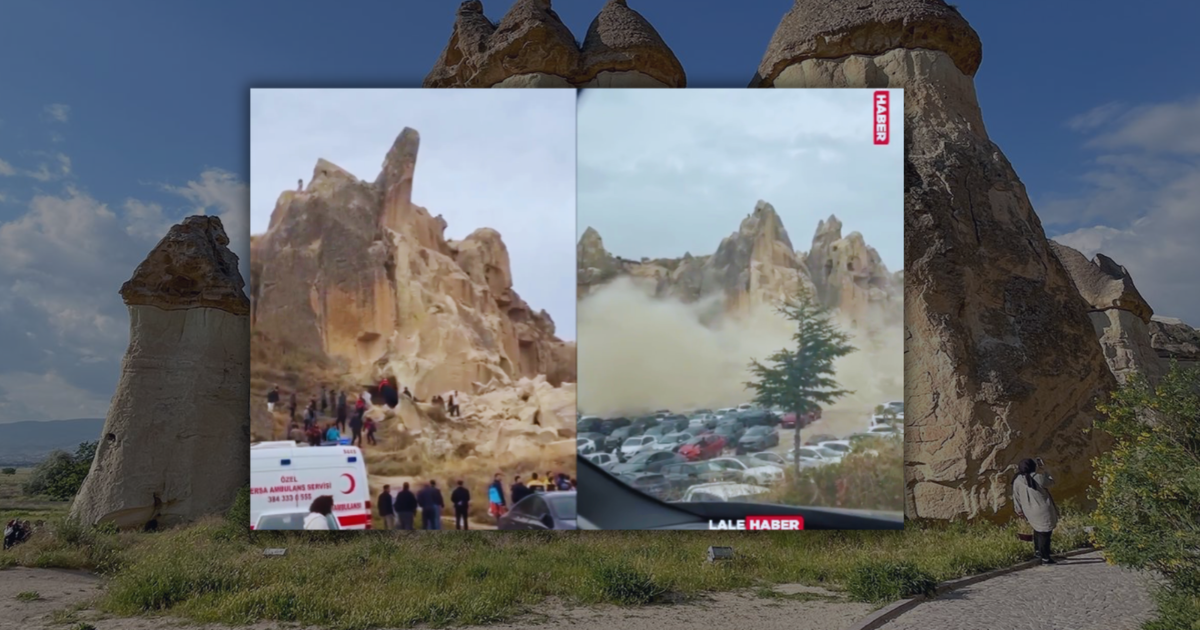
CAPPADOCIA, TURKEY, October 29, 2026 — At least two people were killed and one was injured Thursday when a large section of a natural rock formation collapsed near the entrance to the Göreme Open-Air Museum, one of Turkey’s most famous historical and tourist attractions.
The incident occurred in the town of Göreme, in Nevşehir province, within the UNESCO-listed region of Cappadocia.
According to Turkey’s Anadolu Agency, large pieces of rock broke away from a formation known as a fairy chimneyand fell onto an area where people were present.
Police, gendarmerie officers, emergency medical personnel, and disaster response teams from Turkey’s Disaster and Emergency Management Authority (AFAD) were dispatched to the scene.
Rescue workers confirmed that two people had died beneath the fallen rocks. A third person was transported to a hospital for treatment.
Search and rescue operations continued as authorities worked to determine whether anyone else remained trapped under the debris.
Heavy Rainfall May Have Contributed to the Collapse
Nevşehir Governor Hüseyin Kök said heavy rainfall in recent days may have contributed to the collapse.
Cappadocia’s distinctive rock formations were created over millions of years through volcanic activity and erosion.
The region’s famous fairy chimneys, tall formations of relatively soft volcanic rock, are particularly vulnerable to natural weathering.
Authorities have not yet announced a final determination of the cause of Thursday’s collapse.
The incident occurred on October 29, Turkey’s Republic Day, a national holiday when popular tourist destinations often attract large numbers of visitors.
Cappadocia: A Region of Underground Cities and Ancient Churches
Cappadocia is not a single city but a historic region in central Turkey, internationally recognized for its extraordinary geological landscape and centuries-old cultural heritage.
The region is famous for its fairy chimneys, cave dwellings, rock-cut churches, monasteries, and extensive underground settlements.
Among its best-known attractions are the underground cities of Derinkuyu and Kaymaklı, remarkable multi-level complexes carved into volcanic rock.
These underground settlements contain interconnected tunnels, living quarters, storage rooms, ventilation shafts, and spaces used by communities seeking shelter during periods of conflict.
Cappadocia is also home to the Göreme Open-Air Museum, a historic complex of churches and monastic buildings carved directly into the surrounding rock.
Many of these churches preserve Byzantine frescoes depicting religious scenes, providing valuable evidence of the region’s early Christian history.
Göreme National Park and the Rock Sites of Cappadocia were added to the UNESCO World Heritage List in 1985 because of their exceptional natural formations and cultural significance.
There have been no confirmed reports that Thursday’s collapse damaged the region’s famous underground cities, including Derinkuyu and Kaymaklı.
A Major Tourist Destination
Cappadocia attracts visitors from around the world who come to explore its historical sites, walk through its unusual valleys, visit underground settlements, and experience its famous hot-air balloon flights.
The Göreme Open-Air Museum is among the region’s most visited cultural attractions.
Thursday’s tragedy has raised renewed concerns about the safety of natural rock formations in heavily visited tourist areas, particularly following periods of significant rainfall.
Authorities have not yet released full details about the identities or nationalities of those killed and injured.
Investigation and Rescue Operations Continue
Local authorities are continuing their investigation into the collapse while emergency personnel assess the affected area.
The extent of any damage to nearby historical structures has not yet been fully established.
The tragedy occurred in one of Turkey’s most historically significant landscapes, where natural rock formations and centuries-old human settlements exist side by side.
The incident highlights the challenges of preserving Cappadocia’s fragile geological heritage while ensuring the safety of the millions of people drawn to its unique natural and historical attractions.
Sources: Anadolu Agency, October 29, 2026; Associated Press, October 29, 2026; UNESCO World Heritage Centre.
By NJ RADAR Team