


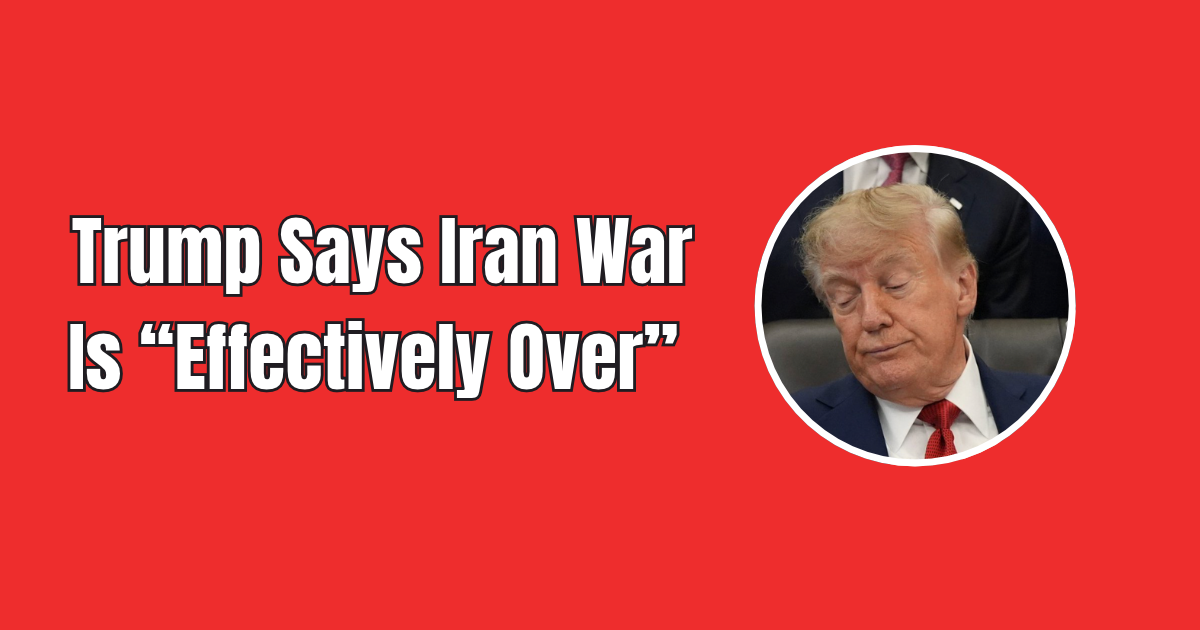
WASHINGTON, D.C. — November 9, 2026 — President Donald Trump said Monday that the U.S.-Israeli war against Iran is effectively over from a military standpoint, offering his clearest indication yet that Washington may be moving away from further large-scale attacks after more than eight months of conflict.
Speaking to reporters during an unexpected appearance in the White House briefing room, Trump said additional military action against Tehran no longer appeared necessary, although American forces remain prepared to respond if negotiations fail.
“Iran militarily is effectively over,” Trump said. “We’re just keeping it the status quo.”
The president made the remarks after meeting with Qatari Prime Minister Sheikh Mohammed bin Abdulrahman Al Thani, whose government has been helping mediate talks between Washington and Tehran.
Trump described the diplomatic discussions as showing “positive momentum,” but stopped short of announcing a ceasefire agreement or formally declaring the war over.
“The military action doesn’t seem to be a very necessary thing, but we’re locked and loaded, ready to go for any reason that changes,” he told reporters.
Diplomacy Gains Ground, but Major Disagreements Remain
Qatar has played a central role in efforts to bring the United States and Iran back to the negotiating table. Recent discussions have focused on ending hostilities, reopening the Strait of Hormuz and resolving disputes surrounding Iran’s nuclear program.
Tehran has demanded that Washington lift its naval blockade, release frozen Iranian funds and ease economic sanctions as part of any agreement.
The United States, meanwhile, wants guarantees that Iran will not develop nuclear weapons, including restrictions on its stockpile of highly enriched uranium and access for international nuclear inspectors.
Despite the recent diplomatic activity, neither side has announced an agreement on those conditions.
Trump said he believes further attacks are unlikely if negotiations continue making progress. At the same time, he warned that the U.S. military has identified additional Iranian infrastructure that could be targeted if fighting resumes.
The American naval blockade also remains in place, and U.S. forces have continued limited military operations against Iranian targets.
For that reason, Trump’s remarks should not be interpreted as confirmation that the war has officially ended.
Months of War and Growing Political Pressure
The conflict began on February 28, 2026, when the United States and Israel launched military operations against Iran.
Eight months of fighting have disrupted regional trade, threatened shipping through the Strait of Hormuz and pushed fuel prices higher, with consequences reaching well beyond the Middle East.
The war has also become a contentious political issue in Washington.
Democrats won control of both chambers of Congress in the November 3 midterm elections, following a campaign in which economic concerns and dissatisfaction with the war featured prominently.
Trump’s latest comments come as his administration faces renewed scrutiny over its military decisions, including an impeachment effort against Defense Secretary Pete Hegseth led by Republican Congressman Thomas Massie.
The president has defended the military campaign, arguing that it significantly weakened Iran’s capabilities. Iranian officials, however, have disputed Washington’s portrayal of the conflict and continue to demand major concessions before accepting a broader settlement.
Qatari and other regional diplomats are pressing both governments to reach an agreement before another escalation threatens shipping, energy supplies and regional security.
Trump’s remarks suggest the White House is now giving diplomacy greater room to succeed. Whether that produces a lasting agreement will depend on decisions in both Washington and Tehran, particularly over sanctions, the naval blockade and Iran’s nuclear program.
For now, American military forces remain positioned for further action, even as the president publicly signals that another major offensive may no longer be necessary.
Sources: Associated Press, November 9, 2026; Al Jazeera English, November 9, 2026; Reuters, November 9, 2026; Axios, November 9, 2026; Financial Times, November 9, 2026.
By NJ RADAR Team