


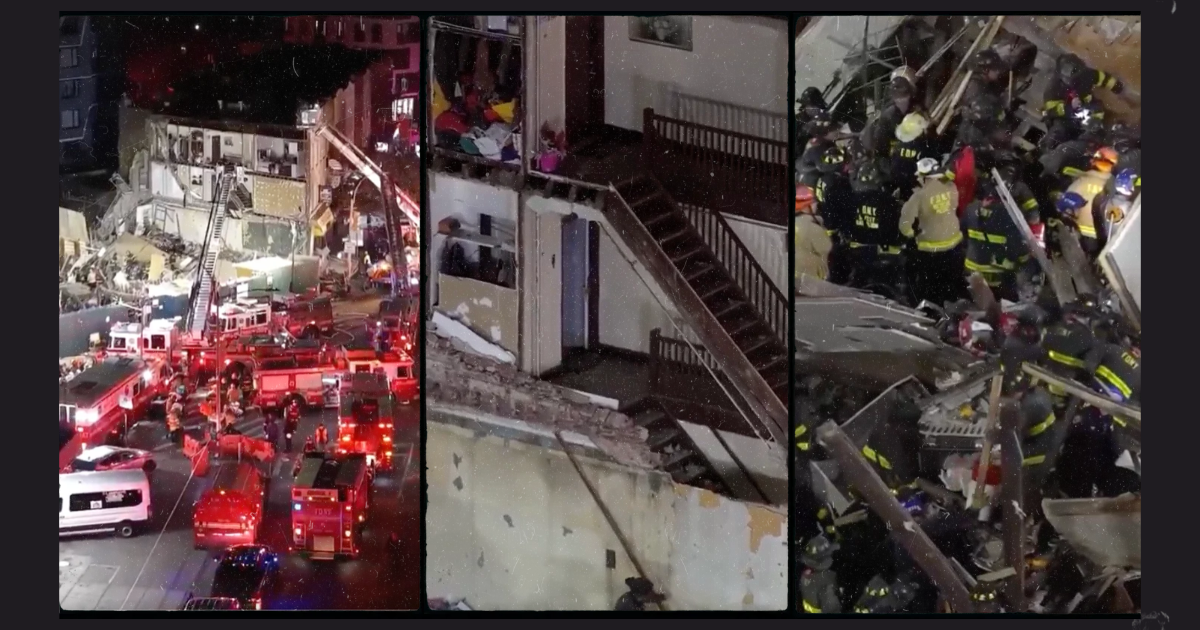
BROOKLYN, N.Y. — November 12, 2026 — A deadly building collapse in Brooklyn’s Flatbush neighborhood has intensified concerns about construction safety, rapid development and the future of long-established communities facing growing pressure from gentrification.
Eight people, including two children, were killed when a three-story residential and commercial building collapsed Wednesday afternoon into an adjacent construction site near Flatbush and Bedford avenues. Eighteen others were injured, according to city officials.
The collapse occurred shortly after 4 p.m. at a building on Flatbush Avenue, where apartments stood above a ground-floor business. Construction crews were excavating a neighboring property when part of the structure gave way.
Firefighters and rescue teams worked through the night to recover victims from the wreckage. Among those killed were construction workers, while several residents were rescued from the debris.
The cause remains under investigation.
Residents Say Construction Warnings Were Ignored
According to the Associated Press, residents had previously complained about vibrations and cracks associated with nearby construction.
City records also showed that inspectors issued a stop-work order in March over inadequate protections during demolition. Work later resumed after the violations were reportedly corrected.
Investigators are now examining whether excavation activities, structural conditions or failures in construction safety procedures contributed to the collapse.
Mayor Zohran Mamdani ordered inspections at approximately 100 construction sites associated with companies involved in the project.
Officials have not determined responsibility for the disaster.
Anger Over Gentrification in Flatbush
For some neighborhood residents, the tragedy has intensified longstanding frustrations over development in Brooklyn.
Flatbush has historically been home to substantial Black and Caribbean immigrant communities. Like other parts of Brooklyn, the neighborhood has experienced rising housing costs and pressure from new development.
Speaking to Agence France-Presse, resident Winston Bowen blamed what he described as careless development practices.
Another resident, Rachel Cyprian, criticized the pace of construction and expressed concern that longtime Black residents were being displaced by neighborhood changes.
Others questioned whether building safety concerns receive sufficient attention in working-class communities.
Their comments reflect a broader debate over who benefits from urban redevelopment and who bears its risks.
However, the investigation has not established that gentrification, racial discrimination or deliberate disregard for residents caused Wednesday’s collapse.
Housing Inequality and Building Safety
The disaster also comes amid documented housing problems across New York City.
City housing data show that serious housing code violations remain widespread. In 2025, approximately 13 of every 100 privately owned rental units had a serious housing code violation, according to EquityNYC.
A separate 2025 audit by the New York City Comptroller found racial disparities in the enforcement of building code violations, with homeowners in Black and Hispanic neighborhoods facing disproportionately high penalties in certain communities.
Those findings do not explain the Flatbush collapse, but they add context to residents’ concerns about housing conditions and the fairness of city oversight.
Questions for City Officials
The Brooklyn tragedy has raised urgent questions about how construction projects are monitored when excavation takes place beside older occupied buildings.
Investigators must determine whether the neighboring excavation was properly supported, whether earlier complaints received adequate attention and whether the building was sufficiently protected during construction.
For Flatbush residents, those questions go beyond a single construction site.
They concern the safety of existing homes, the responsibilities of developers and the ability of longtime communities to remain secure as their neighborhoods change.
The immediate priority remains accountability for the collapse and support for the victims’ families.
But the investigation may also help determine whether changes are needed in how New York City oversees construction near occupied buildings.
Sources: Associated Press, November 12, 2026; Reuters, November 12, 2026; Agence France-Presse, November 12, 2026; ABC7 New York, November 12, 2026; NYC Comptroller, April 21, 2025; EquityNYC Housing Data.
By NJ RADAR Team