


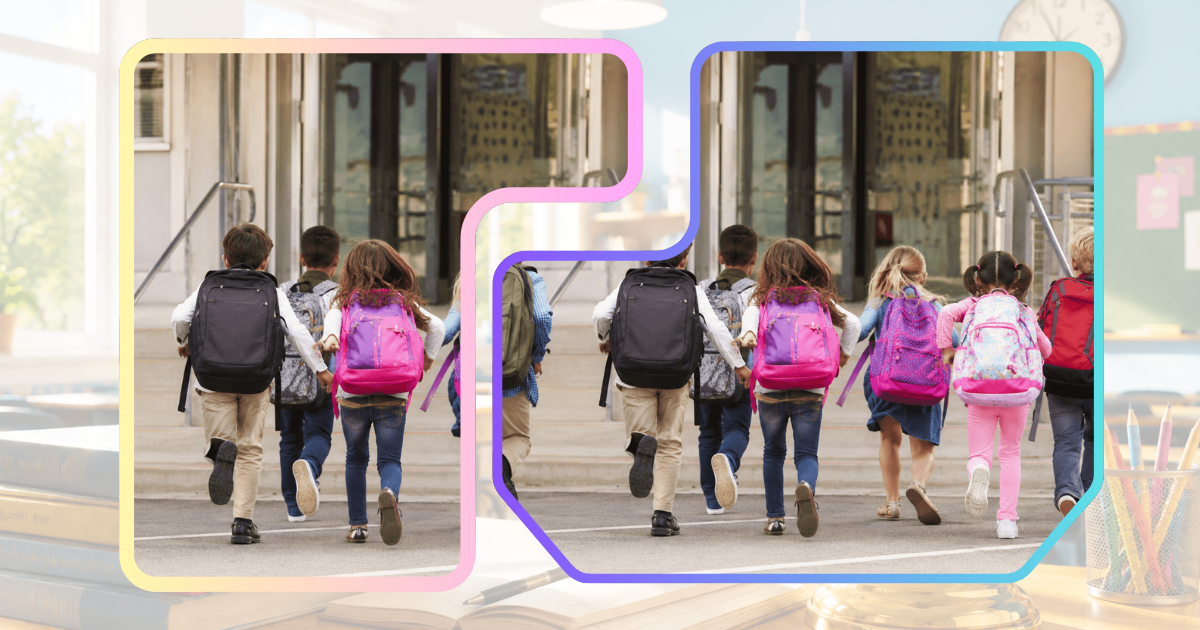
Students across New Jersey are returning to classrooms this fall in a school system facing three major pressures at once: districts struggling with rising costs and staff reductions, continued shortages of teachers in key subjects, and artificial intelligence rapidly changing what happens inside the classroom.
NEW JERSEY — The first school bell of the 2026–27 academic year will sound familiar.
But what students find behind the classroom door may no longer be quite the same.
Across New Jersey, school districts are preparing for a year shaped by difficult budget decisions, staffing problems and a technology that only a few years ago was largely absent from schools: artificial intelligence.
The contrast is striking. New Jersey has approved a record $12.4 billion in state aid for K-12 education for Fiscal Year 2027, more than $370 million above the previous year and the largest amount in state history.
Yet some districts are still entering September under significant financial pressure.
That is because a record statewide total does not mean every district is financially stable.
Rising health insurance costs, student transportation expenses, enrollment changes, the expiration of federal pandemic-era assistance and changes in the distribution of state funding are forcing some local school boards to make difficult decisions.
More Money Statewide, but Cuts in Individual Schools
The financial pressure is already visible.
In Paterson, the Board of Education approved a budget this spring that included layoffs of teachers and other employees, while hundreds of vacant positions were expected to remain unfilled.
Camden has also faced significant staff reductions as the district tries to respond to rising costs and declining enrollment.
Other communities are confronting their own versions of the same problem: fewer employees, higher local taxes, larger classes or reductions in certain programs.
That makes it difficult to describe the 2026–27 school year simply as a year of “record funding” or a year of “cuts.”
Both can be true.
The state is spending more overall, while individual districts can still lose purchasing power or face a gap between the funding they receive and the actual cost of operating their schools.
And for families, all those numbers eventually become something much more concrete: how many adults are inside a school building, how many students are in a classroom, whether an aide, counselor or specialist is available, and which programs a school can afford to keep.
Haunting Silence: The Schools That Are Disappearing
While many parts of New Jersey are debating budgets, staffing levels and class sizes, in Paterson the crisis has taken on an even more visible form: four schools have completed their final school year and will not reopen to students this fall.
Alexander Hamilton Academy, Norman S. Weir, Public School 1 and Young Men’s Leadership Academy are among the schools slated for closure or for an end to operations in their current form. Students will be reassigned for the 2026–27 school year, largely to their neighborhood schools.
Behind the administrative language of “reorganization” and a “new model” remains a much more emotional picture.
A school is not just a building.
It is a place where generations of children spend a large part of their childhood, where parents know the teachers, where performances, meetings and community events take place, and where a neighborhood often finds its natural center.
When such a school goes silent, what remains are empty hallways and classrooms that only weeks earlier were filled with children’s voices.
For students, a closure means a new school, a different route to class, new teachers and new classmates. For parents, it means adjusting to a system already under pressure. And for the city, it becomes a highly visible reminder that a school district’s budget crisis does not end with spreadsheets and Board of Education reports.
Paterson is also entering the new school year with major staff reductions. The 2026–27 budget calls for the elimination of hundreds of positions, while average class sizes are also expected to increase.
That gives the image of locked school doors a much broader meaning.
It shows what happens when the financial problems of a school system stop being numbers on a page and become something children, parents and entire communities can literally see.
New Jersey Still Needs Teachers
Money is not the only problem.
A major Rutgers University study found that New Jersey’s overall teaching workforce has remained relatively stable, at around 117,500 teachers, but that the statewide total hides serious shortages in certain subjects.
The number of math and science teachers declined by about 9% over the decade examined in the report.
Multilingual education and computer science were also identified as areas facing significant staffing pressure, while the number of teachers leaving the profession increased after the pandemic.
The ratio of newly certified teachers to educators permanently leaving the profession has also worsened over time.
That means a district may technically have enough teachers overall and still struggle to find the right person for a physics classroom, a computer science course, a specialized program or multilingual instruction.
It is not a problem that can be solved simply by filling an empty chair.
And Then Comes AI
While districts try to balance budgets and hire teachers, another transformation is already taking place inside classrooms.
Students now have access to generative AI systems that can write an essay, solve a problem, summarize a reading, create an image or assist with research in a matter of seconds.
The question for schools is no longer whether students will use artificial intelligence.
They already are.
The question is what schools are going to do about it.
The New Jersey Department of Education says AI is expected to have a transformative impact on education and that both teachers and students will need to develop new skills to understand and use these systems responsibly.
The New Jersey School Boards Association has gone a step further by developing a model AI policy that districts can adapt to their own needs.
The policy attempts to balance the potential educational benefits of AI with concerns about student privacy, academic integrity, legal compliance, unequal access and the possibility that excessive reliance on AI could weaken critical-thinking skills.
That could make this school year one of the first in which AI is no longer viewed mainly as a novelty or simply as a new way to cheat.
Increasingly, it is becoming something schools will have to teach students how to use properly.
What Does Homework Even Mean When AI Can Do It?
The arrival of AI raises questions that go directly to the heart of education.
If a student asks an AI system to write an essay, whose work is the teacher grading?
If AI explains a difficult algebra problem step by step, is that cheating or tutoring?
Can a teacher use AI to prepare lessons?
Should students be required to disclose when AI helped them complete an assignment?
And perhaps the hardest question of all: how can a teacher determine what a student truly understands when a machine can generate a polished answer almost instantly?
There is no single statewide answer to all of these questions.
New Jersey’s approach gives local education leaders significant responsibility for deciding how AI will be used, restricted and taught within their districts.
That means students in neighboring towns may encounter very different rules.
Three Pressures, One Classroom
Budget problems, teacher shortages and artificial intelligence may appear to be three separate stories.
In practice, they meet in the same place: the classroom.
A district with fewer staff members may be more tempted to rely heavily on technology.
For a teacher managing larger classes, AI may be useful for preparing materials or creating individualized practice.
At the same time, students need more supervision and clearer guidance to understand when AI is helpful and when it replaces the thinking they are supposed to be learning to do themselves.
Technology can assist a teacher.
But it cannot replace the relationship between a student and an experienced educator.
And that may become one of the defining debates of the new school year.
New Jersey is investing more money in public education than ever before. At the same time, it is entering a period in which some districts are cutting positions, shortages remain in certain teaching fields, and machines capable of writing, calculating and “thinking” alongside students are becoming part of everyday school life.
When the school bell rings this fall, students will return to the same buildings.
But they will not be returning to quite the same classroom.
Sources: New Jersey Governor’s Office, New Jersey Department of Education, Rutgers University Heldrich Center for Workforce Development, New Jersey School Boards Association, NJ Spotlight News, Paterson Public Schools
By NJ RADAR Team