


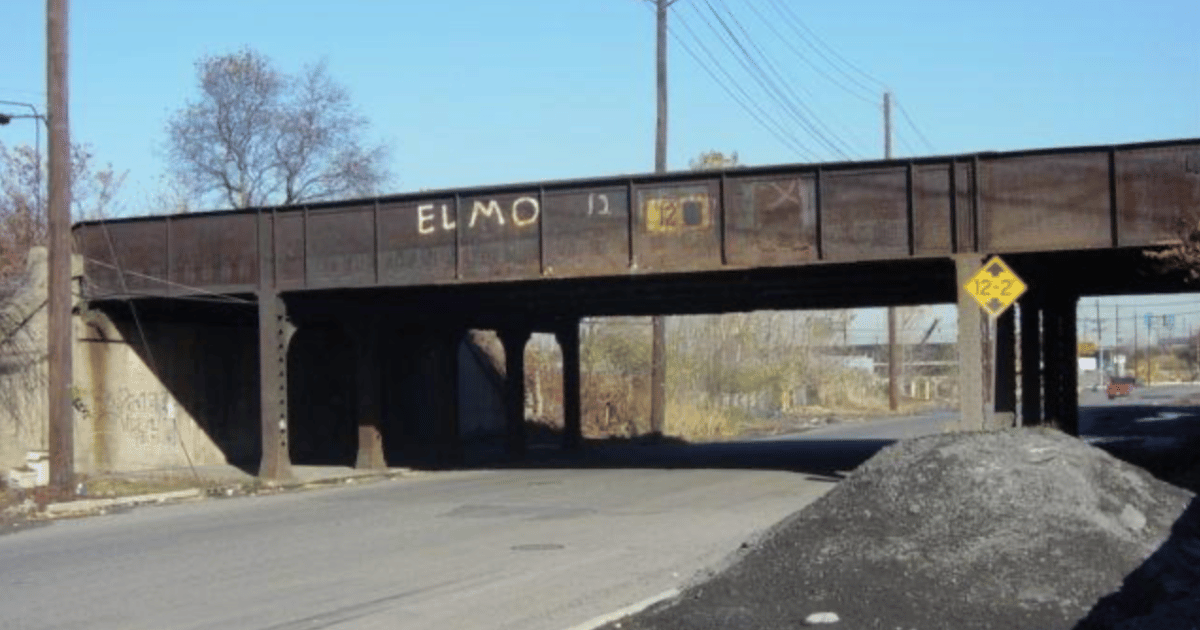
An 11-year-old truck accident has resulted in a major legal ruling that could affect how municipalities across New Jersey are held accountable for road safety.
NEWARK, NJ — November 22, 2026 — A truck driver followed a designated truck route through Newark, only to crash into a railroad bridge that was too low for his vehicle. More than a decade later, the New Jersey Supreme Court has ruled unanimously that the city cannot escape responsibility for failing to provide the warning signs required by state law.
In a decision issued Thursday, November 19, the state’s highest court reinstated a $562,500 jury award to truck driver David Wilson and his wife, Cheryl, reversing an earlier appellate ruling that had favored Newark.
The case dates to March 26, 2015, when Wilson was driving a tractor-trailer through an industrial section of Newark shortly before 5 a.m.
At the intersection of Foundry Street and Avenue P, he encountered a sign directing trucks onto Avenue P. Believing the road was suitable for his vehicle, Wilson turned right.
But a short distance ahead stood a railroad overpass with just 12 feet, 2 inches of clearance.
Wilson’s truck was 13 feet, 6 inches tall.
The trailer struck the bridge and became wedged beneath it. Wilson suffered a neck injury.
There was no sign on the overpass indicating its height and no advance warning at the last safe exit where the driver could have avoided the collision.
A Truck Route That Led Straight Into Danger
The central issue was not simply the absence of a warning sign. Newark had also posted a truck-route sign directing drivers toward the low bridge.
Wilson argued that the combination created a dangerous and misleading situation.
A jury agreed, finding that the city had created a dangerous condition, had actual or constructive notice of the hazard, and acted in a manner that was palpably unreasonable.
The jury awarded Wilson and his wife $562,500 in damages.
Newark challenged the verdict, arguing that municipalities are generally protected from lawsuits involving missing traffic signs under the New Jersey Tort Claims Act.
In May 2025, an appellate court accepted the city’s position and overturned the award.
Wilson appealed to the New Jersey Supreme Court.
Supreme Court Rejects Newark’s Defense
The Supreme Court unanimously reversed the appellate decision.
Writing for the court, Justice Rachel Wainer Apter explained that New Jersey law specifically requires municipalities to post height warnings for bridges and overpasses with less than 14 feet, 6 inches of clearance.
The law also requires an additional warning at the last safe exit or detour before such a structure.
Unlike ordinary traffic signs, which municipalities may have discretion to install, these warnings are mandatory.
The justices concluded that Newark could not rely on the general immunity provisions of the Tort Claims Act to avoid responsibility for failing to comply with those requirements.
The court also rejected the argument that Wilson needed expert testimony to establish that the city’s conduct was palpably unreasonable.
Jurors, the justices explained, were capable of evaluating the danger created by a misleading truck-route sign and missing bridge warnings without specialized expert testimony.
The ruling restored the original $562,500 verdict.
Why the Decision Matters Across New Jersey
Although the accident occurred more than 11 years ago, the ruling has implications far beyond the streets of Newark.
New Jersey has numerous older railroad bridges and highway overpasses, particularly in industrial communities where large trucks regularly travel.
Some structures were built decades before modern freight vehicles became common, leaving limited vertical clearance.
The Supreme Court’s decision reinforces a clear legal obligation: when a bridge falls below the state’s required clearance threshold, municipalities responsible for the roadway must provide the prescribed warnings.
The ruling also establishes an important distinction between ordinary traffic-control decisions and safety measures that state law expressly requires.
A municipality may have discretion over certain road signs, but it cannot disregard a mandatory warning and automatically claim immunity when an accident occurs.
For commercial drivers, clear signage can mean the difference between completing a delivery safely and becoming trapped beneath an overpass.
For cities and towns, the decision underscores the importance of identifying hazardous structures and maintaining accurate warnings before drivers reach a point where turning around is no longer possible.
An Accident That Changed New Jersey Road Liability Law
What began as an early-morning truck accident on Avenue P developed into an 11-year legal battle over municipal responsibility.
Newark argued that it was shielded from liability. Wilson maintained that he had followed a route designated for trucks and encountered a bridge without the warnings required by law.
The state’s highest court ultimately sided with the driver, reinstating the jury’s award.
The ruling sends a message to municipalities throughout New Jersey: required safety warnings are not optional, and failing to provide them can carry substantial financial consequences.
For Wilson, the decision brings a long-running legal dispute closer to its conclusion.
For New Jersey’s cities and towns, it provides a reminder that a missing road sign can become much more than a traffic problem.
Sources: New Jersey Supreme Court, David B. Wilson v. City of Newark, November 19, 2026; New Jersey Monitor, November 20, 2026; Patch, November 20, 2026.
By NJ RADAR Team