


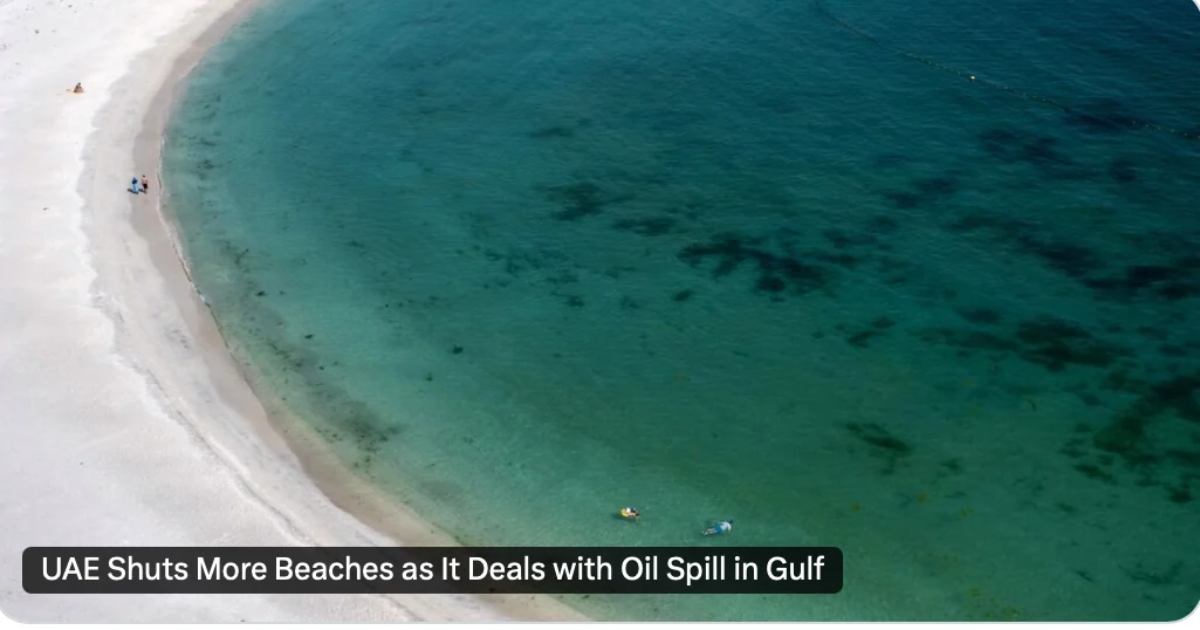
A major oil spill is spreading across the Persian Gulf and reaching the coast of the United Arab Emirates, prompting authorities to close several beaches amid growing concerns about marine pollution and environmental damage.
Satellite images from the European Union’s Copernicus Earth observation program show a large oil slick spreading from the area of a damaged tanker identified by maritime experts as Gem No. 2.
Reuters reported on October 26 that the spill had reached coastal areas of the UAE, raising concerns about the environmental consequences of the ongoing conflict in the region.
Damaged Tanker Identified as Possible Source
The Gem No. 2 tanker was damaged and caught fire earlier in October amid escalating military tensions involving Iran.
According to Reuters, maritime and satellite imagery experts identified the damaged vessel as the likely source of the spreading oil slick.
Copernicus satellite imagery from October 24 shows oil extending across parts of the Persian Gulf and moving toward the UAE coastline.
However, UAE authorities have not officially confirmed the vessel’s identity or established the precise cause of the damage.
Several UAE Beaches Closed
Authorities have closed beaches in several coastal areas as oil contamination reaches the shoreline.
The affected locations include Umm Al Quwain, Al Hamriyah Beach in Sharjah, and beaches in Ras Al Khaimah.
The closures are intended to protect the public while authorities assess the contamination and coordinate cleanup operations.
The full extent of the spill and the amount of oil released have not yet been established.
Marine Ecosystems Face Serious Risks
Environmental experts warn that the spill could have significant consequences for marine ecosystems in the Persian Gulf.
The region supports hundreds of fish species, dolphins, sea turtles, coral communities, and other marine organisms.
Oil contamination can harm wildlife, damage sensitive coastal habitats, and disrupt fishing activities.
The pollution also raises concerns about seawater desalination facilities, which provide an essential source of drinking water for several countries in the region.
Environmental Consequences of Regional Conflict
The incident highlights how damage to commercial vessels and energy infrastructure can create environmental emergencies extending far beyond the immediate area of a military confrontation.
Oil pollution can travel considerable distances through marine currents, affecting shorelines and ecosystems in multiple locations.
While authorities continue monitoring the situation, the long-term ecological impact remains uncertain.
Further satellite observations and environmental assessments will be necessary to determine the full scale of the damage.
The expanding oil slick has become another concern for Gulf communities already facing the economic and environmental consequences of regional instability.
Sources: Reuters, October 26, 2026; European Union Copernicus Earth Observation Programme.
By NJ RADAR Team