


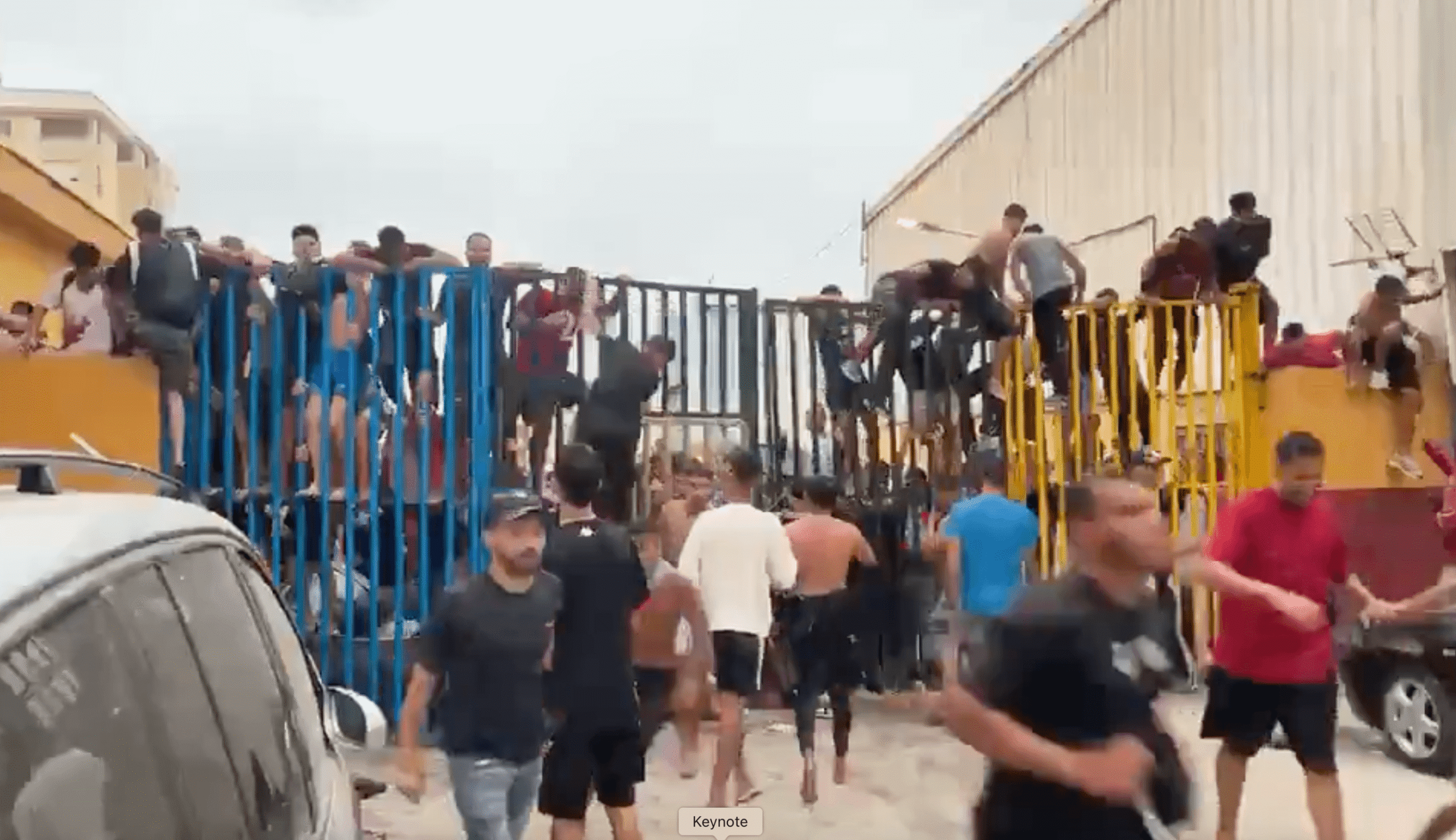
Few people know this remarkable geographic fact: part of the European Union is physically located not in Europe, but on the African continent. That place is Ceuta and Melilla—two Spanish autonomous cities on Morocco’s northern coast that form the European Union’s only land border with Africa.
For many migrants, that border represents the shortest route into the European Union. Instead of risking a dangerous journey across the Mediterranean Sea, they only have to cross the fence separating Morocco from Spanish territory.
Ceuta is home to about 83,000 people and covers just 19.9 square kilometers (7.7 square miles). Although it is located in Africa, it is fully part of Spain and the European Union. Residents use the euro, Spanish and EU laws apply, and the city is part of the Schengen Area, with special rules governing local cross-border movement.
Many people assume Ceuta has always been Spanish, but its history is more complex. The city was captured by Portugal in 1415. In 1580, when Spanish King Philip II united the Spanish and Portuguese crowns in what became known as the Iberian Union, Ceuta effectively came under Spanish rule. After Portugal regained its independence in 1640, the Treaty of Lisbon of 1668 formally recognized Spanish sovereignty over Ceuta, where it has remained ever since.
Melilla, the second Spanish city on the African continent, has been under Spanish control since 1497.
For decades, Morocco has maintained that both cities should fall under its sovereignty. Spain rejects those claims, arguing that Ceuta and Melilla are integral parts of the Spanish state and that their residents wish to remain under Spanish administration.
Because of its location, Ceuta has long been one of the European Union’s most sensitive migration hotspots. Every year, thousands of people attempt to enter the EU through the city, prompting authorities to reinforce the border with high security fences, surveillance systems, and an increased security presence.
Ceuta’s mayor, Juan Jesús Vivas, has repeatedly warned that the city’s small size and limited resources make it difficult to cope with large waves of migrants without assistance from the Spanish government and the European Union.
The latest surge in migrant arrivals has once again drawn global attention to this small city in Africa that is, paradoxically, part of Europe.
Sources: France 24; TIME; Forbes; CP24/AP; Europa (European Union) on X.
[…] House Appropriations Committee, for the first time, stated in writing that “the cities of Ceuta and Melilla, under Spanish administration, are located on Moroccan territory,” while simultaneously […]