


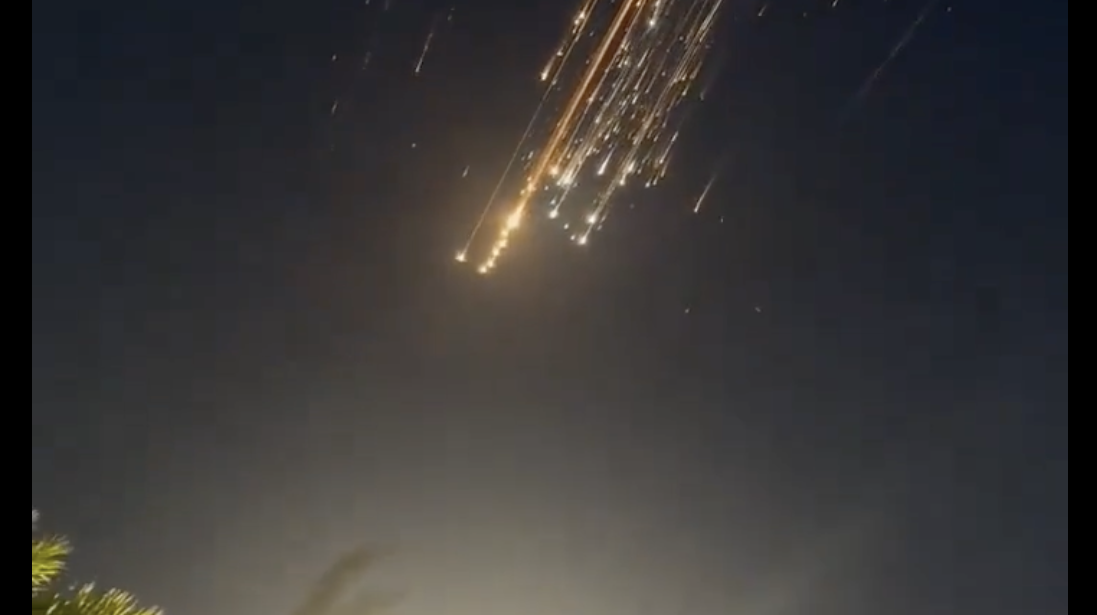
Did you know that about one ton of space junk falls toward Earth every single week? Old satellites, discarded rocket stages, and thousands of other human-made objects regularly re-enter the atmosphere. While most burn up high above the planet, some larger pieces survive the fiery descent and eventually crash back to Earth.
Although most of these objects burn up during atmospheric entry, some larger pieces survive and fall directly to the ground—threatening homes, farms, parking lots, and even ending up in the sea. In recent years, this problem has escalated significantly due to the massive surge in the number of satellites in orbit, with launches from private companies like SpaceX standing out in particular.
Statistics confirm this growing trend of danger: last year, US authorities issued nearly 820 warnings about objects entering the atmosphere, representing an increase of nearly eight times compared to a decade ago, when only around 110 such warnings were issued. Experts warn that the risk of debris striking populated areas or posing hazards to airspace and aircraft is constantly rising, while legal questions of liability and compensation remain entirely unresolved—many of the international agreements governing this issue still date back to the Cold War, when orbital activity was limited to a handful of national governments.
This is no longer a purely theoretical risk. Discarded hardware from the International Space Station has already crashed into a home in Florida, while fragments from SpaceX rockets have landed in Poland and Canada. Debris has also washed ashore in Australia and the Philippines, and a large rocket component survived reentry and struck farmland in Kenya.
The danger extends beyond the ground. A recent study found that in high-density airspace regions—such as those in the northeastern United States or around major cities in Asia—the annual risk of an aircraft being affected by an uncontrolled reentry can reach as high as 26%. The threat isn’t hypothetical: in 2022, predictions showed a 20-ton rocket body was likely to reenter over southern Europe, prompting Spanish and French authorities to close parts of their airspace as a precaution—the first time airspace had ever been shut down specifically because of an uncontrolled reentry. The closures ended up delaying 645 flights by about 29 minutes.
With prediction models still carrying a 20 to 30 percent margin of error—leaving potential impact zones spanning thousands of kilometers—and no binding international safety rules currently in force, experts say the risk of debris striking populated areas or aircraft will only continue to grow in the years ahead.
Sources & References
- NASA Orbital Debris Program Office
- Stellarixorine on X (image/screenshot)