

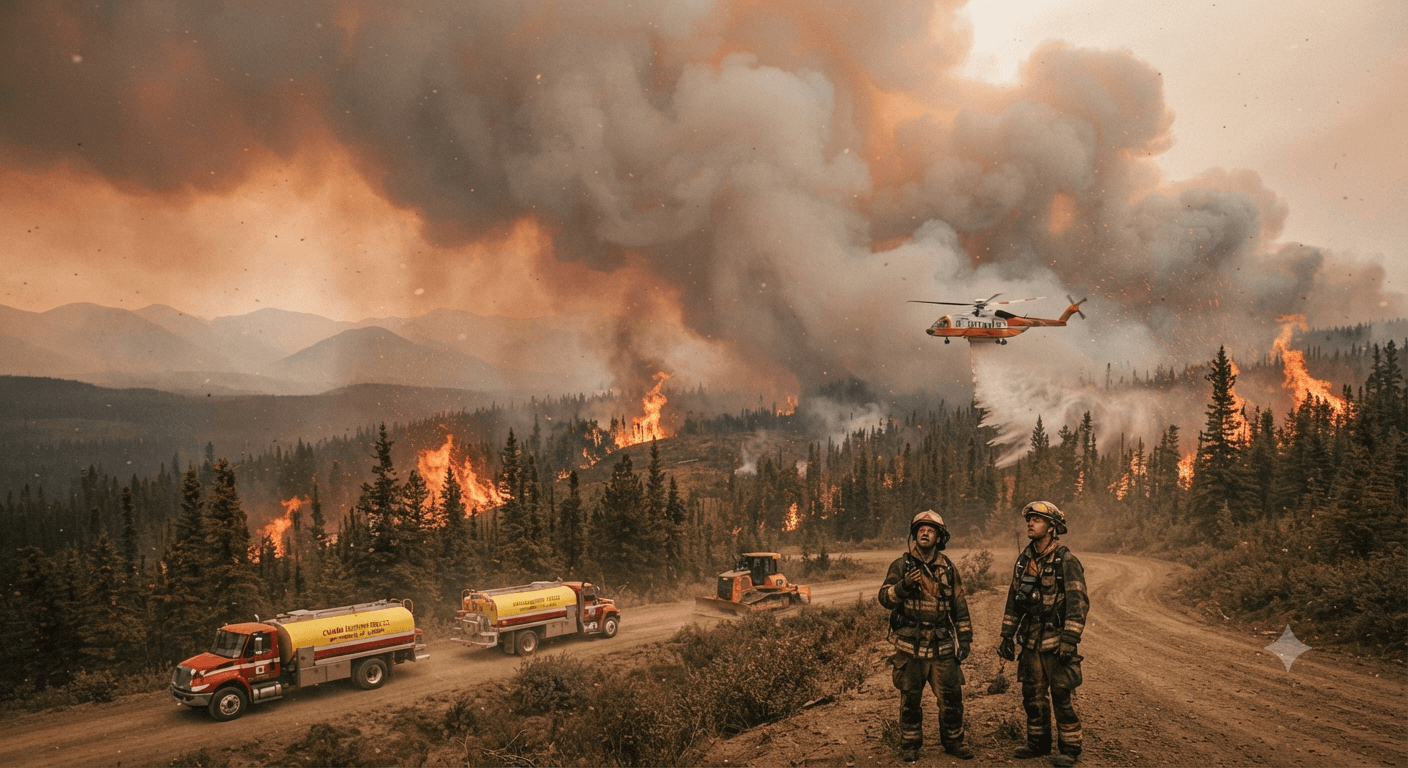
The massive wildfires burning across Canada continue to have consequences far beyond the areas directly affected by the flames. Smoke from the fires has spread across large parts of North America, affecting air quality in both Canada and the United States, including New Jersey.
Carried by changing weather patterns, wildfire smoke has traveled hundreds of miles, creating hazy skies and reducing visibility in several regions. At times, residents across the Northeast, including parts of New Jersey, have experienced poor air quality as smoke drifted south from Canada.
Health experts warn that wildfire smoke contains fine particulate matter (PM2.5), which can pose serious health risks. Children, older adults, pregnant women, and people with asthma, heart disease, or other respiratory conditions are especially vulnerable. During periods of poor air quality, officials recommend limiting prolonged outdoor activities and following local air quality advisories.
The economic impact of the Canadian wildfires has also been significant. Beyond the enormous costs of firefighting and emergency response, researchers say the fires have led to billions of dollars in economic losses across Canada and the United States. These losses include healthcare expenses, reduced workplace productivity, business disruptions, property damage, and the costs associated with evacuations and recovery efforts.
While New Jersey has not experienced the devastating wildfires seen in Canada, the state has felt their effects through episodes of smoky skies and unhealthy air. The events highlight how large natural disasters can cross national borders, affecting communities hundreds of miles away.
Canadian authorities continue to battle active wildfires, while experts warn that warmer temperatures and prolonged dry conditions are contributing to longer and more intense wildfire seasons across North America.
Sources: Government of Canada – Canadian Wildland Fire Information System (CWFIS); Environment and Climate Change Canada; U.S. Environmental Protection Agency (EPA); Centers for Disease Control and Prevention (CDC); New Jersey Department of Environmental Protection (NJDEP).