


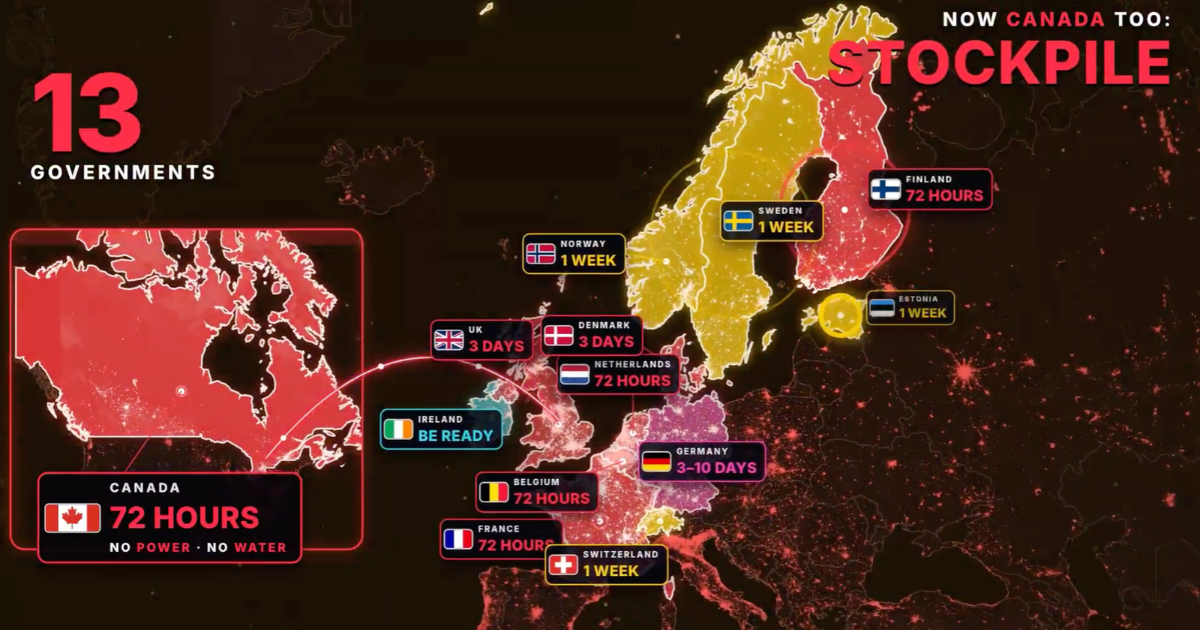
Canada is urging residents to keep enough essential supplies at home to manage for at least 72 hours during an emergency, including situations where electricity, running water or communication services become unavailable.
The guidance, published by the Canadian government through its emergency preparedness program, encourages households to plan for disruptions caused by severe weather, natural disasters and threats to critical infrastructure.
Canada’s official preparedness website also identifies cyberattacks among the technological and infrastructure hazards residents should understand.
The message is straightforward: households should be able to meet their basic needs for three days if essential services are interrupted.
What Canadians Are Being Asked to Prepare For
A prolonged power outage can affect much more than lighting.
Heating and air-conditioning systems may stop working. Internet and telephone connections can fail. Water supplies may be interrupted, and refrigerated food or medication can become unsafe.
Canadian officials recommend preparing an emergency kit containing drinking water, nonperishable food, flashlights, batteries, a portable radio, necessary medications, first-aid supplies, important documents and backup charging equipment.
The government also recommends a household emergency plan that accounts for children, older adults, pets and people who depend on electrically powered medical equipment.
The central recommendation is to remain self-sufficient for at least 72 hours, with additional supplies where possible.
Canada Is Not Alone
Similar preparedness recommendations are being promoted internationally.
The European Commission’s Preparedness Union Strategy calls for measures that would help residents remain self-sufficient for a minimum of 72 hours during major emergencies.
The strategy addresses a broad range of risks, including natural disasters, cyber incidents, disruptions to essential infrastructure and security threats.
The United Kingdom and several other European countries also encourage households to prepare emergency supplies. The recommended duration varies depending on national guidance and the type of crisis being considered.
What connects these policies is a growing emphasis on household preparedness as part of wider national emergency planning.
Why Are Governments Emphasizing Preparedness?
Modern communities depend on interconnected systems that deliver electricity, drinking water, transportation, communications and other essential services.
When one system fails, the effects can spread quickly.
An extended electricity outage, for example, can interrupt water pumping, electronic payment systems, refrigeration and telecommunications.
Extreme weather remains a major concern, but governments are also addressing technological disruptions and cybersecurity risks that could affect critical infrastructure.
The recommendations do not establish that a particular disaster is imminent. They are intended to help households cope with emergencies before normal services can be restored.
For residents, the practical advice is simple: know the risks in their area, prepare an emergency plan and keep essential supplies accessible.
Sources: Government of Canada – Get Prepared, Emergency Kits, Power Outages; European Commission – Preparedness Union Strategy.
By NJ RADAR Team