


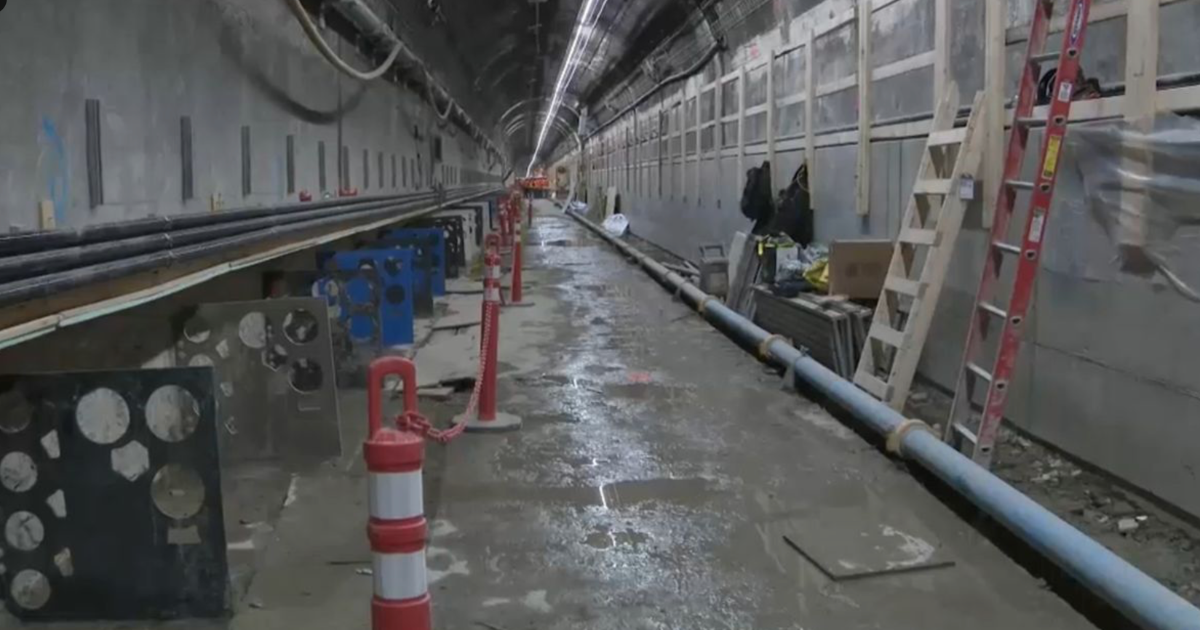
A major piece of the Northeast Corridor is back in operation. Amtrak has completed the rehabilitation of East River Tunnel Line 2, restoring a century-old rail connection used every day by Amtrak, Long Island Rail Road and NJ TRANSIT trains. For New Jersey commuters traveling through New York Penn Station, the milestone is part of a much larger effort to make one of the region’s busiest rail corridors more reliable.
NEW YORK — More than a decade after Superstorm Sandy sent saltwater rushing into rail tunnels beneath the East River, one of the most heavily damaged tubes has been rebuilt and returned to service.
Amtrak is marking the completion of the rehabilitation of East River Tunnel Line 2 on Monday at New York Penn Station. The tunnel underwent roughly a year of intensive reconstruction and is part of a rail system that handles more than 450 Amtrak, Long Island Rail Road and NJ TRANSIT trains each day.
For New Jersey riders, the project may be physically located beneath New York’s East River, but its importance extends well across the Hudson.
NJ TRANSIT trains depend on the complex network surrounding Penn Station, meaning disruptions or capacity problems in one part of that system can ripple across the entire region.
Damage That Lasted Long After Sandy
The East River Tunnel system dates back more than a century. Two of its four tubes were severely damaged when Superstorm Sandy flooded them with saltwater in 2012.
The immediate floodwaters disappeared, but the damage did not.
Saltwater accelerated corrosion of concrete, steel, electrical equipment and other infrastructure inside the tunnels, eventually requiring something far more extensive than routine repairs. Amtrak launched a $1.6 billion rehabilitation program to completely renew the two Sandy-damaged tubes.
Instead of simply repairing individual damaged components, crews essentially rebuilt Line 2 from the inside out.
During the project, workers removed old track, ballast, electrical systems and thousands of feet of concrete bench walls that run along the sides of the tunnel. New track, power and communications infrastructure, drainage systems, fire-safety equipment and other components were then installed.
According to Amtrak, crews removed approximately 24,000 linear feet of running rail, 12,000 feet of third rail, 8,100 tons of ballast and 8,000 railroad ties during the initial reconstruction work.
Why New Jersey Riders Should Care
At first glance, an East River tunnel may sound like a New York story.
It isn’t only a New York story.
New York Penn Station sits at the center of the Northeast Corridor, and NJ TRANSIT is one of the major rail operators using the East River Tunnel system. Amtrak describes the tunnels as critical infrastructure for Amtrak, LIRR and NJ TRANSIT.
Restoring Line 2 gives the system back an extensively modernized tunnel before construction moves to the next damaged tube.
That matters in a region where commuters know how quickly a signal failure, power problem or track issue around Penn Station can turn into delays extending far beyond Manhattan.
The rehabilitation is intended to improve safety, reliability and resilience and extend the useful life of the infrastructure for generations.
But the Work Is Not Finished
The reopening of Line 2 is a major milestone, but it does not mark the end of the East River Tunnel project.
The second Sandy-damaged tube, Line 1, is scheduled to close later this fall for a similar comprehensive rehabilitation. Amtrak says the entire East River Tunnel rehabilitation project remains on track for completion by the end of 2027.
The strategy has been to close one tube at a time while keeping the other tunnels operating, allowing Amtrak, LIRR and NJ TRANSIT to maintain service through one of the busiest passenger rail corridors in the country.
That means passengers should not interpret Monday’s celebration as the end of construction-related challenges around Penn Station. Another major phase is still ahead.
A Tunnel Built for Another Century
There is something remarkable about the scale of the project.
Infrastructure built in the early 20th century, flooded by one of the most destructive storms in the region’s modern history, is now being reconstructed to carry trains well into the 21st century.
Amtrak says the renewed tunnels are being designed to serve passengers for another 100 years or more.
For NJ TRANSIT riders, Monday’s reopening may happen out of sight, deep beneath the East River.
But in a rail network as interconnected as the New York–New Jersey region, what happens underground on one side of Penn Station can ultimately determine how smoothly thousands of commuters get home on the other.
Source: ABC7NY / Amtrak; X post: ABC7NY
By NJ RADAR Team