


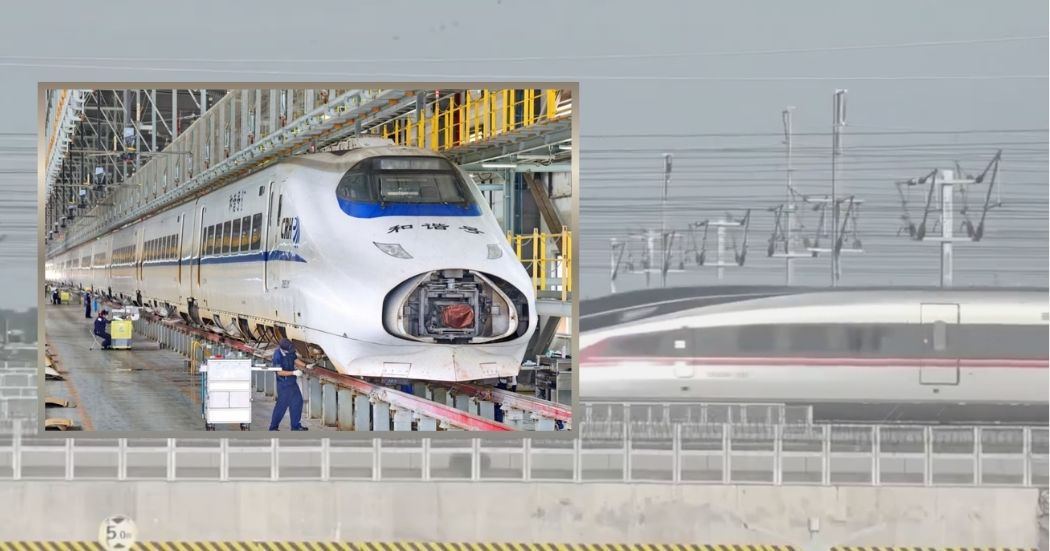
CHINA — A Chinese experimental maglev vehicle has reached 800 km/h, or about 497 mph, in just 5.3 seconds during a high-speed test — a performance that puts it close to the cruising speed of a passenger jet.
The test marks another major step in China’s rapidly advancing magnetic-levitation technology.
Unlike conventional trains, maglev systems use magnetic forces to lift and propel vehicles above the track, dramatically reducing friction and allowing for extremely high speeds.
800 km/h in Seconds
The experimental vehicle reportedly accelerated to 800 km/h in only 5.3 seconds on a specialized test track.
At that speed, the vehicle is already approaching the cruising range of many commercial aircraft, although the test should not be confused with a normal passenger train operating at 800 km/h.
The vehicle used for the record was an experimental maglev test platform, designed to study ultra-high-speed electromagnetic propulsion rather than transport passengers in regular service.
Why Maglev Technology Matters
Maglev trains have long been viewed as one possible bridge between traditional high-speed rail and air travel.
Because the vehicles do not rely on conventional wheel-to-rail contact at high speeds, engineers can reduce mechanical friction while testing speeds far beyond those reached by most existing passenger rail systems.
China has invested heavily in high-speed rail and magnetic-levitation research, and tests like this are aimed at exploring whether future ground transportation could dramatically reduce travel times between major cities.
Not Your Average Train Ride — Yet
For now, passengers should not expect to board an 800 km/h train anytime soon.
The record was achieved under controlled experimental conditions, and turning such speeds into a safe, comfortable and commercially viable transportation system would require extensive infrastructure, testing and safety development.
Still, reaching 800 km/h in 5.3 seconds offers a striking glimpse of what the next generation of ground transportation could eventually look like.
At nearly passenger-jet speed — without ever leaving the ground — maglev technology is pushing the definition of a “train” into entirely new territory.
Sources: NEXTA via X (Twitter); Clash Report via X (Twitter)
By NJ RADAR Team