


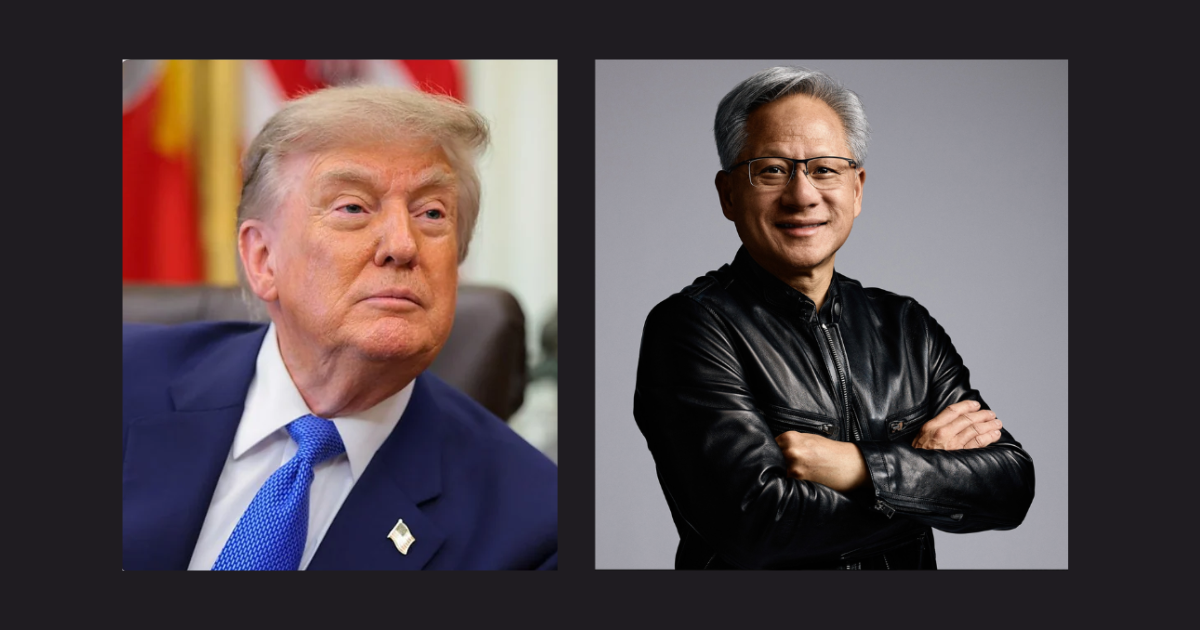
The Nvidia cofounder is back at the helm of the AI chip giant less than two weeks after his resignation, following consultations between the company’s board and senior U.S. government officials.
WASHINGTON, D.C. — November 23, 2026 — President Donald Trump has welcomed the return of Jensen Huang as chief executive of Nvidia, saying the U.S. government provided assurances that his reinstatement would not pose a threat to national security. The announcement ends an extraordinary leadership crisis at one of the world’s most influential technology companies.
Nvidia confirmed Monday that its board of directors had unanimously voted to reinstate Huang as president, CEO and board member, effective immediately.
The decision came less than two weeks after Huang resigned amid revelations about extramarital relationships, including one involving a Chinese businesswoman suspected by U.S. intelligence officials of having connections to China’s intelligence services.
Trump, who had publicly advocated Huang’s return, praised the board’s reversal.
“The NVIDIA Board of Directors has made the correct and proper decision to return Jensen Huang to the position of CEO,” Trump wrote on Truth Social.
He added that the federal government had no reason to believe Huang’s return presented a national security risk.
Speaking about the decision, Trump also said Nvidia’s board had requested assurances from the government concerning potential security threats and that those assurances had been provided.
A Dramatic Reversal at Nvidia
Huang resigned on November 12 after reports about his personal relationships raised questions about corporate conduct, sensitive technology and possible foreign intelligence activity.
Nvidia initially appeared determined to move forward without its longtime leader.
Chief Financial Officer Colette Kress assumed the role of interim CEO, while the board began considering permanent leadership options.
As recently as November 17, board chairman Harvey Jones publicly indicated that Nvidia did not intend to reinstate Huang.
But pressure for his return continued to build.
Trump repeatedly defended the executive, while several prominent technology entrepreneurs argued that Huang’s leadership was essential to Nvidia’s success and America’s position in the global artificial intelligence industry.
On Sunday, Trump publicly urged Nvidia’s directors to bring Huang back, describing his leadership as important to the company and the United States.
By Monday morning, the board had reversed its earlier position.
National Security Assurances From Washington
In its official announcement, Nvidia said directors held a series of discussions with Huang before reaching their decision.
The board also consulted senior U.S. government officials about potential national security concerns.
According to Nvidia, those consultations gave directors confidence that Huang’s return would not endanger national security.
Trump separately said Attorney General Todd Blanche had confirmed that the federal government had no evidence Huang engaged in unlawful conduct.
The assurances were particularly important because Nvidia produces advanced semiconductors used in artificial intelligence, data centers and other technologies with significant commercial and national security applications.
American officials have sought to restrict China’s access to certain advanced chips over concerns about their potential military applications.
The controversy surrounding Huang therefore extended beyond corporate leadership and raised questions about protecting sensitive American technology.
Allegations Involving a Suspected Chinese Intelligence Connection
The leadership crisis followed reports about Huang’s relationship with Alice Huang, a Chinese businesswoman whom U.S. officials suspect may have connections to China’s intelligence services.
The two are not related.
The New York Times reported that Alice Huang had maintained contact with an official from China’s principal intelligence agency during the period of her relationship with the Nvidia executive.
The allegations intensified scrutiny of whether Huang had been targeted by a foreign intelligence operation and whether sensitive corporate or government information could have been compromised.
No public finding has established that Jensen Huang knowingly participated in espionage.
Nvidia has formed an independent board committee to investigate the circumstances surrounding the reports. The company emphasized Monday that the investigation will continue despite Huang’s reinstatement.
Huang has agreed to cooperate with the inquiry.
Nvidia Strengthens Its Security Oversight
Alongside Huang’s return, Nvidia announced additional measures intended to strengthen national security and export compliance.
The company has established a National Security and Export Control Committee composed entirely of independent directors.
The committee will oversee risks involving international trade, sensitive technologies and compliance with U.S. export restrictions.
Nvidia also plans to appoint a chief compliance officer responsible for monitoring regulatory compliance throughout the company.
These measures come as federal authorities continue examining questions involving advanced semiconductor exports and potential foreign intelligence activity.
Trump urged Nvidia to continue investigating compliance with American export controls, emphasizing the company’s responsibility to protect U.S. national security.
Wall Street Welcomes Huang’s Return
Investors responded enthusiastically to the announcement.
Nvidia shares surged by roughly 30% in early Monday trading, reflecting renewed confidence in the leadership of the executive who helped transform the company into a dominant force in artificial intelligence.
Huang cofounded Nvidia in 1993 and guided its development from a graphics chip manufacturer into one of the world’s most valuable technology companies.
Its processors now power many of the advanced artificial intelligence systems used by technology companies, research institutions and governments.
The company’s importance has grown as competition intensifies among the United States, China and other countries seeking leadership in AI development.
Huang’s departure had created uncertainty about Nvidia’s direction at a critical moment for the industry.
His return removes one immediate leadership concern, although the investigations and regulatory questions remain unresolved.
Trump Faces Questions Over His Support
The president’s involvement has also attracted scrutiny from lawmakers.
Trump has described Huang as a valuable American technology leader and has argued that his continued leadership benefits the national economy.
However, some members of Congress have questioned the basis for the government’s national security assurances.
Republican Senator John Cornyn publicly challenged the conclusion that Huang’s return posed no security risk, asking what evidence supported that assessment.
Democratic lawmakers have also sought information about the administration’s knowledge of the controversy and its handling of semiconductor export restrictions.
The debate reflects broader concerns about the relationship between major technology companies, government officials and national security policy.
A Second Chance Under Intense Scrutiny
In a statement announcing his return, Huang expressed gratitude to Nvidia’s board, employees, shareholders and supporters.
He also thanked his family and acknowledged the responsibility involved in returning to the company’s leadership.
Board chairman Harvey Jones said directors believed Huang remained the right person to lead Nvidia and that his reinstatement served the interests of employees, customers and shareholders.
The decision represents an extraordinary comeback for a technology executive whose company has become central to the global AI economy.
Yet the controversy is far from over.
Nvidia’s independent investigation will continue, federal inquiries remain active, and lawmakers are pressing for further answers about national security and export controls.
For now, Huang has regained control of the company he helped create, with the backing of President Trump and the unanimous support of Nvidia’s board.
His next challenge will be restoring confidence while navigating the increasingly complicated intersection of artificial intelligence, corporate leadership and U.S.-China relations.
Sources: Nvidia Corporation, official press release, November 23, 2026; Reuters, November 23, 2026; Associated Press, November 17, 2026; TechCrunch, November 23, 2026; The Washington Post, November 23, 2026.
By NJ RADAR Team