


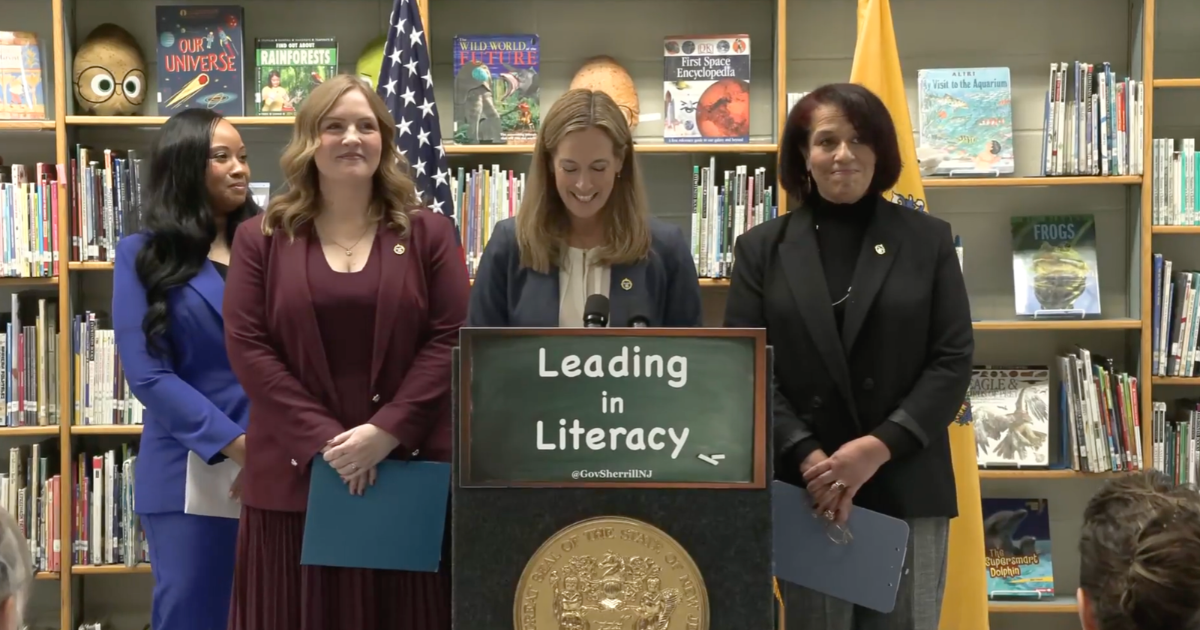
The governor’s latest education initiative puts reading skills in the spotlight as New Jersey works to improve early literacy, identify struggling students, and strengthen classroom instruction.
NORTH BRUNSWICK, NJ — November 23, 2026 — New Jersey Governor Mikie Sherrill signed an executive order Monday aimed at improving student literacy across the state, placing renewed attention on one of the most important challenges facing public education: ensuring that children develop strong reading and comprehension skills during their early school years.
Sherrill announced the signing through her official social media account, inviting residents to watch the event live.
“Join me as I sign an Executive Order to strengthen student literacy,” the governor wrote.
The signing took place in North Brunswick and represents another step in the administration’s effort to improve educational outcomes for New Jersey students.
The announcement comes as schools across the state continue implementing early reading assessments and evidence-based literacy programs designed to identify learning difficulties before they become more serious.
Reading Skills at the Center of Education Reform
Reading is essential to nearly every subject taught in school. Students who struggle to understand written material often encounter difficulties in mathematics, science, history, and other academic areas.
Strong reading skills are particularly important during the earliest grades, when children are developing the foundations for future learning.
New Jersey has already taken steps to strengthen early literacy through legislation requiring reading assessments for students from kindergarten through third grade.
Under the state’s existing literacy framework, schools are required to screen young students regularly to identify reading difficulties and determine where additional support may be necessary.
The assessments help teachers recognize children who need targeted instruction, while providing parents with information about their children’s progress.
Sherrill’s new executive order adds to the state’s ongoing emphasis on literacy as a central education priority.
Schools Already Expanding Early Reading Assessments
New Jersey’s current literacy requirements call for students in kindergarten through third grade to undergo universal reading screening three times during the school year.
The assessments are intended to identify students who may be at risk of falling behind and help schools provide appropriate instructional support.
For the 2026–2027 school year, districts must submit screening data to the New Jersey Department of Education during three reporting periods.
The first reporting deadline was November 13, 2026. Additional deadlines are scheduled for February 12 and July 2, 2027.
Schools must also communicate screening results to parents, giving families an opportunity to understand their children’s progress and work with educators when additional help is needed.
The state’s literacy framework emphasizes evidence-based instructional practices and the importance of early intervention.
State Investment in Literacy Education
Earlier this year, the Sherrill administration announced $3.95 million in available grant funding to support literacy education throughout New Jersey.
The funding was intended to help schools strengthen reading instruction and expand resources for students who need additional support.
The state’s fiscal year 2027 budget also included $15 million for high-impact tutoring, covering both literacy and mathematics.
That investment was designed to reach approximately 13,500 additional students across nearly 100 more school districts.
High-impact tutoring typically involves regular, structured instruction delivered individually or in small groups, allowing educators to concentrate on students’ specific learning needs.
These investments form part of a broader strategy to address academic achievement gaps and help students recover skills they may not have fully developed.
What the New Order Means for Schools
The executive order signals that improving student reading outcomes remains a priority for the governor’s administration.
Its significance will ultimately depend on how the state translates that commitment into classroom practices, teacher support, student assessments, and additional resources.
New Jersey schools already operate under literacy screening requirements, but identifying a struggling reader is only the first step.
Effective intervention also requires trained educators, appropriate instructional materials, and sufficient time to work with students who need additional assistance.
The full provisions of Monday’s executive order were not yet available in the official materials reviewed at the time of publication, including any new implementation deadlines, funding commitments, or specific requirements for school districts.
Those details will be important in determining how the order changes existing education policies.
A Statewide Challenge
New Jersey consistently places a high priority on public education, yet differences in academic achievement remain a concern across school districts.
Students enter classrooms with varying levels of preparation, language experience, and access to educational resources.
For children learning English as an additional language, reading development may require instructional approaches that address both language acquisition and academic comprehension.
Other students may need specialized support for reading disabilities or difficulties with decoding, vocabulary, and fluency.
Early assessment can help schools recognize these needs, but meaningful progress depends on the quality and consistency of instruction that follows.
Sherrill’s announcement brings renewed attention to the responsibility of state and local education officials to ensure that students receive the support they need.
As New Jersey moves forward with its literacy initiatives, parents, teachers, and school administrators will be watching how the latest executive order is implemented and whether it leads to measurable improvements in student reading achievement.
Sources: Governor Mikie Sherrill, official X announcement, November 23, 2026; New Jersey Department of Education, Universal Literacy Screening Guidance; NJDOE Literacy Grant Announcement, April 6, 2026; New Jersey Governor’s Office, Fiscal Year 2027 Budget.
By NJ RADAR Team