


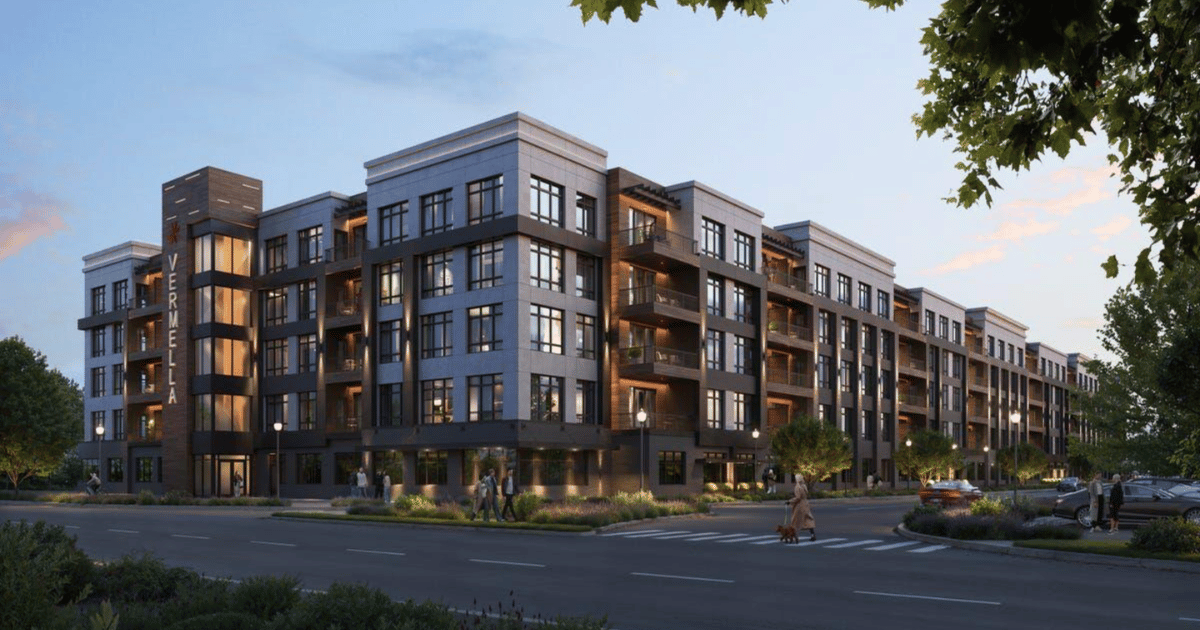
Thousands of new homes, a $1 billion redevelopment near Jersey City Medical Center, and the transformation of former BMW property in Bergen County are reshaping communities across northern New Jersey.
NEW JERSEY — November 23, 2026 — From a former BMW corporate campus in Bergen County to the rapidly changing skyline of Jersey City, northern New Jersey is experiencing another wave of major residential development. Thousands of new apartments and townhomes are planned, alongside public parks, shopping areas, and new medical facilities.
Two projects are drawing particular attention: a 370-home development in Woodcliff Lake and a $1 billion transformation of land surrounding Jersey City Medical Center, where more than 2,200 residential units are planned.
Meanwhile, a newly completed residential tower in Jersey City’s Journal Square neighborhood has secured $270 million in refinancing, illustrating the scale of private investment already flowing into the region’s housing market.
Together, the developments reflect a growing effort to make better use of existing commercial properties and urban land as New Jersey continues to confront a shortage of housing.
Woodcliff Lake: Former BMW Property Becomes a New Residential Community
One of Bergen County’s most significant residential projects is taking shape in Woodcliff Lake, where developers have begun transforming part of BMW’s former North American headquarters campus into a mixed-use residential community.
Known as Orchard House by Vermella, the development occupies approximately 21 acres at 300 Chestnut Ridge Road.
Russo Development and Woodmont Properties broke ground on the project in October 2026, following a redevelopment agreement that also helped keep BMW’s North American headquarters in Woodcliff Lake.
The project represents an unusual solution to two challenges facing suburban communities: finding new uses for aging corporate properties while preserving major employers and creating additional housing.
Orchard House will include 370 residences, consisting of 297 apartments, 47 townhomes, and 26 supportive housing units providing 40 beds for people with special needs.
A total of 74 residences are designated as affordable housing, helping Woodcliff Lake meet its housing obligations while expanding options for residents with different incomes and needs.
The development will also feature more than 9,000 square feet of retail space, with potential tenants including restaurants, service businesses, and medical offices.
About half of the property is expected to remain open space, including a public park and a walking trail around the development.
Planned residential amenities include fitness facilities, rooftop swimming pools, lounges, and landscaped terraces.
The project’s name recalls the site’s earlier history as part of the Tice Farms apple orchard, long before it became associated with BMW.
For Woodcliff Lake, the development offers an opportunity to introduce new housing while maintaining its identity as an established suburban community.
The agreement involving BMW adds another dimension. Rather than losing a major corporate presence, the borough has found a way to reuse part of the company’s former property while retaining the automaker’s headquarters in town.
Jersey City: A $1 Billion Transformation Around a Major Hospital
While Woodcliff Lake is redeveloping a former corporate property, Jersey City is preparing for a substantially larger transformation.
RWJBarnabas Health announced a $1 billion plan on November 16 to redevelop approximately 5.5 acres surrounding Jersey City Medical Center.
The project, approved by the Jersey City Redevelopment Agency, will bring more than 2,200 residential units, retail space, restaurants, public parks, and land reserved for future medical facilities.
The healthcare organization is partnering with Related Companies and Kushner Real Estate Group, known as KRE, to carry out the development.
The first major phase will include three residential towers containing approximately 1,700 apartments.
Two parking garages will provide a combined 872 spaces, while street-level retail and dining establishments will create new commercial activity around the hospital campus.
The plans also include new parks and publicly accessible outdoor spaces.
A second phase will add another residential tower with 515 units, including workforce housing offered at below-market rates.
That phase also includes a six-story parking garage and reserves space for a possible 100,000-square-foot outpatient medical building.
RWJBarnabas Health has also begun developing a separate nine-story parking garage to serve the hospital and the surrounding neighborhood.
The entire redevelopment is expected to proceed in stages over approximately a decade.
Housing Development With a Healthcare Connection
The Jersey City project differs from conventional residential construction because it is directly connected to the future of a major regional hospital.
RWJBarnabas Health says the redevelopment will create financial resources that can be reinvested in healthcare services while preserving opportunities for future medical expansion.
Jersey City Medical Center serves patients from across Hudson County, and its leadership anticipates growing demand as the surrounding population increases.
The planned residential buildings will rise near Liberty Harbor and Paulus Hook, areas with access to the Hudson Bergen Light Rail, PATH trains, and other transportation connections.
The proposal reflects a broader shift in urban development, in which hospitals and other large institutions seek to integrate housing, public spaces, and commercial activity into their surrounding neighborhoods.
For Jersey City, the project also raises questions familiar to rapidly growing communities: how new housing will affect traffic, parking, school enrollment, public services, and affordability.
The development’s workforce housing component could help address some affordability concerns, although the number of below-market units in that portion of the project has not yet been specified publicly.
Journal Square: $270 Million Refinancing for The Greyson
Another major real estate transaction was announced in Jersey City last week, although it involves financing rather than a newly proposed development.
Nasser Freres, the developer of The Greyson, secured $270 million in refinancing for its residential tower at 25 Cottage Street in Journal Square.
The 622-unit building opened to residents earlier this year and represents another substantial addition to the neighborhood’s expanding rental market.
The refinancing was arranged by Walker & Dunlop through a bridge loan provided by affiliates of Apollo.
The transaction replaces existing financing and supports the property’s transition from construction to long-term operations.
The Greyson includes apartments ranging from studios to three-bedroom residences, along with approximately 35,000 square feet of commercial space.
Located within walking distance of the Journal Square Transportation Center, the property provides residents with convenient PATH access to Manhattan.
Its development reflects the continuing transformation of Journal Square from a traditional commercial district into a high-density residential neighborhood.
The $270 million transaction is significant as a financing agreement, but it should not be confused with a new $270 million construction project.
More Homes, but How Affordable Will They Be?
The three developments illustrate different approaches to housing growth in New Jersey.
Woodcliff Lake is turning former corporate land into a residential community that combines market-rate housing, affordable units, supportive housing, and public space.
Jersey City Medical Center’s redevelopment will introduce more than 2,200 apartments while creating opportunities for future healthcare expansion.
The Greyson demonstrates the growing investor interest in established residential buildings in transit-connected neighborhoods.
But the developments also raise an important question: Will the construction of thousands of new apartments make housing more accessible to New Jersey residents?
Although additional housing can help address shortages, the benefits depend on factors such as rental prices, household incomes, transportation access, and the number of affordable units included in each project.
Luxury apartments may attract investors and higher-income renters, while workforce and affordable housing programs serve a different segment of the population.
In Woodcliff Lake, the 74 designated affordable residences provide a clearly identified component of the development.
In Jersey City, the planned workforce housing offers another approach, but more details will be needed to determine how many households will qualify.
The distinction matters in a state where housing costs remain a major concern for families, young professionals, and older residents.
New Jersey’s Changing Landscape
The developments in Woodcliff Lake and Jersey City show how dramatically New Jersey’s built environment is changing.
Former office properties are being converted into residential neighborhoods. Hospital campuses are being integrated into mixed-use districts. Older urban centers are attracting large investments in residential towers.
For developers and local governments, these projects offer opportunities to generate economic activity, create housing, and make better use of valuable land.
For residents, the results will be measured by more than the number of buildings completed.
They will be judged by whether communities gain affordable places to live, accessible public spaces, reliable infrastructure, and services that keep pace with population growth.
As construction progresses across northern New Jersey, the challenge will be ensuring that the region’s expanding skyline is matched by opportunities for the people who already call it home.
Sources: Real Estate NJ, October 9 and November 17, 20 and 23, 2026; RWJBarnabas Health, November 16, 2026; Jersey Digs, October 14 and November 18, 2026; Walker & Dunlop, November 18, 2026; New Jersey Business News (BINJE), November 17, 2026.
By NJ RADAR Team