


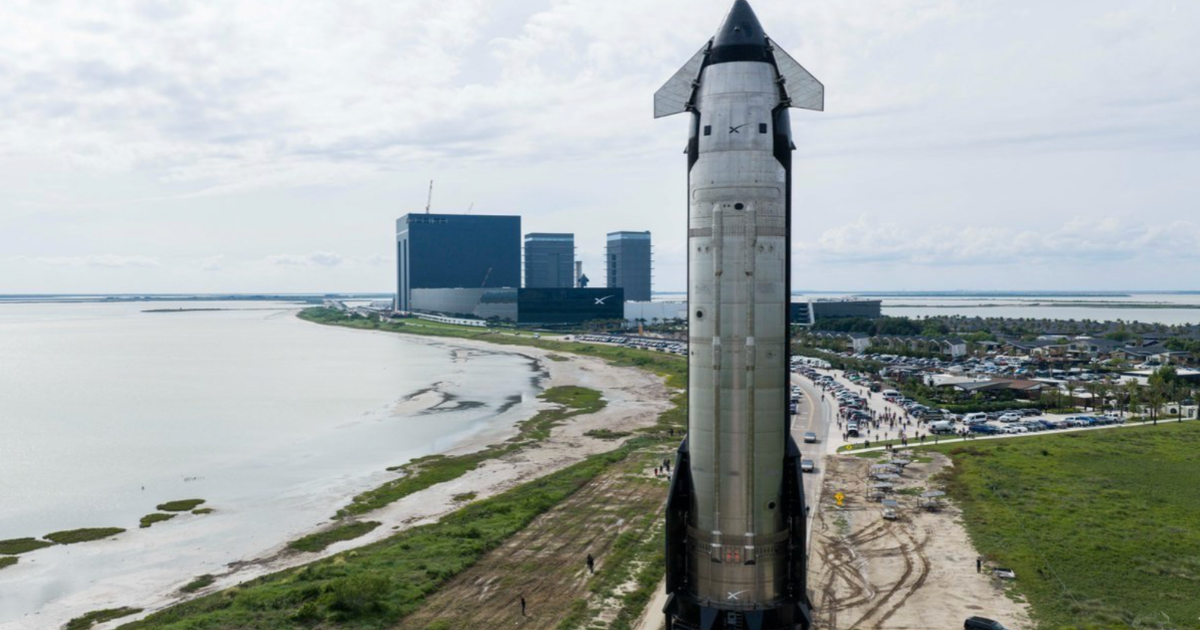
STARBASE, Texas — November 12, 2026 — SpaceX has moved its Starship Ship 42 spacecraft toward the launch pad at Starbase, Texas, as the company prepares for an ambitious test flight that could mark a major milestone in reusable rocket technology.
The movement of Ship 42 comes ahead of Starship Flight 15, currently targeted for Friday, November 13. Unlike previous missions, this flight is designed to attempt the recovery of both major sections of the rocket — the Super Heavy booster and the Starship upper stage.
If successful, SpaceX would achieve the first complete recovery of an orbital-class rocket system, taking a significant step toward its goal of making space transportation fully reusable.
Final Preparations at Starbase
Ship 42 is the upper-stage spacecraft assigned to Flight 15. It will be paired with Super Heavy Booster 22, which was transported to the launch site on November 10.
Before reaching this stage, both vehicles underwent extensive testing, including engine firing tests intended to verify the performance of their propulsion systems.
Booster 22 also underwent a special test involving the launch tower’s mechanical arms, commonly called chopsticks. These enormous arms are designed to catch returning rocket stages rather than allowing them to land on conventional landing platforms.
With both vehicles moving through their final preparations, SpaceX is targeting a launch window opening at 5:45 p.m. Eastern Time on Friday, November 13, subject to regulatory approval and operational readiness.
A Mission With Two Landing Attempts
The most ambitious part of Flight 15 will come after liftoff.
Approximately six and a half minutes into the mission, the Super Heavy booster is expected to return toward Starbase, where SpaceX will attempt to catch it using the launch tower’s mechanical arms.
The Starship upper stage will face a much longer journey.
Ship 42 is expected to enter Earth orbit and complete approximately 14 revolutions around the planet over roughly 22 hours. During that time, it is scheduled to deploy 26 next-generation Starlink V3 satellites.
After completing its orbital mission, the spacecraft will attempt to return to Starbase for its own catch by the launch tower.
SpaceX has previously demonstrated the recovery of Super Heavy boosters, but catching the Starship upper stage after an orbital mission would be a new achievement.
The company can also direct a vehicle toward a controlled ocean landing if conditions do not permit a safe tower catch.
Why Reusing the Entire Rocket Matters
SpaceX has already demonstrated the commercial value of reusable rockets through its Falcon 9 program, which routinely lands and reuses first-stage boosters.
Starship is designed to take that approach further.
Its long-term goal is to make both the booster and spacecraft reusable, reducing the need to manufacture major new components for every mission.
Recovering both stages could eventually lower launch costs, shorten the time between flights and support more frequent missions carrying satellites, cargo and people.
Starship is also central to SpaceX’s longer-term plans for lunar missions and eventual human exploration of Mars.
NASA has selected a modified version of Starship as a lunar landing system for its Artemis program, making the rocket’s continued development important beyond SpaceX’s commercial operations.
What Comes After Flight 15?
The upcoming flight follows Starship Flight 14 in September, during which the vehicle reached orbit and advanced the company’s testing program.
Flight 15 will test a more demanding mission profile involving satellite deployment, extended orbital operations and the planned return of both stages.
Even if one or both recovery attempts fail, engineers are expected to gather valuable data about the spacecraft’s heat shield, guidance systems, engines and ability to survive reentry.
For now, the movement of Ship 42 to the launch site represents another visible step toward a test that could help determine how quickly SpaceX can advance from experimental Starship flights to routine, fully reusable operations.
Sources: SpaceX – Starship Flight 15 mission information; Space.com, November 10–12, 2026; Next Spaceflight, Starship Flight 15 tracking.
By NJ RADAR Team
[…] SpaceX Moves Starship Ship 42 to Launch Pad Ahead of Historic Flight Test […]