


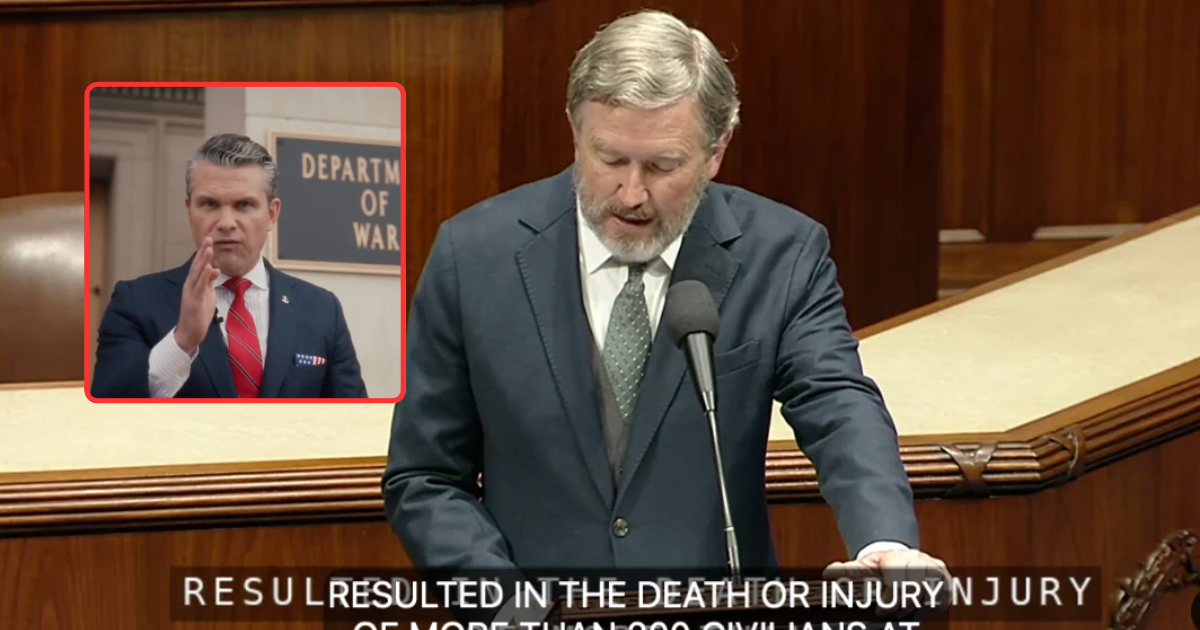
WASHINGTON, D.C. — November 9, 2026 — Republican Congressman Thomas Massie of Kentucky introduced eight articles of impeachment against Defense Secretary Pete Hegseth on Monday, accusing him of violating federal law, exceeding his constitutional authority and carrying out unauthorized military operations.
The move sets up a possible House vote as early as Wednesday, November 11, just days after Republicans suffered major losses in the midterm elections.
Massie, a frequent critic of President Donald Trump’s foreign policy, argues that Hegseth continued military operations against Iran without congressional authorization, despite legal restrictions on the president’s ability to wage war.
The Kentucky congressman first introduced the impeachment resolution in September, but House Republican leaders adjourned before a vote could take place. His decision to reintroduce the measure Monday forces lawmakers to address the issue within two legislative days.
At the center of the dispute is the War Powers Resolution of 1973, which limits the executive branch’s authority to conduct military operations without congressional approval.
Massie claims Hegseth violated several provisions of that law by continuing hostilities in Iran beyond the permitted period and disregarding congressional efforts to end the conflict.
“By engaging in hostilities in Iran for more than 90 days without congressional authorization, Secretary Hegseth is breaking the law and must be held accountable,” Massie said in a statement released by his office.
Eight Charges Against Hegseth
Three of the eight impeachment articles focus directly on the war with Iran. The remaining charges address other military operations and alleged abuses of power.
Massie accuses Hegseth of failing to comply with laws intended to minimize civilian casualties, including those relevant to a deadly strike on an Iranian school earlier this year.
Another article concerns U.S. military strikes on vessels suspected of transporting drugs. Massie alleges that the operations involved unlawful killings and violations of established legal protections.
The resolution also challenges the U.S. military operation that resulted in the capture of Venezuelan leader Nicolás Maduro and his wife, Cilia Flores, arguing that the action lacked proper legal authorization.
Additional accusations involve military operations in Yemen and alleged retaliation against Democratic Senator Mark Kelly of Arizona, who publicly reminded military personnel of their obligation to refuse unlawful orders.
These are allegations contained in Massie’s impeachment resolution, not findings of guilt by Congress or a court.
Hegseth Rejects the Allegations
Hegseth has dismissed the impeachment effort as politically motivated and defended the administration’s military operations.
Speaking to reporters Monday, he described the effort as political “noise” and said he was not concerned about the resolution.
President Trump has continued to support Hegseth, defending his performance and the administration’s military strategy.
House Speaker Mike Johnson has urged Republicans to oppose impeachment, arguing that removing the defense secretary during ongoing military operations would be inappropriate.
The dispute has also exposed divisions within the Republican Party, particularly over the war in Iran and Congress’s authority to approve military action.
Democrats Signal Support
House Democratic Leader Hakeem Jeffries has indicated that he will support the impeachment effort.
Speaking on ABC’s This Week on Sunday, Jeffries said his vote would be a “hard yes.”
That position could give Massie’s resolution considerable Democratic support, although Republican votes would still be needed for it to pass the currently Republican-controlled House.
The impeachment push comes amid growing public dissatisfaction with the Iran war, which has contributed to economic uncertainty, higher energy prices and political pressure on the Trump administration.
Massie lost his Republican primary earlier this year to a Trump-backed challenger and will leave Congress when his current term expires in January.
Despite his approaching departure, he has continued to challenge the administration over military intervention and executive authority.
What Happens Next?
House Republican leaders must respond to Massie’s resolution within two legislative days. They could allow a vote on impeachment, move to dismiss the proposal or refer it to a committee.
If a majority of the Hous votes to impeach Hegseth, the case would move to the Senate, where a two-thirds majority would be required for conviction and removal from office.
Impeachment itself would not automatically remove him.
Only two Cabinet secretaries have previously been impeached in American history: Secretary of War William Belknap in 1876 and Homeland Security Secretary Alejandro Mayorkas in 2024. Neither was removed from office through a Senate conviction.
For now, Hegseth remains in office, and the House is preparing for a confrontation that could put lawmakers from both parties on record over the Pentagon’s conduct of the Iran war.
Schumer Calls for Hegseth’s Removal
Senate Democratic Leader Chuck Schumer joined the growing calls for Defense Secretary Pete Hegseth’s removal on Monday, arguing that his handling of the war in Iran warrants an impeachment trial.
“The Senate needs to put Pete Hegseth on trial so we can remove him for his catastrophic failure in Iran,” Schumer said in remarks shared by C-SPAN.
His comments came as Republican Congressman Thomas Massie introduced eight articles of impeachment against Hegseth, setting up a possible House vote later this week.
Sources: Office of Rep. Thomas Massie, November 9, 2026; Associated Press, November 9, 2026; CBS News, November 9, 2026; Fox News, November 9, 2026; Axios, November 9, 2026.
By NJ RADAR Team
[…] Republican Congressman Moves to Impeach Pete Hegseth Over Iran War […]