


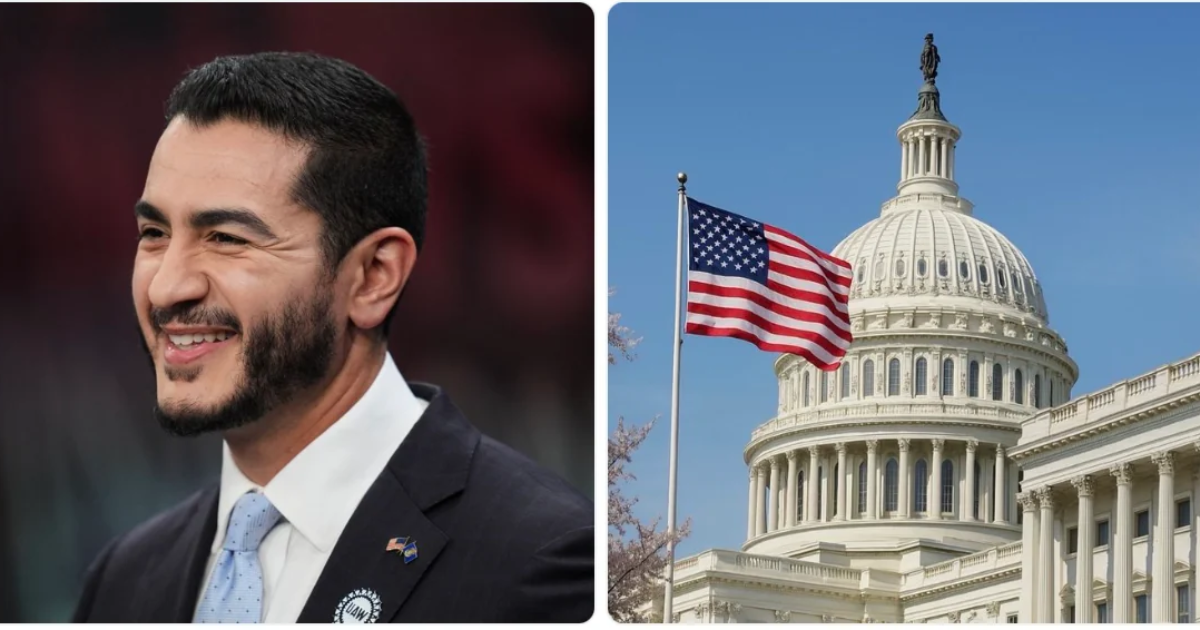
The Democratic physician defeats Republican Mike Rogers in Michigan, marking a historic milestone for Muslim Americans and a major victory in the 2026 midterm elections.
DETROIT, MICHIGAN — November 4, 2026 — Democrat Abdul El-Sayed has made history by becoming the first Muslim elected to the United States Senate, defeating Republican Mike Rogers in Michigan’s closely watched Senate race.
The Associated Press declared El-Sayed the winner at 2:27 a.m. Wednesday, confirming a landmark victory in one of the most competitive contests of the 2026 midterm elections.
El-Sayed, 42, a physician and former Detroit public health director, will succeed retiring Democratic Senator Gary Peters when the new Congress begins in January 2027.
His election marks the first time in American history that a Muslim has been elected to the U.S. Senate.
A Historic Victory in Michigan
El-Sayed’s victory carries significance beyond Michigan.
Although Muslim Americans have previously served in the U.S. House of Representatives, none had been elected to the Senate before November 2026.
The son of Egyptian immigrants, El-Sayed was born and raised in Michigan. He studied medicine and public health before becoming executive director of the Detroit Health Department.
He entered politics in 2018, running unsuccessfully for Michigan governor in the Democratic primary.
Eight years later, he has won one of the nation’s most prominent elected offices.
According to preliminary election results reported early Wednesday, El-Sayed received approximately 52% of the vote, compared with about 46% for Rogers.
Final totals remain subject to completion of ballot counting and certification.
“Michigan, We Did It!”
El-Sayed celebrated the victory with supporters at an election-night gathering in Detroit early Wednesday morning.
“Michigan, we did it!” he declared as the crowd cheered.
The atmosphere reflected the significance of a campaign that faced intense political opposition, national scrutiny, and repeated attacks involving the candidate’s Muslim identity.
El-Sayed thanked voters for giving him an opportunity to represent Michigan and emphasized the broad coalition that supported his campaign.
His victory also represents a breakthrough for progressive Democrats who argued that an economically focused, grassroots campaign could succeed in a competitive state.
A Campaign Focused on Healthcare and Economic Inequality
El-Sayed built his campaign around proposals to reduce healthcare costs, expand access to medical services, and limit the influence of corporate money in politics.
He strongly supported Medicare for All, a proposal to establish universal health coverage through a government-funded system.
He also advocated higher taxes on billionaires and policies intended to reduce financial pressure on working families.
His campaign attracted backing from prominent progressive politicians, including Senator Bernie Sanders.
Rogers, a former Republican congressman and FBI agent, received support from President Donald Trump and national Republican organizations.
The two candidates offered sharply different approaches to healthcare, taxation, government spending, and foreign policy.
Religious Identity Became a Major Campaign Issue
The campaign also became a national debate about religious identity and political representation.
El-Sayed faced accusations involving his Muslim faith and alleged connections to extremist organizations.
He repeatedly denied those allegations, and credible evidence supporting claims of extremist ties was not established.
Democratic leaders condemned several of the attacks as Islamophobic.
His criticism of U.S. military assistance to Israel and Israeli military operations in Gaza also became a prominent issue during the campaign.
Rogers criticized those positions and sought to portray El-Sayed as outside Michigan’s political mainstream.
El-Sayed, meanwhile, argued that the election should focus on healthcare, affordability, economic opportunity, and government accountability.
A Surprising Endorsement From a Former Democratic Rival
One of the campaign’s most unusual developments came shortly before Election Day.
Democratic Representative Haley Stevens, whom El-Sayed had defeated in the August Senate primary, publicly endorsed Republican Mike Rogers.
The endorsement triggered criticism from Michigan Democrats and created a political controversy during the final days of the campaign.
Despite the unexpected development, El-Sayed maintained his campaign and secured the statewide victory.
His election demonstrates that the Democratic primary’s divisions did not prevent him from winning the general election.
A Major Result in the Battle for the Senate
The Michigan race was particularly important because Democrats needed to defend the seat held by retiring Senator Gary Peters.
Republicans had hoped to capture the seat as part of their effort to maintain control of the U.S. Senate.
El-Sayed’s victory kept Michigan’s seat in Democratic hands and contributed to the party’s broader gains in the 2026 midterm elections.
His election also gives the Senate a new member with a background in medicine, public health, and progressive political organizing.
A Historic Night for Muslim American Representation
El-Sayed’s victory follows another historic election result in New Jersey, where Democratic surgeon and U.S. Army veteran Adam Hamawy became the first Muslim elected to Congress from that state.
While Hamawy will serve in the House of Representatives, El-Sayed will become the first Muslim to serve in the Senate.
Together, the victories mark an important moment in the history of Muslim American participation in national politics.
The United States elected its first Muslim member of Congress, Keith Ellison of Minnesota, in 2006.
Twenty years later, El-Sayed’s victory has extended Muslim American representation to the upper chamber of Congress for the first time.
A New Chapter in American Political History
El-Sayed’s election represents more than a change in party representation or the outcome of a single competitive Senate race.
It is a historic development in the political representation of a religious minority that has often faced discrimination and intense public scrutiny.
His victory also raises expectations about how his medical background, public health experience, and political priorities will shape his work in Washington.
When the new Congress convenes in January 2027, Michigan will be represented by the first Muslim ever elected to the U.S. Senate.
On November 4, 2026, Abdul El-Sayed made American political history, becoming the nation’s first Muslim senator-elect and opening a new chapter in the representation of Muslim Americans in Congress.
Sources: Associated Press – El-Sayed Wins Michigan Senate Race; Local 4 Detroit – Election Results; WKAR – Victory Speech and Election Report; WDIV – Victory Celebration Video.
By NJ RADAR Team