


From Japan and Turkey to Europe and Australia, emergency preparedness messages are appearing across different parts of the world. Are governments responding to growing global threats, or is there another explanation?
November 3, 2026 — Across several continents, governments and emergency management agencies are encouraging citizens to store food, water, medicine, and essential supplies, prepare emergency bags, and develop plans for surviving the first 72 hours of a major crisis.
Japan has issued an emergency preparedness appeal following the establishment of a new national disaster agency. The European Union has introduced new guidelines encouraging three days of self-sufficiency. The United Kingdom recently launched a national preparedness campaign, while Turkey has long recommended that households maintain emergency supplies.
Similar messages have circulated in Australia, although authorities there have denied claims that a new nationwide stockpiling warning was issued.
The announcements have generated questions on social media, particularly because they appear against a backdrop of military tensions, economic uncertainty, cyber threats, and growing concerns about critical infrastructure.
Why are so many governments discussing emergency preparedness at approximately the same time?
And does the apparent similarity between these messages indicate a shared concern about the future?
Japan: Prepare for at Least Three Days, Preferably a Week
On November 2, Japan officially launched its National Disaster Management Agency, creating a permanent government body responsible for coordinating disaster preparedness, emergency response, and recovery.
Goshi Hosono, the agency’s first chief, urged residents to review their emergency plans, secure furniture, identify evacuation locations, and maintain adequate supplies of drinking water, food, and other necessities.
The recommendation calls for at least three days of supplies, with one week considered preferable.
Hosono acknowledged that government services could face serious limitations during a disaster affecting large parts of the country.
Japan is particularly vulnerable to earthquakes, tsunamis, volcanic eruptions, and other natural hazards.
The government is preparing for scenarios including a possible major earthquake along the Nankai Trough, an offshore fault zone capable of producing catastrophic shaking and tsunamis.
The country’s experience with the devastating 2011 earthquake, tsunami, and Fukushima nuclear disaster also continues to influence national emergency planning.
Although the wording of the latest appeal prompted speculation about war, Japanese officials have identified disaster resilience as its primary purpose.
European Union: Citizens Should Be Self-Sufficient for 72 Hours
On November 3, the European Commission presented new emergency preparedness guidelines at the European Civil Protection Forum in Brussels.
European Commissioner Hadja Lahbib outlined recommendations intended to help households manage the first three days of a major emergency while public authorities organize assistance.
The guidelines address four main areas: maintaining essential supplies for 72 hours, teaching preparedness skills in schools, supporting people with disabilities, and improving public communication during crises.
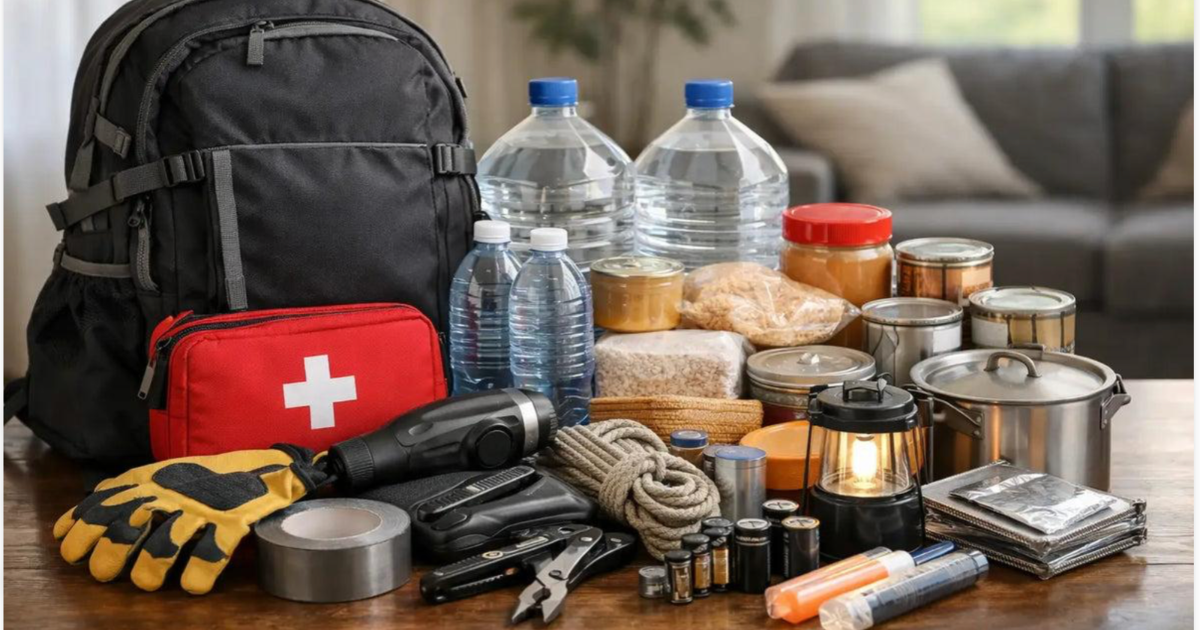
Residents are encouraged to prepare emergency bags containing important documents, medication, water, food, and other necessary items.
The guidelines build on the EU Preparedness Union Strategy introduced in March 2025.
Unlike Japan, where earthquakes are a major concern, the European Union identifies a broader range of possible threats.
These include severe weather, disruptions to energy supplies, cyberattacks, public health emergencies, and geopolitical conflicts.
European officials also recognize that a serious disruption in one sector can quickly affect others.
An electricity failure, for example, could interrupt telecommunications, transportation, electronic payments, refrigeration, and access to drinking water.
The new guidelines are preventive and non-binding. They do not constitute an announcement that a particular emergency is imminent.
United Kingdom: A Three-Year Campaign to Prepare Households
The United Kingdom launched its Be Ready campaign on October 22, encouraging households to maintain essential supplies for approximately 72 hours.
The government recommends keeping bottled water, non-perishable food, medication, flashlights, batteries, and other basic necessities available.
Officials have also urged residents to consider what they would do if electricity, water, mobile phone networks, or internet services stopped working.
The campaign is planned to continue over three years and includes cooperation with charities, emergency organizations, local governments, and community groups.
British officials have cited severe storms, flooding, and infrastructure disruptions as practical reasons for improving preparedness.
National security concerns, including cyberattacks and threats to critical infrastructure, also form part of the broader discussion.
The government’s position is that households able to manage their immediate needs can reduce pressure on emergency services, allowing responders to prioritize people requiring urgent assistance.
Turkey: Earthquake Preparedness Has Long Included a 72-Hour Emergency Bag
Turkey provides another example of a country recommending that citizens prepare essential supplies for three days.
The country’s Disaster and Emergency Management Authority, known as AFAD, advises households to keep emergency bags containing water, non-perishable food, first-aid supplies, medication, flashlights, batteries, hygiene products, and important documents.
The recommendation is particularly relevant because Turkey is located in a highly active seismic region.
Major earthquakes have repeatedly caused extensive damage, displaced populations, and overwhelmed local emergency services.
AFAD explains that rescuers may be unable to reach every affected household immediately following a major disaster.
Residents may therefore need to rely on their own supplies for several days.
However, Turkey’s 72-hour recommendation is an established disaster preparedness measure rather than evidence of a newly announced national emergency.
Australia: Viral Claims Have Created Confusion
Australia has also appeared in social media discussions about governments allegedly instructing citizens to stockpile emergency supplies.
However, an investigation published by Agence France-Presse on November 3 found that claims about a new nationwide Australian government emergency stockpiling warning were false.
Australia’s National Emergency Management Agency told AFP that the federal government had not issued such a request.
Australian authorities do encourage disaster preparedness, particularly during periods of elevated risks from bushfires, floods, cyclones, and severe storms.
Emergency guidance can vary between states and territories because the threats differ significantly across the country.
The distinction matters: longstanding disaster advice should not be presented as evidence of a sudden national warning about war or an undisclosed threat.
Why Does the Number 72 Keep Appearing?
The repeated recommendation of 72 hours is not accidental.
Three days is a widely used emergency planning period because the first hours after a major disaster are often the most difficult for both households and rescue organizations.
Roads may be blocked, electricity may fail, water systems may become unsafe, and communications networks may stop functioning.
Hospitals, firefighters, police, and emergency responders may need to prioritize life-threatening situations before routine assistance becomes available.
A household with adequate supplies can reduce its dependence on immediate outside assistance.
The 72-hour principle is also used in the United States, where the Federal Emergency Management Agency has long recommended maintaining emergency supplies for at least three days.
It is therefore an established international preparedness benchmark, not a newly invented warning.
What Is Changing in the Global Security Environment?
Although the recommendations have different origins, their growing visibility reflects a broader concern about the resilience of modern societies.
Several developments have made emergency preparedness an increasingly prominent public policy issue.
Geopolitical tensions: Armed conflicts and deteriorating international relations have increased concerns about the possibility of disruptions affecting energy supplies, transportation, and essential services.
Cybersecurity threats: Modern societies depend heavily on digital infrastructure. Cyberattacks affecting electricity systems, telecommunications, hospitals, banks, or transportation networks can create widespread disruption.
Extreme weather: Floods, wildfires, storms, heat waves, and other disasters can overwhelm emergency services and interrupt access to basic necessities.
Infrastructure dependence: Electricity, water, food distribution, communications, and financial systems are closely interconnected. Problems affecting one service can spread to others.
Emergency response limitations: Even well-resourced governments cannot guarantee immediate assistance to every household during a disaster affecting a large geographic area.
These challenges help explain why public preparedness has become a priority in countries with very different political systems, geographic conditions, and security environments.
Are Governments Coordinating Their Warnings?
The similar timing of several announcements has generated speculation that governments may be responding to intelligence about an undisclosed threat.
However, the available evidence does not establish that Japan, the European Union, Turkey, and Australia have issued coordinated emergency warnings about a single impending event.
The announcements also differ substantially.
Japan’s appeal accompanied the opening of a new national disaster agency.
The EU’s November guidelines implement a preparedness strategy adopted in 2025.
The United Kingdom introduced a planned public awareness campaign.
Turkey’s emergency bag recommendations have existed for years.
And Australia has specifically rejected claims that its government issued a new national stockpiling warning.
The timing of separate announcements may attract attention, but it does not establish a common hidden cause.
Is This Preparation for War?
The answer depends on the country and the official guidance involved.
In Europe, potential military conflicts, hostile-state activities, and disruptions to critical infrastructure are explicitly included in broader preparedness planning.
In Japan and Turkey, major earthquakes remain central concerns.
In Australia, extreme weather and other natural hazards are major reasons for household preparedness.
Some emergency preparations are useful across multiple scenarios. The same water supply, flashlight, battery-powered radio, or first-aid kit could prove valuable during a hurricane, earthquake, blackout, cyberattack, or armed conflict.
Therefore, an emergency preparedness campaign may address security risks without indicating that war is expected to begin.
There is currently no verified evidence that these announcements collectively signal an imminent global conflict.
A Bigger Question: How Much Responsibility Is Shifting to Citizens?
Beyond the debate over possible threats lies a broader question about the relationship between governments and their populations.
The message emerging from many preparedness campaigns is that citizens should be capable of meeting their basic needs during the first phase of a crisis.
That approach can improve community resilience and allow emergency services to concentrate on the most vulnerable people.
However, it also raises questions about households that cannot afford to purchase extra supplies or store significant quantities of food and water.
Older adults, people with disabilities, low-income families, and individuals who depend on electricity-powered medical equipment may face additional difficulties.
Effective disaster planning therefore requires more than encouraging people to fill emergency bags.
It also requires reliable public services, accessible shelters, clear communication systems, coordinated emergency responses, and special protections for residents who cannot safely manage without assistance.
What Should Citizens Take From These Announcements?
The simultaneous visibility of emergency preparedness campaigns across different continents is notable, but their underlying causes are not identical.
Some reflect long-standing natural disaster risks. Others address newer concerns about cybersecurity, geopolitical instability, and the vulnerability of modern infrastructure.
The growing international emphasis on preparedness suggests that governments increasingly recognize how quickly large emergencies can disrupt ordinary life.
However, recognizing risks is different from predicting that a particular catastrophe is about to occur.
The most significant message is not that governments know a global disaster is imminent, but that they increasingly acknowledge the limits of emergency response systems — and are asking citizens to prepare for the possibility that help may not arrive immediately.
As Japan, Europe, Turkey, and other countries strengthen preparedness efforts, the challenge will be to ensure that emergency planning improves public safety without creating unnecessary fear or leaving vulnerable populations behind.
Sources: European Commission, November 3, 2026; The Japan Times, November 2, 2026; UK Government, October 22, 2026; Turkey AFAD – Emergency Preparedness Guidance; AFP Fact Check, November 3, 2026; FEMA – Build an Emergency Kit.
By NJ RADAR Team