


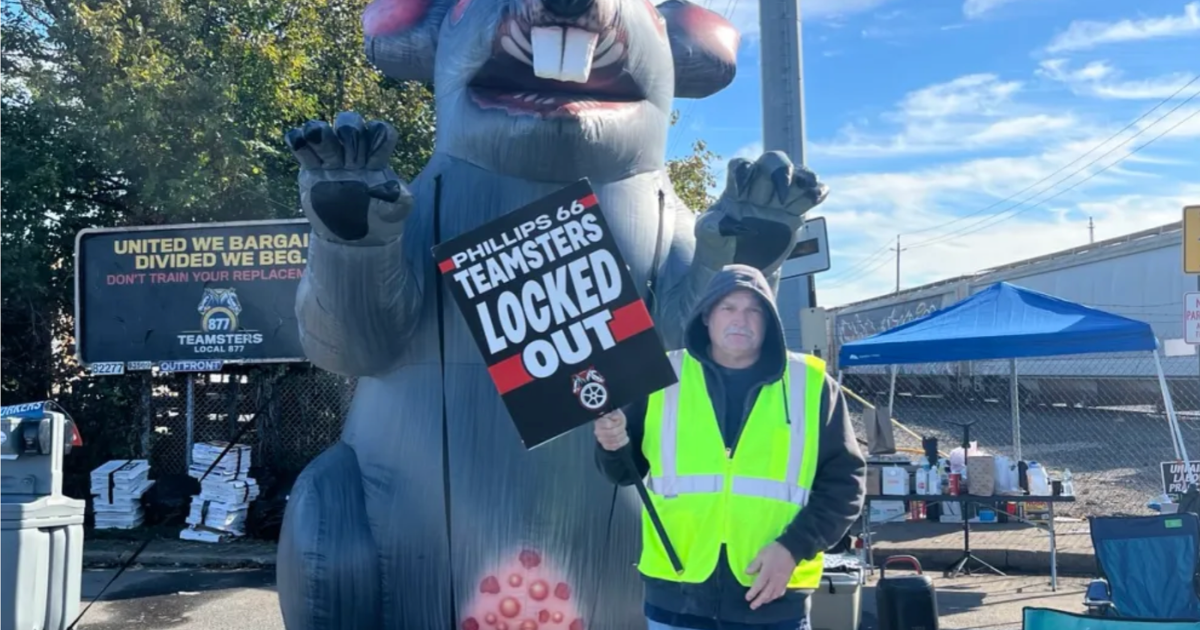
LINDEN, NJ — November 3, 2026 — Nearly 400 union workers at the Phillips 66 Bayway Refinery in Linden, New Jersey, have approved a new labor agreement, marking a major breakthrough in a dispute that led to a lockout at the largest oil refinery on the U.S. East Coast.
The agreement was ratified by members of Teamsters Local 877, according to union president Jeff Sanford, who confirmed the development to News 12 New Jersey.
However, despite the approval, workers have not yet received a confirmed date for returning to their jobs.
Union representatives and refinery management were scheduled to meet Tuesday morning to determine the next steps toward restoring normal staffing at the facility.
Nearly 400 Workers Locked Out Since October 19
The labor dispute began after the previous collective bargaining agreement expired on October 1, 2026.
Both sides initially agreed to extend the contract while negotiations continued.
However, workers rejected an earlier company proposal, and the extension expired on October 19.
Phillips 66 subsequently locked out approximately 385 union employees at its Bayway Refinery and Linden Terminal.
The workers, represented by Teamsters Local 877, included refinery operators, maintenance personnel, and other employees responsible for critical industrial operations.
Union members established picket lines outside the facility, demanding improvements to compensation, benefits, working conditions, and safety protections.
The lockout continued while negotiations between the company and union representatives proceeded.
Workers Raised Concerns About Wages, Schedules, and Safety
Throughout the dispute, union representatives argued that employees deserved a fairer share of the refinery’s financial performance.
Workers also challenged attendance policies, working schedules, healthcare provisions, and proposed changes affecting workplace safety.
Some employees reported being required to work extended schedules involving as many as 13 consecutive days or nights before receiving time off.
Union officials expressed particular concern about staffing arrangements and the qualifications required for certain industrial positions.
Before the lockout, Teamsters Local 877 had also objected to proposals it said could weaken existing safety standards and shorten training requirements.
Phillips 66 maintained that it was committed to safe operations and continued negotiating toward a mutually acceptable agreement.
Tentative Agreement Reached October 28
Negotiations produced a tentative agreement on October 28.
Phillips 66 confirmed at the time that it had reached a preliminary deal with union representatives but emphasized that the proposal still required approval from union members.
Voting began afterward, and the membership subsequently approved the agreement.
The ratification represents a significant development following weeks of uncertainty.
However, the complete contract terms, including any changes to wages, benefits, scheduling requirements, and workplace protections, have not yet been publicly detailed.
It is therefore too early to determine which specific union demands were included in the final agreement.
The Largest Oil Refinery on the East Coast
The Bayway Refinery is one of the most important energy facilities in the northeastern United States.
Located in Linden, Union County, the refinery has the capacity to process approximately 275,000 barrels of crude oil per day.
Its products include gasoline, diesel fuel, heating oil, and aviation fuel.
The facility also supplies jet fuel used at Newark Liberty International Airport.
Because of its size and importance to regional fuel distribution, the labor dispute attracted attention beyond Linden and the surrounding communities.
Any prolonged disruption to refinery operations could potentially affect fuel supply chains throughout the Northeast.
However, no confirmed regional fuel shortage has been attributed to the lockout.
Refinery Continued Operating During the Dispute
Phillips 66 maintained operations while union employees were locked out.
The company said supervisors, engineers, and other qualified personnel were assigned to operate the refinery and terminal.
Management maintained that the facility remained safely staffed and capable of meeting customer requirements.
Union representatives questioned whether the replacement staffing arrangements provided sufficient protection during emergencies.
They noted that some locked-out employees normally served on internal fire brigades and oil spill response teams.
The concerns attracted the attention of Linden Mayor Derek Armstead, who publicly requested assurances that emergency response systems remained fully operational.
Armstead emphasized that the safety of Linden residents should not be compromised by a labor dispute.
Phillips 66 responded that the facility continued operating with trained personnel and that no operational safety incidents had been reported during the transition.
Why the Agreement Matters Beyond Linden
The Bayway Refinery plays a central role in the regional energy economy.
Its operations support fuel supplies, transportation networks, industrial production, and employment in New Jersey.
Labor disputes at major energy facilities can have implications extending beyond the workers and companies directly involved.
Potential concerns include employee safety, fuel distribution, local economic activity, and the ability of refineries to maintain consistent production.
The dispute also highlights broader questions about working conditions in industries that depend on continuous operations and highly trained personnel.
For the approximately 385 affected employees and their families, the agreement represents progress toward resolving the uncertainty created by the lockout.
When Will Workers Return?
As of Tuesday morning, November 3, a return-to-work date had not been publicly confirmed.
Teamsters Local 877 President Jeff Sanford said union officials and company representatives planned to meet at approximately 8 a.m. to discuss when employees could return to their positions.
It remains unclear whether all workers will resume their duties simultaneously or whether the company will implement a phased return.
Further details about the ratified contract may also emerge following discussions between union representatives and management.
A Major Step Toward Ending the Dispute
The ratification marks a turning point in one of New Jersey’s most significant recent industrial labor disputes.
After weeks of negotiations, protests, and uncertainty, workers and management have moved closer to restoring their working relationship.
Although questions remain about implementation of the agreement and the timing of employees’ return, the vote represents a substantial step toward resolving the conflict.
For New Jersey, the outcome matters not only to hundreds of refinery workers and their families but also to the continued stability of one of the Northeast’s most important energy facilities.
Sources: News 12 New Jersey, November 3, 2026; CBS New York, October 29, 2026
By NJ RADAR Team