


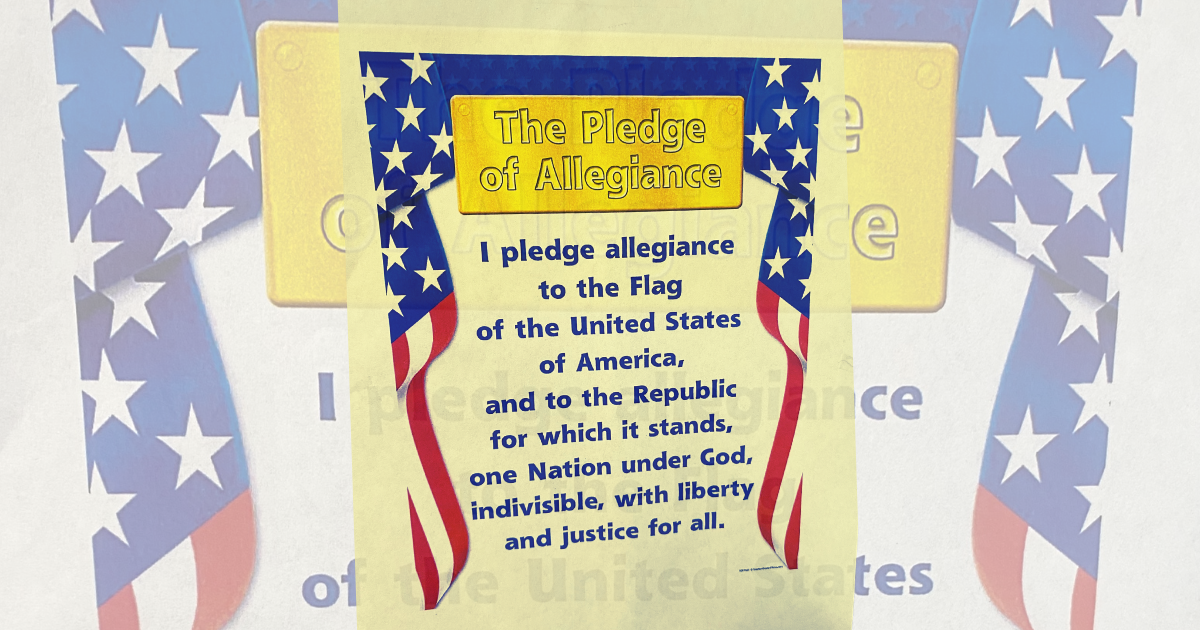
On September 8, 1892, the words that would eventually become one of the most familiar patriotic statements in the United States appeared in print for the first time.
The Pledge of Allegiance was published in The Youth’s Companion, a widely read American children’s magazine.
The pledge was created as part of a nationwide patriotic campaign connected to the 400th anniversary of Christopher Columbus’ arrival in the Americas. Schools across the country were encouraged to raise American flags and take part in coordinated ceremonies.
The Original Pledge Was Different
The version Americans know today was not the original.
The 1892 pledge was much shorter and referred simply to “my flag,” rather than “the flag of the United States of America.”
Over the following decades, the wording was changed several times.
In the 1920s, “my flag” was replaced with language specifically identifying the United States flag. Congress formally recognized the pledge in 1942.
The words “under God” were added much later, in 1954, during the Cold War.
Francis Bellamy and The Youth’s Companion
The pledge is traditionally credited to Francis Bellamy, a former Baptist minister who worked for The Youth’s Companion.
Bellamy was asked to create a short patriotic oath that schoolchildren could recite as part of the magazine’s national flag campaign.
The resulting pledge became far more enduring than anyone involved in the project could likely have imagined.
Within weeks of its publication, schoolchildren around the country were taking part in organized flag ceremonies, helping establish a tradition that would continue for generations.
More than 130 years later, the Pledge of Allegiance remains a familiar part of American civic life — but the words recited today are the product of several changes made long after that first publication on September 8, 1892.
Sources: U.S. Library of Congress; Smithsonian Magazine; History
By NJ RADAR Team