


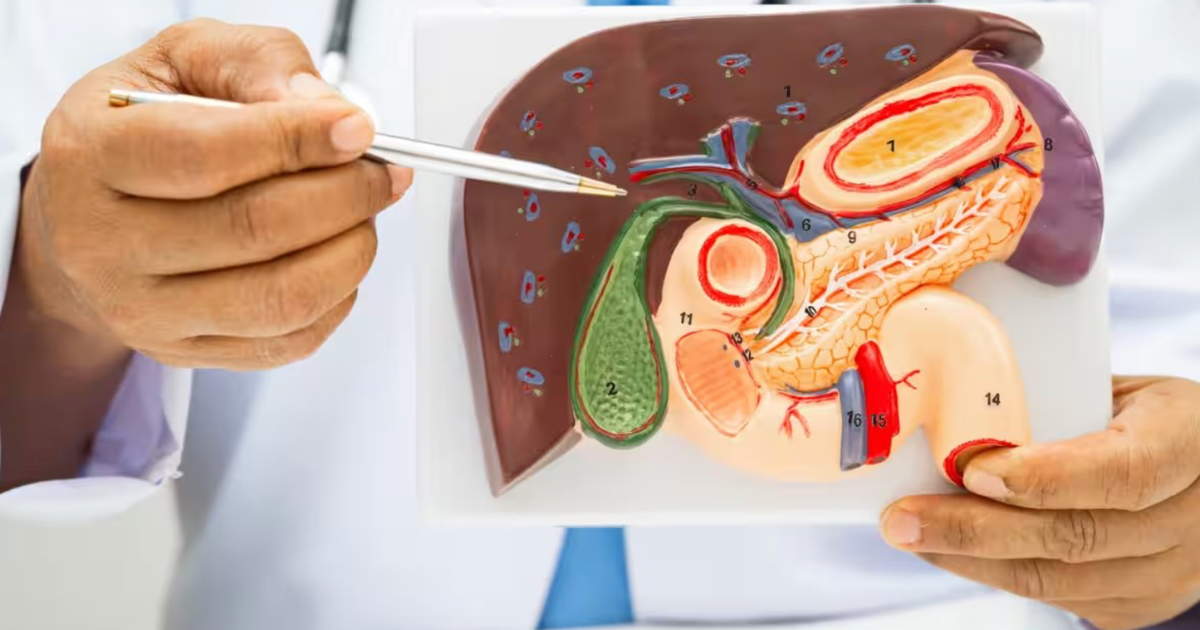
Scientists at MIT have developed an experimental injectable treatment that can create small pieces of liver-like tissue inside the body, potentially offering a new way to support patients with severe liver disease.
The technology, described by MIT researchers as “satellite livers,” combines liver cells with tiny hydrogel particles. Once injected into the body, the material can form living tissue that connects with nearby blood vessels and begins performing some of the functions of a normal liver.
In animal studies, the engineered tissue remained alive and functional for at least eight weeks.
The implanted cells were able to produce important proteins and enzymes normally made by the liver, suggesting that the approach could eventually help supplement a failing organ.
A Possible Bridge to Transplantation
The goal is not to remove or replace the patient’s original liver.
Instead, the injectable tissue would act as an additional source of liver function elsewhere in the body.
That could be especially valuable for patients waiting for a donor organ, or for people who are too sick to undergo a major liver transplant operation.
Researchers say the approach could potentially serve as a bridge to transplantation, giving patients additional liver function while they wait for a suitable donor.
It may also one day offer an alternative for some patients who are not candidates for conventional transplant surgery.
Why the Liver Is a Good Target
The liver is one of the body’s most important organs.
It helps remove toxins from the blood, processes nutrients, regulates metabolism and produces proteins needed for blood clotting and many other essential functions.
Unlike many organs, the liver also has a remarkable ability to regenerate.
Researchers have long been interested in whether liver cells could be placed elsewhere in the body and encouraged to form functioning tissue.
One major challenge has been keeping those cells alive long enough for them to establish a blood supply.
The MIT team designed its injectable material specifically to help solve that problem.
Tiny Hydrogel Particles Help the Cells Survive
The treatment uses microscopic particles made from a biocompatible hydrogel.
These particles create a structure that helps liver cells survive after injection and gives blood vessels space to grow into the new tissue.
Once supplied with blood, the implanted cells can receive oxygen and nutrients and begin functioning more like natural liver tissue.
MIT researchers found that this strategy allowed the transplanted liver cells to form stable tissue rather than quickly dying after implantation.
Still Experimental
Despite the promising results, the research is still at an early stage.
The treatment has so far been tested in mice, not human patients.
More studies will be needed to determine whether the technique is safe, durable and effective in larger animals and eventually in people.
Researchers will also need to address issues such as immune rejection and determine how much engineered tissue would be required to provide meaningful support for a human liver.
Still, the work points toward a future in which treating organ failure may not always require replacing an entire organ.
Instead, doctors could potentially add functioning tissue elsewhere in the body to help a damaged organ continue doing its job.
For patients with advanced liver disease, that could someday mean gaining valuable time — or perhaps even another option beyond traditional transplantation.
Sources: MIT News; MIT Department of Biological Engineering
By NJ RADAR Team