


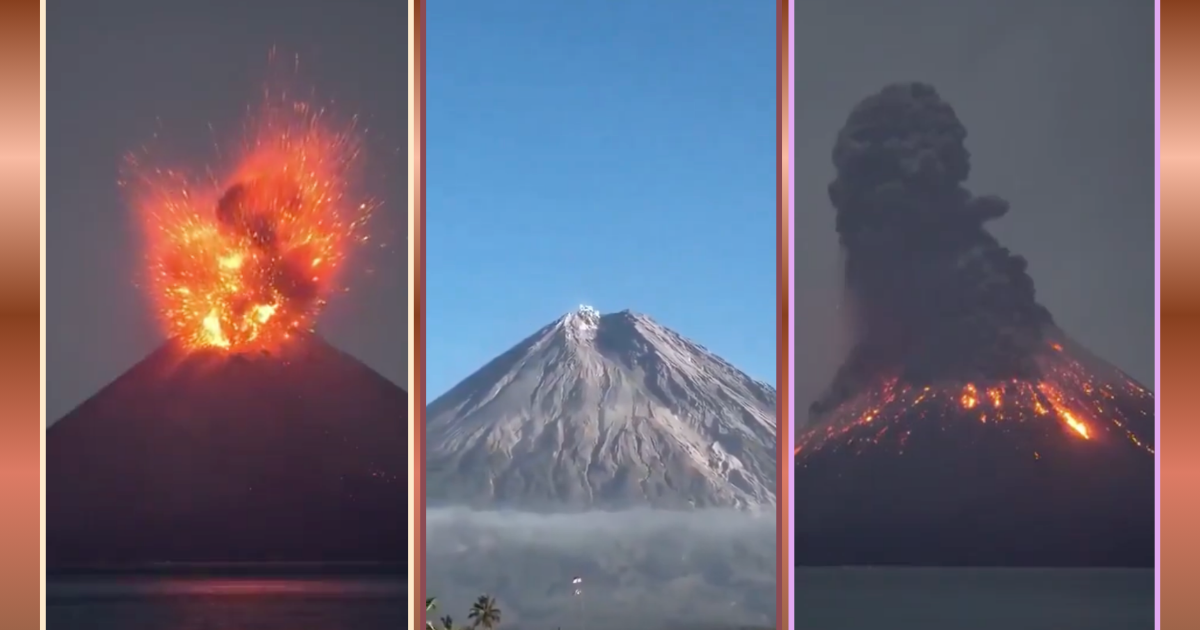
A powerful eruption of Anak Krakatau caused major travel disruption across Indonesia, temporarily shutting airports serving Jakarta and affecting nearly 3,000 flights.
Volcanic ash from the eruption spread across western Indonesia after the volcano began erupting late Friday. The ash reached areas around Jakarta and forced authorities to close several airports because volcanic particles can seriously damage aircraft engines and other systems.
By Monday afternoon, Indonesia’s Transportation Ministry said 2,961 domestic and international flights had been disrupted, affecting about 341,000 passengers.
That included cancellations, delays and diversions across the country.
Jakarta Airport Temporarily Shut Down
Among the airports affected was Soekarno-Hatta International Airport, Jakarta’s main international gateway.
Runways, taxiways and aircraft operating areas had to be cleaned and inspected before flights could safely resume.
The airport, along with several others, reopened after authorities determined that conditions had improved, although airlines continued dealing with delays and backlogs.
Why Volcanic Ash Is So Dangerous for Planes
Volcanic ash may look like ordinary dust, but it is particularly dangerous for aviation.
The tiny particles can enter jet engines, melt under extreme heat and interfere with internal components. Ash can also damage aircraft windshields and navigation equipment.
For that reason, airports can be forced to close even when the eruption itself is far away.
Ash Reached 50,000 Feet
During the eruption, ash clouds were reported as high as 50,000 feet in some areas.
Schools in affected regions temporarily shifted to remote learning, while authorities warned residents to wear masks and avoid unnecessary outdoor exposure because of the ash.
No immediate tsunami threat was reported.
The Volcano That Triggered a Deadly 2018 Tsunami
Anak Krakatau sits in the Sunda Strait between Java and Sumatra.
Its name means “Child of Krakatau,” because the volcano emerged from the remains of the much larger Krakatau volcano that produced one of history’s most catastrophic eruptions in 1883.
Anak Krakatau itself caused another major disaster in December 2018, when part of the volcano collapsed into the sea and triggered a tsunami that killed more than 400 people.
The volcano remains active and Indonesian authorities continue to monitor it closely.
The latest eruption serves as another reminder of Indonesia’s extraordinary geological activity. The country sits along the Pacific Ring of Fire and has more than 120 active volcanoes.
Sources: Reuters; Associated Press; ANTARA News; Indonesia Transportation Ministry
By NJ RADAR Team