

A nearly seven-year-old legislative hearing is drawing new attention in New Jersey as officials continue investigating a voter-registration failure that improperly sent thousands of records into the state election system.
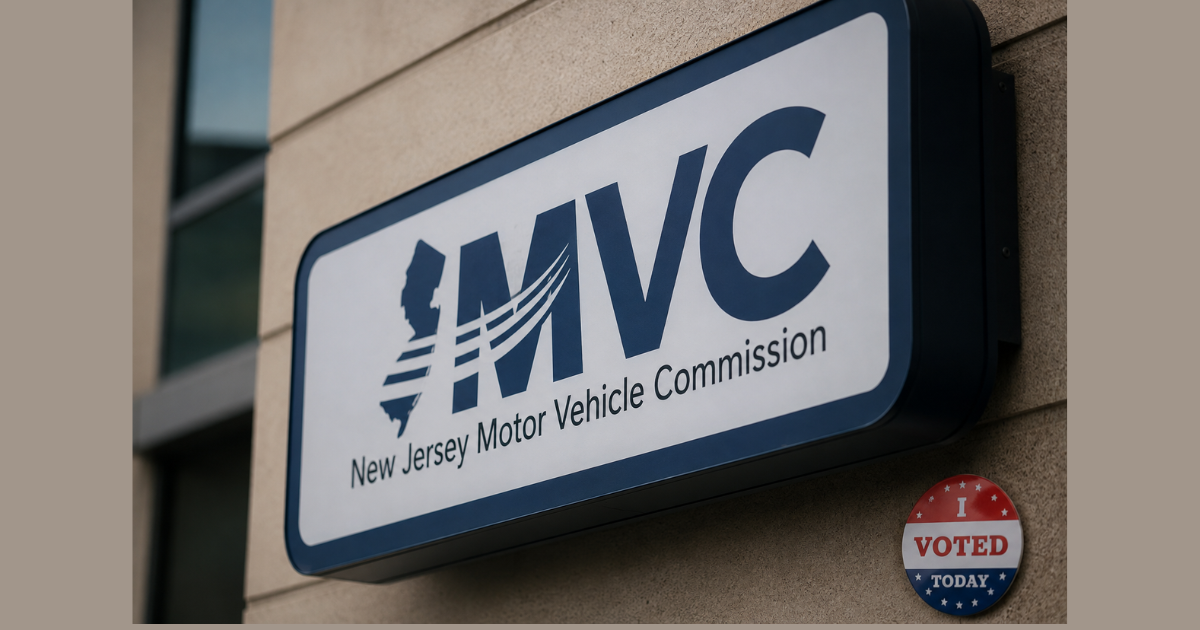
During a December 2019 Assembly Judiciary Committee hearing, then-Motor Vehicle Commission Chief Administrator B. Sue Fulton was questioned about safeguards designed to prevent people who were not eligible to vote from being registered through the MVC.
The exchange is now resurfacing because New Jersey recently disclosed that approximately 6,600 people who had indicated during MVC transactions that they were not U.S. citizens nevertheless had their information transmitted into the voter-registration system between June 2023 and June 2024.
What Fulton Said in 2019
At the 2019 hearing, Republican Assemblyman Erik Peterson pressed Fulton on how the state would prevent ineligible applicants from being registered as New Jersey prepared to expand access to driver’s licenses.
Fulton initially said the automatic voter-registration process included verification of eligibility.
But under further questioning, she explained that applicants themselves attested, under penalty of perjury, that they met the requirements to register, including citizenship and age requirements.
When Peterson asked whether MVC employees independently checked a person’s eligibility, Fulton said they did not.
She ultimately told lawmakers that responsibility for verifying voter eligibility rested with the Secretary of State, not with MVC employees.
That distinction has become important in the current controversy.
The Sherrill administration says the recent problem occurred earlier in the process: people who had already answered that they were not citizens should never have had their information transmitted from the MVC system to election officials in the first place.
Why the Old Testimony Matters Now
The resurfaced hearing does not prove that the 2023-2024 registration problem was intentional.
It does, however, raise renewed questions about how New Jersey divided responsibility among the MVC, the Secretary of State and the state’s election system, and whether safeguards were strong enough when automatic voter registration expanded.
Peterson is now calling for a bipartisan investigation into what safeguards existed and what state officials knew about possible weaknesses in the system.
The 2019 exchange is particularly notable because lawmakers were asking almost the same question that has become central today: what happens when someone who is not eligible to vote interacts with an MVC system that also handles voter registration?
What Happened to the 6,600 Records
Gov. Mikie Sherrill disclosed the problem in July, saying a software error caused roughly 6,600 records to be improperly transmitted for voter registration after individuals had indicated that they were not U.S. citizens.
The state has since reviewed those records.
According to the governor’s August 19 update:
- About 5,100 registrations have been placed in deleted status because the individuals had no separate registration or later attestation supporting their eligibility.
- About 1,450 registrations have been placed in rejected status while county election officials conduct additional reviews.
- Approximately 340 people who were newly registered because of the system error later voted.
- Another approximately 220 people affected by the software error also voted but had earlier voter registrations or separate attestations suggesting they may have been legally eligible to vote. Their cases are also under review.
Those numbers are important because the original group of 6,600 should not automatically be described as 6,600 confirmed illegal voters.
State officials have said some people may actually have been U.S. citizens who incorrectly answered the citizenship question during an MVC transaction, which is one reason certain cases are still being reviewed.
State and Contractor Disagree Over Responsibility
Another unresolved part of the story is who was responsible for the failure.
The Sherrill administration has blamed IDEMIA, the technology contractor involved with the MVC system, saying records belonging to people who identified themselves as noncitizens should never have been transmitted to election officials.
IDEMIA disputes that characterization and says its system correctly recorded the applicants’ answers and made that information available to the state.
That disagreement makes the 2019 testimony even more relevant.
If MVC staff were not independently verifying citizenship, and if election officials relied on information transmitted through the automated system, then the key question becomes exactly where the safeguard was supposed to stop an ineligible registration.
That is now at the center of the state’s ongoing investigation.
A Political Fight Ahead of the 2026 Elections
The controversy is also becoming increasingly political.
Republican lawmakers are demanding broader investigations into New Jersey’s voter-registration safeguards and arguing that the state should examine whether similar problems occurred outside the June 2023 to June 2024 period.
Sherrill, meanwhile, says her administration moved quickly after discovering the problem, removed thousands of registrations and blocked others from voting while their eligibility is reviewed. The governor has also accused Republicans of using the issue for political purposes.
There is currently no publicly established evidence that the registration failure was intentional, nor evidence supporting claims that hundreds of thousands of noncitizens were registered through the same mechanism.
Still, the newly resurfaced 2019 testimony adds another layer to a story that is no longer simply about one software error.
It raises a broader question about system design and accountability: when multiple state agencies share responsibility for voter registration, who is ultimately responsible for making sure an ineligible record never reaches the voter rolls?
With the 2026 elections approaching, that question is unlikely to disappear soon.
Sources: New Jersey Globe, Office of the Governor of New Jersey, News 12 New Jersey
By NJ RADAR Team