


Some students arriving at one of America’s most prestigious universities are entering calculus courses without fully mastering basic mathematical skills. UC Berkeley professors say the problem has become serious enough that instructors sometimes have to revisit concepts such as fractions, exponents and algebra before students can move forward with college-level calculus.
The issue drew renewed attention after the New York Post reported on concerns raised by mathematics faculty at the University of California, Berkeley. But the concern is not based on one professor’s experience alone. Berkeley itself has publicly documented a widening gap in mathematical preparation among incoming students.
Some Calculus Students Need a Review of Fractions
Berkeley’s Department of Mathematics says that between 2018 and 2020, internal assessments classified approximately half of students beginning Math 1A as not yet ready for college-level calculus. Most were considered prepared for precalculus or college algebra, but some needed refreshers on concepts as basic as fractions and exponents.
More recent diagnostic data have reinforced those concerns.
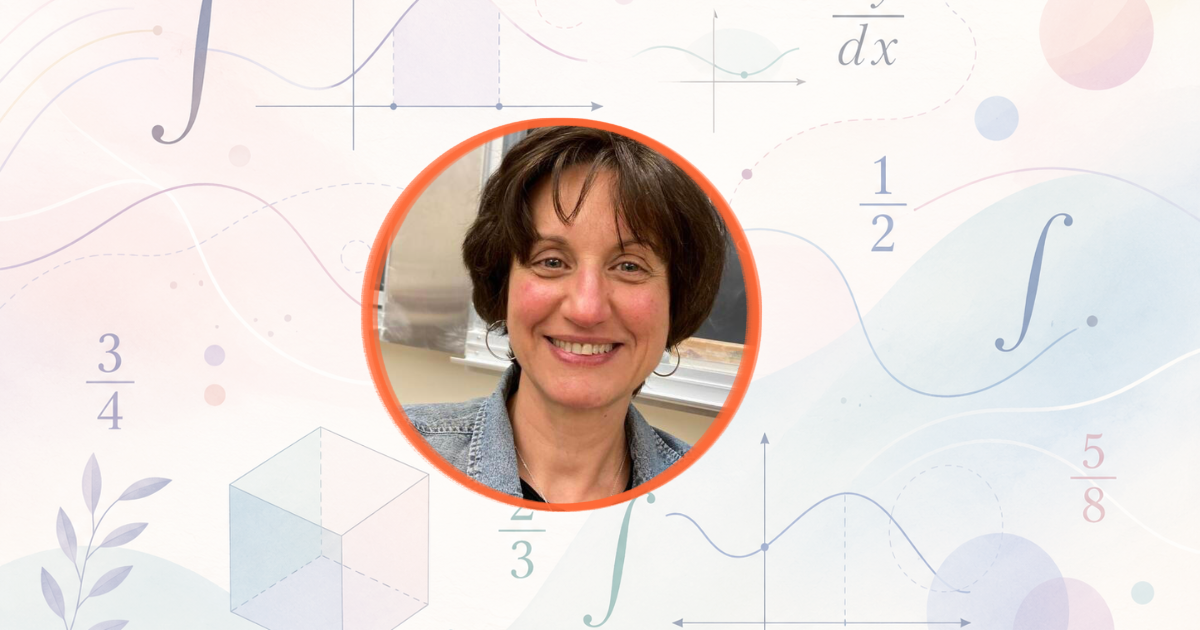
Professor Zvezdelina Stankova said she noticed a significant change when she returned to teaching introductory calculus in spring 2023. She described the bottom third of the class as struggling considerably with mathematical preparation. Berkeley also reported that some students entering Calculus I have required review of how to add fractions with different denominators.
The professors emphasize that this does not mean the students lack intelligence or potential. Berkeley faculty have specifically distinguished between mathematical ability and mathematical readiness, noting that many students are bright and hardworking but arrive with gaps in material they were expected to master before college.
A Wider Problem Than One Classroom
The concern extends beyond Berkeley.
UC San Diego previously reported a sharp rise in students requiring foundational mathematics instruction, while national assessment results have also shown declining performance among high school seniors. Berkeley cited the 2024 National Assessment of Educational Progress, in which 45 percent of 12th-grade students scored below the basic level in mathematics.
For professors, the challenge is practical: calculus depends heavily on fluency in algebra, fractions, exponents and other foundational concepts. If students are struggling with those skills, instructors must decide whether to slow down and review earlier material or continue with the college-level syllabus.
That can create very different experiences within the same classroom, with some students ready for advanced work while others are still trying to rebuild their mathematical foundation.
Berkeley Is Trying to Close the Gap
UC Berkeley has already responded by creating additional support.
In 2020, mathematics professor Alexander Paulin and former lecturer Kelli Talaska developed an online precalculus course for incoming students. Around 2,000 students enrolled in its initial version, and the program later expanded into the university’s Foundations of Lower Division Mathematics initiative.
The goal is not simply to make calculus easier. Faculty say stronger preparation may prevent students from abandoning STEM majors after struggling in their first mathematics courses.
The debate has also reached admissions policy. In June, five Berkeley faculty members launched an open letter urging the University of California to consider restoring SAT or ACT math scores for students applying to STEM programs. More than 1,450 faculty members had signed the letter by June 11. Supporters argue that additional testing data could help universities identify students who need more preparation before entering demanding quantitative courses.
Critics of standardized testing have raised concerns about fairness and unequal access to preparation, while Berkeley faculty involved in the effort say they are not proposing that test scores become the sole measure for admission.
The larger question is increasingly difficult to ignore: if students can reach calculus without being comfortable with fractions, where did the gap begin — and who should be responsible for closing it?
Sources: New York Post; UC Berkeley Letters & Science; X post by @BuddyRevel17394
By NJ RADAR Team