


TRENTON, NJ — November 19, 2026 — West Virginia has filed a federal lawsuit against New Jersey, accusing the state of unfairly restricting competition in its solar energy market and contributing to higher electricity costs for consumers.
The lawsuit, filed Wednesday in U.S. District Court in New Jersey, challenges regulations governing solar renewable energy credits. West Virginia argues that the rules favor solar energy producers operating within New Jersey while preventing companies in neighboring states from competing on equal terms.
West Virginia Attorney General JB McCuskey also filed a similar lawsuit against Washington, D.C., expanding a legal battle that began with a challenge to Pennsylvania’s renewable energy regulations in September.
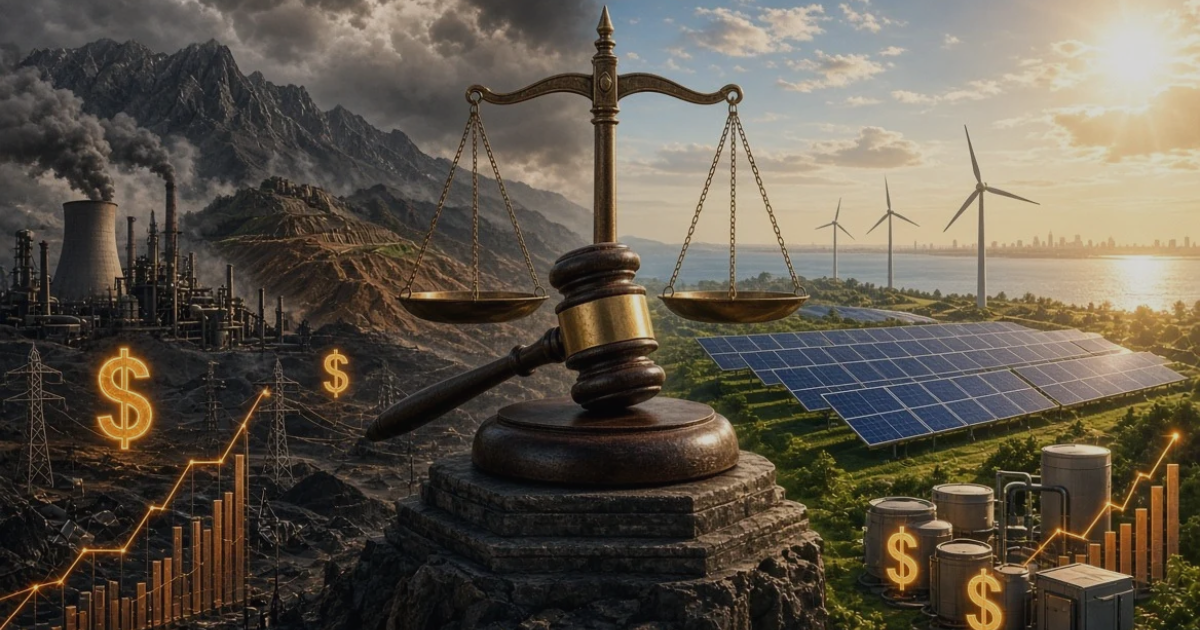
At the center of the dispute is a question with potentially significant consequences for the region: Can a state encourage local renewable energy development by limiting access to its solar credit market, or do those restrictions violate constitutional protections for interstate commerce?
How New Jersey’s Solar Credit System Works
New Jersey requires electricity suppliers to obtain a portion of their electricity from renewable energy sources or meet their obligations by purchasing renewable energy credits.
A solar renewable energy credit represents the environmental benefits associated with generating a specified amount of electricity from solar power. Solar producers can sell these credits separately from the electricity itself, creating an additional source of revenue.
The program is designed to encourage investment in solar installations, reduce dependence on fossil fuels, and support New Jersey’s clean energy goals.
However, West Virginia argues that New Jersey’s eligibility requirements effectively prevent many out-of-state solar producers from participating.
According to the lawsuit, New Jersey permits some renewable energy credits from generators in other states but applies geographic restrictions to its solar programs, requiring qualifying facilities to be physically connected to the state’s energy infrastructure.
West Virginia claims those restrictions give New Jersey solar developers an economic advantage at the expense of competitors elsewhere.
Millions of Dollars at Stake
The financial differences between solar credit markets are substantial.
According to West Virginia’s lawsuit, solar credits in New Jersey have traded at approximately $88.94 to $105.74 under certain programs, while credits available to West Virginia producers in voluntary renewable energy markets have generally sold for approximately $2 to $8.
West Virginia estimates that its solar producers have already lost between $20 million and $22 million in potential credit revenue because of the restrictions.
The lawsuit further claims that lost revenue could reach as much as $296 million between 2027 and 2031 if the current rules remain in place.
These figures are estimates presented by West Virginia and have not been established as findings by the court.
McCuskey argues that opening the market to additional competitors could lower compliance costs for electricity suppliers and ultimately benefit consumers.
He also contends that West Virginia residents lose potential savings because revenue from solar credits sold by regulated utilities could otherwise help offset electricity expenses.
A Regional Electricity Market, but Different State Rules
New Jersey and West Virginia both participate in PJM Interconnection, the regional electricity grid serving 13 states and Washington, D.C.
Electricity generated in one PJM state can be transmitted across state borders and used by customers elsewhere in the region.
But renewable energy credit programs are governed by individual state laws, and the eligibility requirements are not necessarily identical.
This creates a situation in which electricity can move through the regional grid while the environmental credits associated with certain power sources face geographic restrictions.
West Virginia argues that New Jersey’s system violates the Commerce Clause of the U.S. Constitution, which limits states’ ability to impose discriminatory barriers on interstate trade.
The lawsuit asks the federal court to invalidate the challenged restrictions and allow broader participation in the solar credit market.
New Jersey Defends Its Clean Energy Programs
New Jersey officials have indicated that the state intends to defend its regulations.
Michael Symons, a spokesperson for Attorney General Jennifer Davenport, said the state would continue working with Governor Mikie Sherrill’s administration to expand renewable energy and reduce costs for residents.
The administration has made electricity affordability a major policy priority as households and businesses face continuing concerns about utility expenses.
Supporters of state-focused solar incentives argue that such programs can encourage local construction, create employment opportunities, and expand renewable energy infrastructure.
But the legal challenge raises a broader question about how far states may go in supporting local industries when their policies affect competitors in other states.
The lawsuit does not seek to eliminate solar energy incentives altogether. Instead, it challenges the geographic restrictions governing which producers can receive certain credits.
What Could This Mean for New Jersey Residents?
A court ruling in West Virginia’s favor could require New Jersey to change how it administers parts of its solar renewable energy credit programs.
Allowing more producers to compete could reduce credit prices, as West Virginia argues. However, the actual effect on household electricity bills would depend on how suppliers’ costs change and how those savings are passed along to customers.
Broader competition could also affect the financial incentives available to companies developing solar installations within New Jersey.
For state officials, the challenge is balancing several competing priorities: keeping electricity affordable, supporting local renewable energy investment, maintaining grid reliability, and complying with federal constitutional requirements.
The lawsuit comes as New Jersey continues to pursue cleaner electricity while addressing concerns about rising energy costs.
No court ruling has yet determined whether the disputed regulations are unconstitutional.
For now, the legal battle places New Jersey’s solar energy policies under federal scrutiny and could help shape how renewable energy markets operate across state lines.
Sources: West Virginia Attorney General’s Office (November 18, 2026); New Jersey Monitor (November 19, 2026); West Virginia Public Broadcasting (November 19, 2026); Federal lawsuit, State of West Virginia v. New Jersey Board of Public Utilities, filed November 18, 2026.
By NJ RADAR Team