


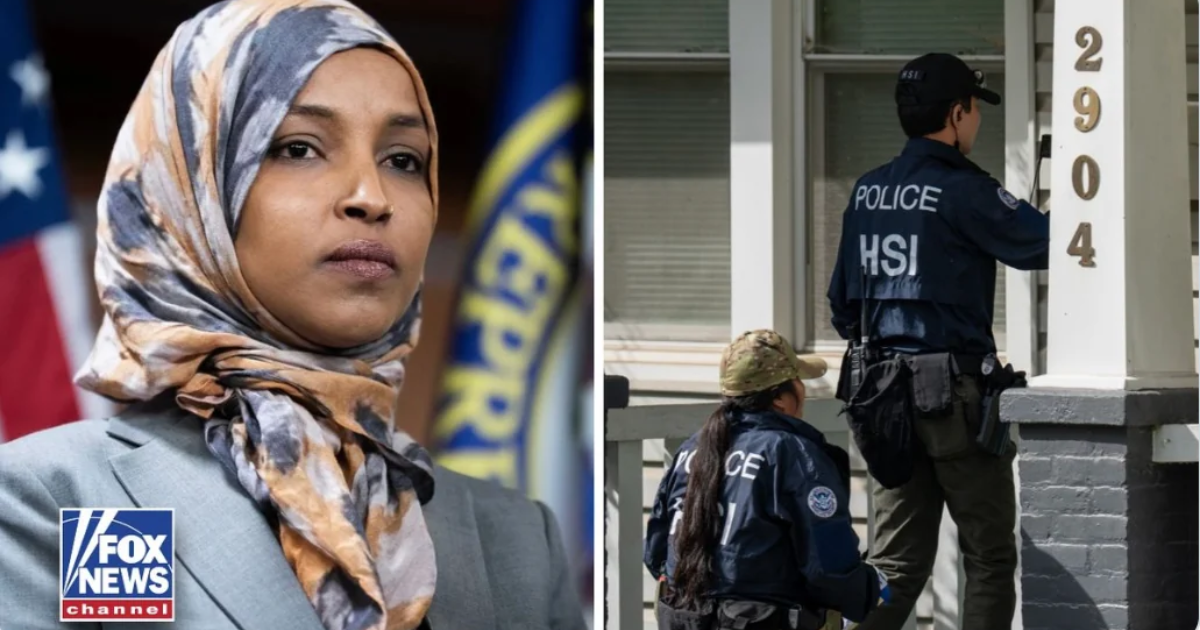
Newly released court records show that federal investigators sought evidence dating back to 1980 in an inquiry involving the Minnesota congresswoman. Omar has not been charged with any crime and maintains that the investigation is politically motivated.
WASHINGTON, D.C., November 23, 2026 — Newly unsealed federal court documents have revealed the extraordinary scope of an investigation involving Democratic Congresswoman Ilhan Omar, showing that prosecutors sought records dating back more than four decades as they examine allegations connected to her immigration history.
The documents, released Monday by order of a federal judge, relate to an October 12 search of Omar’s Washington, D.C., home by agents from Homeland Security Investigations.
Although much of the material remains heavily redacted, the records provide the clearest public indication yet of how broadly federal authorities are examining the Minnesota lawmaker’s past.
One filing states that prosecutors believe Omar may have committed offenses over a period extending back before she entered Congress. The government requested evidence covering the period from 1980 to the present.
Omar was born in Somalia in 1982, meaning the requested period begins before her birth.
The documents do not establish that crimes occurred during those decades, nor do they publicly identify all the offenses under investigation.
Omar has not been charged with a crime and has repeatedly denied wrongdoing.
What the Newly Released Documents Reveal
The records became public following a legal challenge brought by more than a dozen news organizations seeking access to documents connected to the search of a sitting member of Congress.
Chief U.S. District Judge James Boasberg authorized the release of portions of the court record while allowing prosecutors to conceal information they argued could compromise the continuing investigation.
The released material includes documents supporting the search warrant application, legal arguments submitted by the Justice Department and records concerning the decision to keep the case sealed.
However, the central document explaining the evidence used to justify the search remains unavailable.
That 67-page affidavit, which was presented to the court when investigators sought permission to search Omar’s home, is still under seal.
As a result, the public has only a partial picture of the allegations and the evidence federal authorities believe supports their investigation.
Federal Agents Searched Omar’s Home in October
Homeland Security Investigations agents searched Omar’s residence on October 12, approximately three weeks before the November midterm elections.
According to earlier reporting, investigators seized electronic devices and personal documents, including a cellphone, laptop, notebooks and passport.
Omar later said approximately 25 agents participated in the operation, which lasted several hours.
She questioned why such an extensive search was necessary and accused the administration of attempting to intimidate her.
The investigation reportedly concerns possible irregularities in immigration records associated with Omar and members of her family.
Omar arrived in the United States as a refugee from Somalia in 1995 and became an American citizen in 2000.
Federal officials have examined questions involving immigration paperwork, citizenship records and other personal documents.
The newly released filings do not establish that Omar submitted fraudulent information or knowingly violated immigration laws.
A Federal Investigation With a Political Dimension
Omar, who represents Minnesota’s Fifth Congressional District, has been one of President Donald Trump’s most outspoken critics.
The congresswoman has frequently challenged his administration over immigration enforcement, foreign policy and civil rights.
Trump and other senior administration officials have publicly accused Omar of immigration wrongdoing, allegations she rejects.
Omar argues that the investigation is politically motivated and intended to punish her for opposing the president.
Federal prosecutors maintain that they are conducting a legitimate criminal investigation.
The political controversy intensified because agents searched her home shortly before the November 3 election.
The Justice Department has stated in court filings that the attorney general approved the search and that its timing was not intended to influence the election.
Omar subsequently won reelection to Congress.
Judge Orders Greater Transparency
The decision to release portions of the documents followed arguments over the public’s right to examine the circumstances surrounding a federal search of an elected lawmaker’s home.
News organizations argued that the case raises important questions about government accountability and the separation of powers.
The Justice Department opposed broad disclosure, warning that releasing investigative records before a charging decision could expose sensitive evidence, witnesses and investigative methods.
Judge Boasberg allowed some records to become public but agreed that the main affidavit should remain confidential for now.
The case also involves constitutional protections under the Speech or Debate Clause, which protects members of Congress from certain government inquiries into their legislative activities.
The released records show that the Justice Department contacted the general counsel of the House of Representatives before the search.
The legal dispute includes questions about how investigators should handle potentially protected congressional materials found during a search of a lawmaker’s private residence.
What Happens Next?
The investigation remains active, and federal authorities have not announced criminal charges against Omar.
Media organizations seeking additional information have until November 30 to challenge the redactions in the documents released Monday.
A separate court dispute also concerns Omar’s efforts to recover property seized during the October search.
Further court proceedings could reveal additional information about the government’s evidence, the scope of the investigation and the legal basis for its actions.
For now, the newly released documents confirm that investigators are examining a wide range of historical records, but they leave important questions unanswered.
The case has become a significant test of government transparency, congressional protections and the limits of federal investigative authority.
For Omar, the controversy continues as she prepares to begin another term representing Minnesota in Congress.
For the public, the central question remains whether the investigation will produce evidence supporting criminal charges or conclude without prosecution.
Until that question is answered, the allegations remain unproven.
Sources: Fox News, November 23, 2026; Minnesota Star Tribune, November 23, 2026; FOX 9, November 23, 2026; Associated Press, November 17, 2026; Reuters, October 15, 2026.
By NJ RADAR Team