


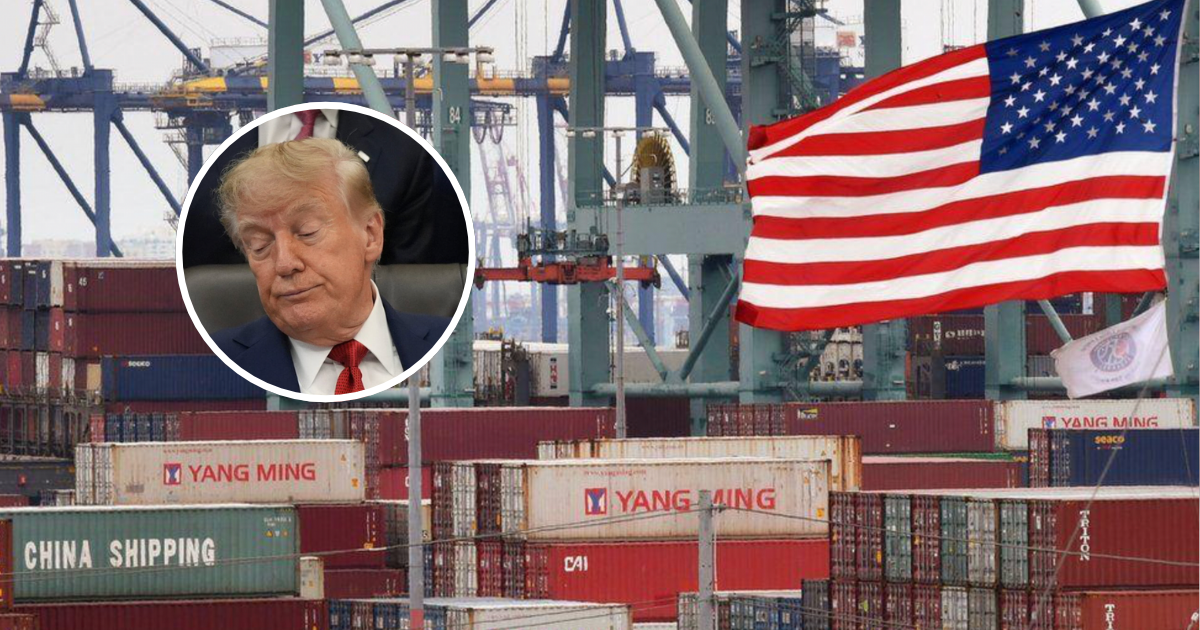
The Trump administration announced a new round of proposed tariffs on Wednesday, November 25, targeting 14 major U.S. trading partners, including China, the European Union, Japan and India.
The move represents an effort to rebuild parts of the administration’s tariff policy after the U.S. Supreme Court struck down sweeping tariffs earlier this year.
China would face an additional 20% tariff, on top of existing duties of approximately 25% on certain industrial and technology products introduced during Trump’s first administration.
A New Legal Basis for Tariffs
The proposal follows an eight-month investigation conducted by the Office of the U.S. Trade Representative under Section 301 of the Trade Act of 1974.
The administration argues that government subsidies and excessive manufacturing capacity in foreign economies have created unfair competition for American manufacturers, particularly in industries such as steel, electric vehicles, aluminum and solar energy.
China has rejected similar accusations, maintaining that its export strength reflects competitive advantages rather than unfair trade practices.
Which Trading Partners Are Affected?
The proposed tariffs target China, the European Union, Japan, South Korea, India, Bangladesh, Cambodia, Indonesia, Malaysia, Singapore, Switzerland, Taiwan, Thailand and Vietnam.
Mexico and Norway were also included in the investigation but are not part of the current tariff proposal.
According to Reuters, the administration intends to respect tariff limits established under existing trade agreements, including the 15% cap negotiated with the European Union, Japan, South Korea and Taiwan.
What Could This Mean for American Consumers?
Although tariffs are imposed on imported goods, they are paid by U.S. importers, who may pass some of the additional costs on to consumers through higher retail prices.
For New Jersey, home to one of the nation’s largest port complexes and an extensive network of importers, retailers and distribution companies, changes in federal trade policy could have significant economic implications.
Businesses that rely on imported products may face higher operating costs, while American manufacturers competing with foreign producers could benefit from additional protection.
When Could the New Tariffs Take Effect?
The proposed tariffs are not yet in effect. They will be subject to a public comment period and hearings before a final decision is made.
Implementation could begin as early as January 2027.
The announcement marks another chapter in the administration’s efforts to reshape international trade, with American businesses and consumers facing renewed uncertainty over import costs and prices.
The timing of the announcement adds a touch of irony to the administration’s trade policy. Just days after returning from China, Trump spoke warmly about his relationship with Chinese President Xi Jinping and the improvement in U.S.–China relations. Yet his administration is now proposing the highest new tariff rate — 20% — on Chinese imports. Apparently, improved diplomatic relations do not necessarily translate into lower tariffs.
Sources: The Washington Post, Reuters, Associated Press, Yahoo Finance
By NJ RADAR Team