


Just days after the unforgettable 2026 FIFA World Cup Final at MetLife Stadium in New Jersey, football fans are already looking ahead to the next chapter.
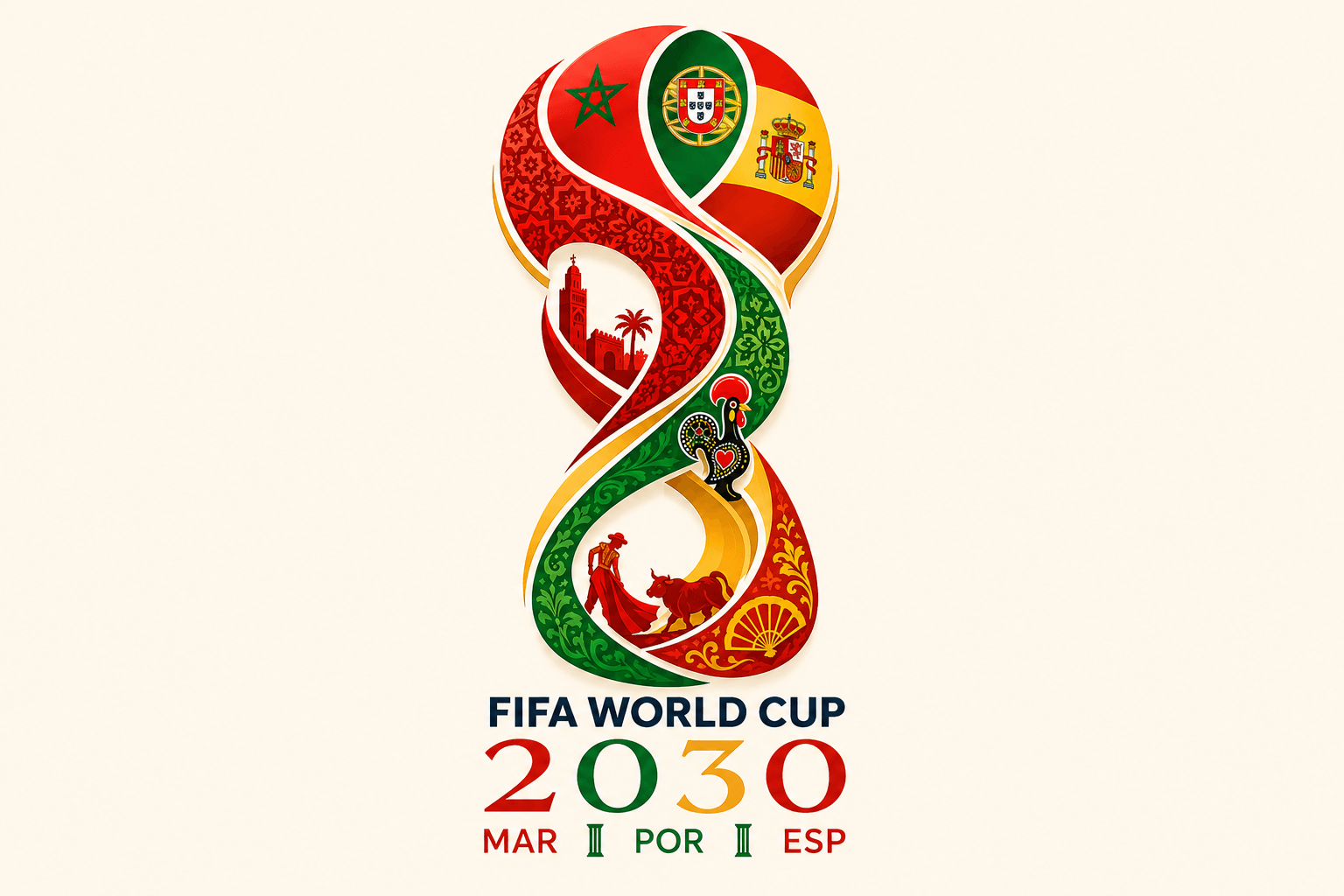
The 2030 FIFA World Cup will be unlike any tournament in history. To celebrate the 100th anniversary of the FIFA World Cup, the competition will span six countries across three continents, making it the most geographically diverse World Cup ever held.
The tournament is scheduled to run from June 8 to July 21, 2030, making it the longest FIFA World Cup in history. The extended schedule reflects the unique multi-continental format created to celebrate the tournament’s centenary.
The Main Hosts
The tournament will be jointly hosted by:
🇪🇸 Spain
🇵🇹 Portugal
🇲🇦 Morocco
These three nations will stage the majority of the matches, including the knockout rounds and the final.
Morocco will become the second African nation to host FIFA World Cup matches, following South Africa in 2010. For Spain, it will be the country’s first World Cup in 48 years, while Morocco and Portugal will both host the tournament for the first time.
A Tribute to Football History
To mark the centenary of the first FIFA World Cup, held in Uruguay in 1930, FIFA has scheduled three special opening matches in South America:
🇺🇾 Uruguay
🇦🇷 Argentina
🇵🇾 Paraguay
Each of these countries will host one centenary match before the tournament officially continues in Europe and Africa.
According to FIFA’s proposed schedule, the centenary matches will take place on June 8 and 9 in Uruguay, Argentina, and Paraguay. The tournament will then move to its main hosts, with the opening ceremony and the first matches in Morocco, Portugal, and Spain scheduled for June 13 and 14.
The choice of the centenary hosts is deeply symbolic. Uruguay is being honored as the birthplace of the FIFA World Cup and the site of the very first final in 1930, when the host nation defeated Argentina 4–2 at the historic Estadio Centenario in Montevideo. Paraguay was selected because it is home to CONMEBOL, South America’s football confederation, which played a central role in the creation of the world’s biggest football tournament.
Another Expanded World Cup
Like the 2026 edition, the 2030 FIFA World Cup is expected to feature 48 national teams, continuing FIFA’s expanded format that allows more countries to compete on football’s biggest stage.
FIFA is also considering a proposal to expand the tournament to 64 teams, although no final decision has been made.
Looking Ahead
After a memorable summer in North America, where millions of fans watched the world’s best teams compete across the United States, Canada, and Mexico, the spotlight will now shift to Europe, Africa, and South America.
The 2030 FIFA World Cup promises to be far more than just another football tournament. As the sport celebrates its first 100 years on the world’s biggest stage, the event is expected to unite continents, cultures, and generations in a celebration unlike anything seen before in FIFA World Cup history.
Sources: FIFAWC26Updates (X), Al Jazeera.