


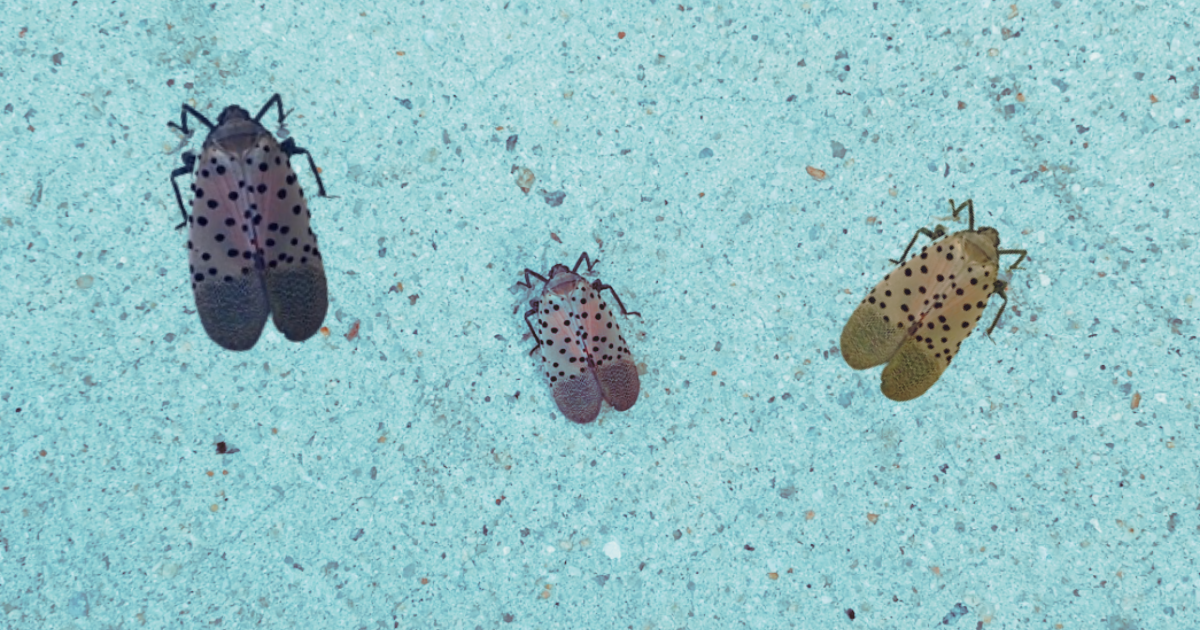
A familiar invasive insect is once again showing up around North Jersey. On Saturday, NJ RADAR photographed an adult spotted lanternfly in Bergen County, a reminder that the destructive pest remains firmly established in the region.
The insect in the photograph is the spotted lanternfly, Lycorma delicatula, an invasive species native to parts of Asia. Adults are easy to recognize by their grayish wings covered with black spots and, when the wings open, striking red coloring underneath.
NJ RADAR photographed this adult in Bergen County on August 22.
From Pennsylvania to New Jersey
The spotted lanternfly was first detected in the United States in Berks County, Pennsylvania, in 2014. Since then, it has spread through much of Pennsylvania and into neighboring states, including New Jersey.
According to the New Jersey Department of Agriculture, the insect is native to China, India and Vietnam and has also become established in South Korea, Japan and the United States.
There is no evidence that spotted lanternflies were deliberately introduced into the country. Like many invasive species, they are believed to have spread through international trade and can easily travel from place to place by hitching rides on vehicles, outdoor equipment, firewood and other materials.
That ability to travel unnoticed is one reason the insect has been so difficult to contain.
Why Are They Considered Destructive?
Spotted lanternflies do not bite or sting people or animals.
The concern is what they can do to plants.
Unlike caterpillars that chew through leaves, spotted lanternflies use piercing mouthparts to feed on plant sap. They can feed on dozens of plant species, including grapevines, maple trees and black walnut.
Large concentrations of the insects can place significant stress on plants, especially when hundreds gather on the same tree or vine.
As they feed, lanternflies also release a sticky sugary substance called honeydew. That substance can cover leaves, sidewalks, outdoor furniture and vehicles and can encourage the growth of dark sooty mold.
The agricultural impact can be particularly serious for vineyards. Researchers have documented significant damage to grapevines, while the effect on mature landscape trees can vary considerably.
Anyone Who Has Seen Them in Pennsylvania Knows How Numerous They Can Become
In some parts of Pennsylvania, spotted lanternflies have appeared in extraordinary numbers during peak seasons.
They can cover tree trunks, sidewalks and parking areas, making their presence difficult to ignore.
Their populations, however, do not remain the same every year. Researchers say numbers can rise or fall depending on weather conditions, available host plants, natural predators and other environmental factors.
An area that sees relatively few insects one summer may experience many more the following year.
New Jersey continues efforts to limit their spread and reduce populations.
State agriculture officials have used several methods, including destroying egg masses, trapping insects and treating areas where large populations have been found.
What Should Residents Do?
New Jersey’s message to residents has long been simple:
“Stomp It Out.”
People who encounter spotted lanternflies are encouraged to kill them and to inspect vehicles, outdoor furniture, firewood, trailers and other objects before moving them to another location.
Residents may also find egg masses during colder months. The masses can appear as gray or mud-like patches on trees, outdoor furniture, stone, vehicles and many other hard surfaces.
Officials also caution against relying on homemade insect-killing mixtures circulating online. Some combinations containing vinegar, soap, salt or oils can damage plants and may pose risks to pets or other beneficial insects. But we only photographed it.
Still Here in North Jersey
The appearance of a spotted lanternfly in Bergen County does not mean the area is facing a new invasion. The species has already been present in New Jersey for years.
But a late-summer sighting serves as a reminder that the invasive pest has not disappeared.
For residents who remember seeing enormous populations across parts of Pennsylvania, spotting one locally may also raise a familiar question:
How many more are nearby?
Sources: New Jersey Department of Agriculture
Penn State Extension
By NJ RADAR Team