


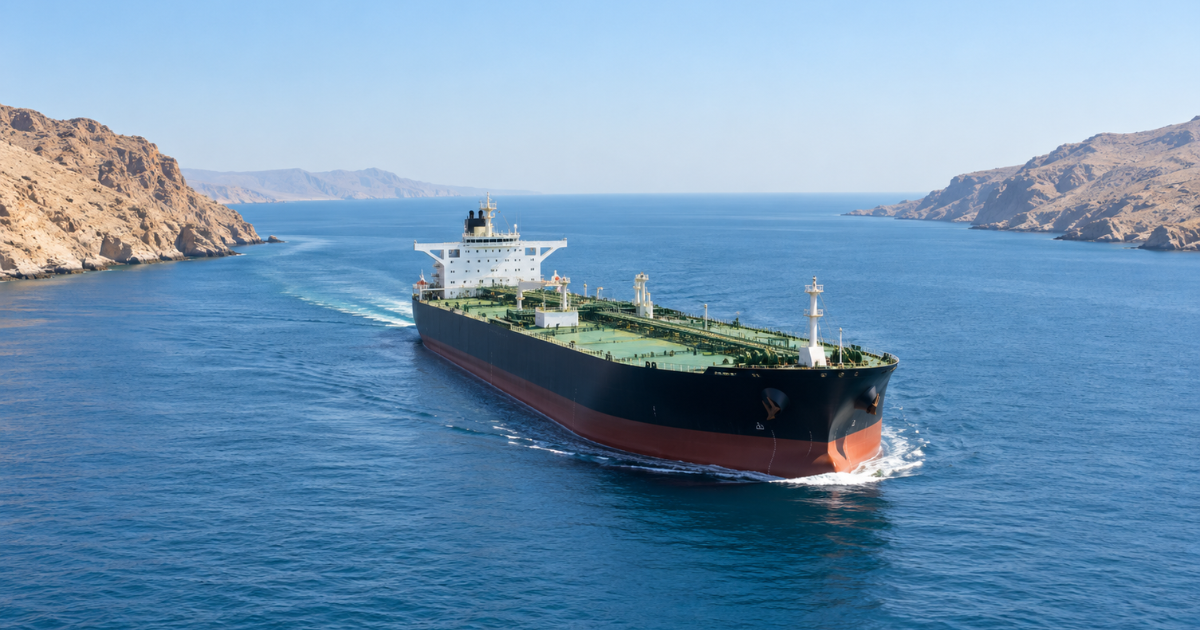
Oil prices climbed sharply this week as renewed attacks on tankers and a steep drop in shipping traffic through the Strait of Hormuz revived concerns about global energy supplies.
Brent crude surged above $100 a barrel, while U.S. crude prices also moved higher as traders reacted to growing risks in one of the world’s most important oil-shipping corridors.
The latest concern centers on the Strait of Hormuz, where vessel traffic has fallen to its lowest level in more than two months.
According to data from Kpler cited by Reuters, only seven commodity vessels passed through the strait on October 6, the lowest number since July 23. Crude movements through the waterway had fallen about 27% from their wartime weekly high, to roughly 10.1 million barrels per day.
The decline comes as attacks on commercial shipping have intensified. Reuters reported that tanker attacks reached their highest weekly level since the current conflict began, adding to concerns about insurance costs, shipping delays and the safety of crews operating in the region.
Despite the disruptions, the Strait of Hormuz is not completely closed. Ships continue to pass through, and Middle Eastern producers have increasingly used alternative export routes through the Gulf of Oman and Red Sea to compensate for some of the lost traffic.
The broader problem for the oil market is increasingly one of logistics rather than simply the amount of crude available.
Higher tanker costs, expensive insurance and disruptions to refining and transportation have kept energy prices elevated even when overall Middle Eastern exports have improved.
Questions Over Emergency Oil Reserves
Another source of market concern is the use of emergency oil reserves.
The International Energy Agency recently backed faster delivery of roughly 100 million barrels from strategic reserves. But that figure largely represents oil that had already been pledged under an emergency release agreed earlier this year, rather than an entirely new 100-million-barrel commitment.
That distinction matters because markets had been looking to emergency reserves as a way to offset supply and transportation disruptions.
Germany has since announced plans to release up to 15 million barrels of crude and refined products as part of the coordinated effort.
For now, oil markets remain highly sensitive to developments in the Strait of Hormuz.
Even without a complete closure, fewer tanker crossings, repeated attacks and higher transportation costs are enough to keep pressure on crude and fuel prices around the world.
Sources: Reuters; International Energy Agency; Euronews
By NJ RADAR Team