


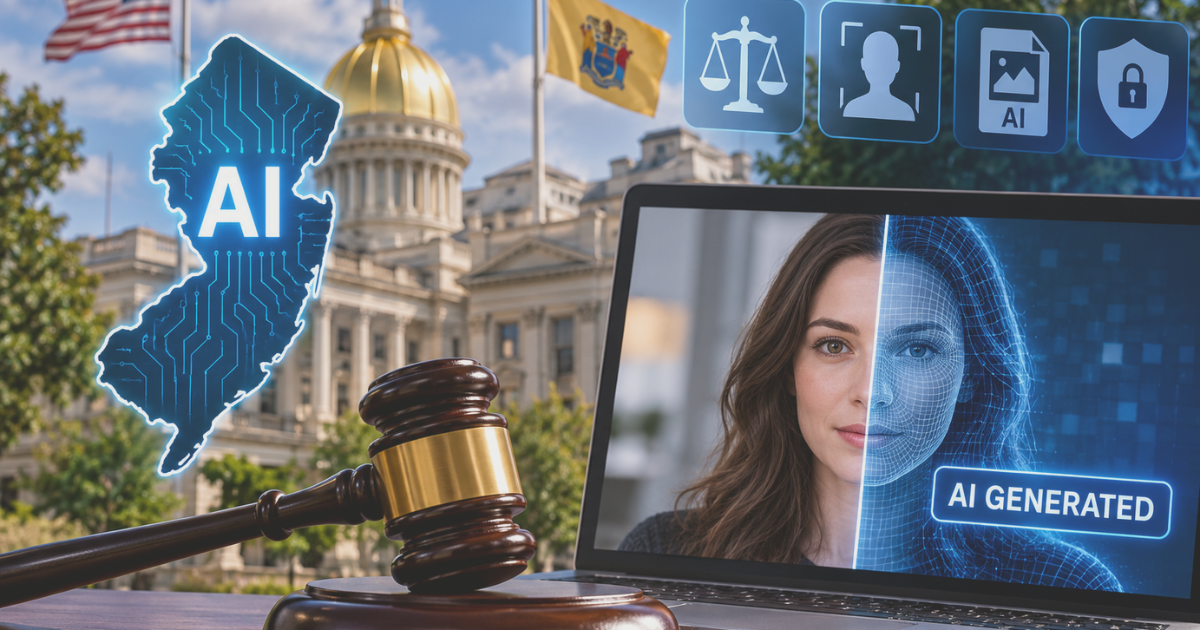
New Jersey lawmakers are considering four bills that would introduce stronger protections against the misuse of artificial intelligence, including mandatory labeling of AI-generated content, protection of personal identities, and greater oversight of major technology companies.
The proposals were discussed Monday, October 19, by the Assembly Science, Innovation, and Technology Committee. Lawmakers heard competing arguments from technology industry representatives, business organizations, and AI safety experts.
No votes were taken during the hearing.
AI-Generated Images and Videos Could Require Labels
One of the proposals, Assembly Bill A5089, would require AI-generated content to carry clear disclosures identifying it as artificially created.
The legislation also calls for computer-readable markers that could help verify whether digital material was produced using artificial intelligence.
The goal is to make it easier for the public to distinguish authentic photographs, recordings, and videos from digitally generated material.
Supporters argue that such protections are becoming increasingly important as AI-generated content becomes more realistic and harder to recognize.
Business representatives, however, warned that proposed penalties of $5,000 per violation per day could create serious financial difficulties for smaller technology companies.
Stronger Protection for Names, Faces, and Voices
A second proposal, A3065, would give New Jersey residents stronger legal control over the use of their names, images, likenesses, and voices.
Under the proposal, individuals whose identities are used without authorization could seek compensation through civil lawsuits.
Certain violations could also result in criminal penalties.
The legislation responds to growing concerns about AI-generated impersonations, including fake videos, manipulated voices, and unauthorized reproductions of real people.
Business representatives called for safeguards that would allow companies to remove unauthorized content before facing legal consequences.
Could AI Companies Be Held Responsible for Misuse?
Another bill, A5090, would establish potential civil liability for generative AI platforms when their technology is used to facilitate criminal activity or create child sexual abuse material.
Companies could defend themselves by demonstrating that they took reasonable measures to prevent prohibited uses.
Representatives of the technology industry argued that developers cannot anticipate every possible misuse of their products.
Matt Lenz, public policy director for Meta, told lawmakers that responsibility should appropriately distinguish between technology developers and individuals who misuse their systems.
New Oversight of Major AI Developers
A fourth proposal, A5275, would require large AI developers to disclose certain safety procedures to the New Jersey attorney general.
The attorney general would also have authority to conduct audits, including through independent contractors.
Supporters say the proposal would help ensure that companies developing increasingly powerful AI systems face appropriate external oversight.
Mihir Kshirsagar, director of Princeton University’s Tech Policy Clinic, emphasized that AI systems are human-engineered products and should remain subject to human oversight and accountability.
Technology Industry Warns Against Excessive Regulation
The New Jersey Business and Industry Association expressed concern that aggressive regulation could create a complicated patchwork of state laws and discourage innovation.
Supporters of stronger oversight countered that voluntary corporate safety practices may not be sufficient to protect the public from increasingly sophisticated AI systems.
Assemblyman Andrew Macurdy, a Democrat representing Union County and sponsor of the four-bill package, defended the need for meaningful penalties capable of influencing major technology companies.
What Happens Next?
All four proposals remain under consideration.
The Assembly committee discussed the measures without taking formal votes, meaning none of the new requirements has become law.
If the legislation advances, New Jersey could join states such as New York and California in adopting stronger rules governing artificial intelligence.
For residents, businesses, content creators, and news organizations, the outcome could affect how AI-generated images and videos are identified, how personal identities are protected, and who bears responsibility when the technology is misused.
Sources: New Jersey Monitor | NJ Legislature A3065 | A5089 | A5090 | A5275
By NJ RADAR Team