


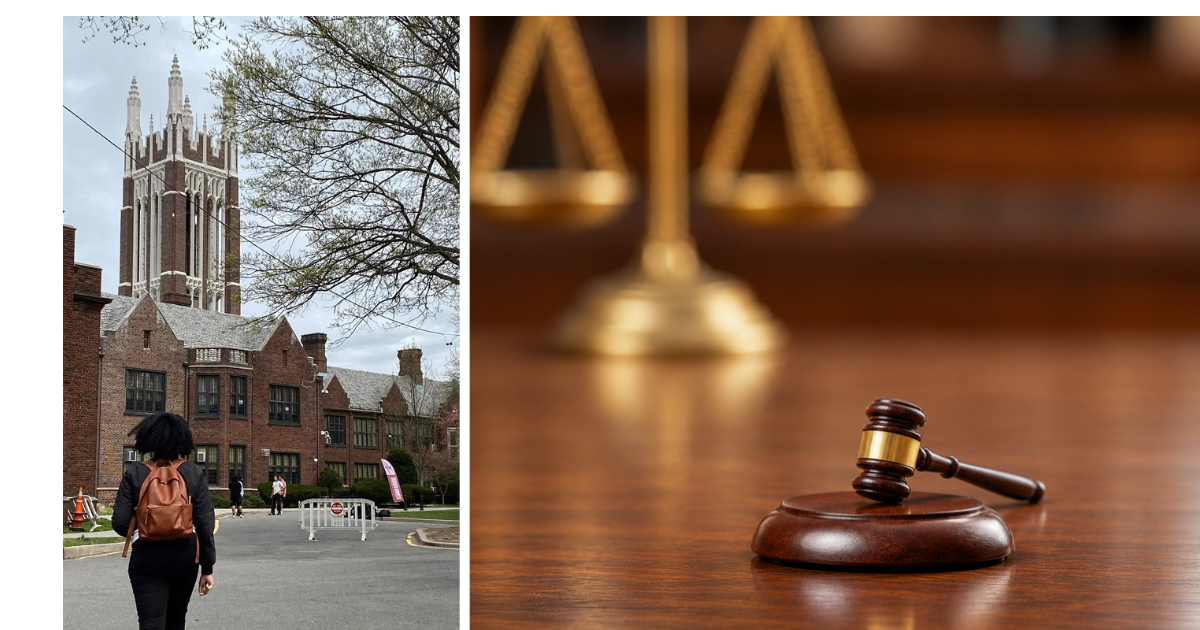
Nearly eight years after a coalition of families and civil rights organizations challenged racial and socioeconomic segregation in New Jersey’s public schools, the legal battle is far from over.
On Friday, November 20, a New Jersey appellate court returned the case to a lower court for further examination, leaving unresolved the question of whether the state is responsible for unconstitutional segregation in its public education system.
The three-judge panel neither ruled in favor of the plaintiffs nor granted the state’s request to dismiss the lawsuit.
A Problem That Extends Beyond School Boundaries
The lawsuit, originally filed in 2018, involves families and civil rights organizations, including the Latino Action Network and the New Jersey State Conference of the NAACP.
It focuses on 23 school districts across eight counties, including Newark, Paterson and Passaic, where Black and Latino students account for more than 90% of public school enrollment, according to the plaintiffs.
At the center of the dispute is New Jersey’s residency-based school enrollment system. Children generally attend public schools in the municipalities or districts where they live.
The plaintiffs argue that this system, combined with existing patterns of residential segregation, perpetuates racial and socioeconomic divisions in education.
State attorneys, however, have argued that demographic changes contribute to these enrollment patterns and that the state should not be held constitutionally responsible for them.
A Constitutional Question
New Jersey’s 1947 Constitution explicitly prohibits racial segregation in public schools — seven years before the U.S. Supreme Court’s landmark Brown v. Board of Education decision in 1954.
In 2023, a lower court acknowledged persistent racial disparities in New Jersey’s public schools but stopped short of finding the statewide education system unconstitutional.
The latest appellate ruling calls for additional evidence concerning the relationship between school residency requirements, segregation and the state’s response to existing disparities.
The judges also rejected the state’s argument that addressing the problem through the courts would be futile and should be left entirely to the Legislature.
What Happens Next?
Attorneys representing the plaintiffs have expressed disappointment with the ruling and indicated that they intend to take the case to the New Jersey Supreme Court.
The outcome could have significant implications for school district boundaries, student enrollment policies and educational opportunities across New Jersey.
For now, however, no changes to school enrollment rules have been ordered. The central constitutional question remains unanswered, and a legal dispute that began in 2018 continues into another year.
Sources: New Jersey Monitor, NJ Spotlight News, New Jersey Superior Court – Appellate Division
By NJ RADAR Team