


KEARNY, NJ — After more than a century of delays, mechanical failures and interruptions to one of America’s busiest rail corridors, New Jersey officially opened both tracks of the new $2.3 billion Portal North Bridge on Monday, November 16, retiring a 116-year-old structure that had become a persistent problem for commuters traveling between New Jersey and New York City.
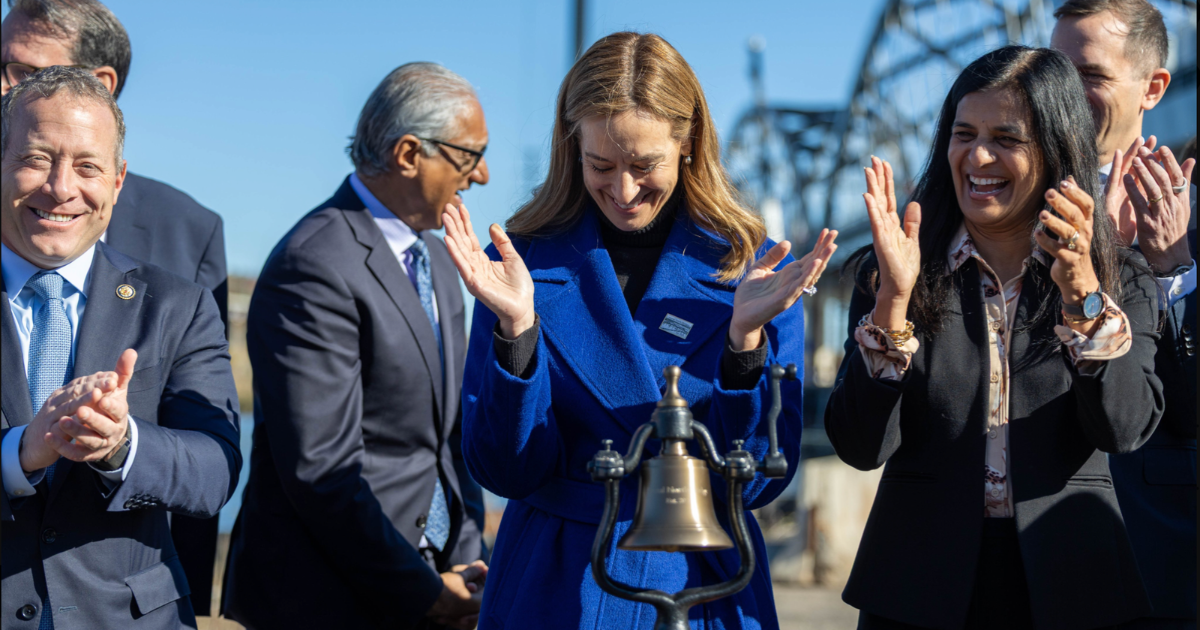
Gov. Mikie Sherrill joined NJ Transit and Amtrak officials in Kearny to celebrate the completion of the long-awaited replacement over the Hackensack River.
The milestone followed five weeks of construction and temporary service changes as crews transferred the final railroad track from the old bridge to the new structure.
Approximately 450 trains use this section of the Northeast Corridor every day, making the crossing a critical connection for commuters and intercity passengers.
A Bridge That Had Outlived Its Time
The original Portal Bridge opened in 1910, when railroad technology and transportation demands were dramatically different.
Its movable swing span rotated to allow boats to pass along the Hackensack River. But as the structure aged, the mechanism increasingly became a source of trouble.
When the bridge failed to close and lock correctly after opening for marine traffic, trains were forced to wait until the problem was resolved.
A single malfunction could create delays extending far beyond the bridge itself, affecting NJ Transit and Amtrak services throughout the Northeast Corridor.
For generations of commuters, the aging bridge became a symbol of the region’s deteriorating transportation infrastructure.
A Modern Bridge That Never Has to Open
The new Portal North Bridge solves the old structure’s central mechanical problem.
Rising approximately 50 feet above the Hackensack River, the two-track fixed bridge provides enough clearance for marine traffic to pass underneath without requiring the railroad crossing to open.
Removing the movable span eliminates a major cause of train delays and allows railroad operations to continue without interruption from passing boats.
The modern structure is also designed to support higher operating speeds and future improvements in rail capacity.
The project extends across approximately 2.44 miles of the Northeast Corridor, including new rail approaches, foundations, retaining walls, electrical systems and other supporting infrastructure.
The old bridge is scheduled to be dismantled in 2027.
Five Weeks of Disruptions Come to an End
Completing the final connection required extensive work on the railroad tracks and electrical systems.
Beginning October 9, NJ Transit and Amtrak crews worked to transfer service from the remaining track on the old bridge to the second track on its replacement.
During the five-week construction period, commuters experienced altered schedules, reduced service and temporary diversions.
Passengers on several Midtown Direct routes were redirected to Hoboken instead of New York Penn Station, requiring additional connections to reach Manhattan.
Other rail lines also experienced service reductions because trains had to share limited track capacity between Newark and Secaucus.
Regular weekend service resumed November 15, followed by the return of normal weekday schedules on Monday, November 16.
With both tracks operating on the new bridge, the temporary Midtown Direct diversions and special cross-honoring arrangements have ended.
Sherrill Celebrates a Major Infrastructure Milestone
Gov. Mikie Sherrill described the completion as a long-overdue improvement for New Jersey commuters.
“New Jersey commuters deserve to get to work on time and get home to their families without a century-old bridge holding up the entire Northeast Corridor,” Sherrill said during Monday’s announcement.
She emphasized that replacing the bridge removes a longstanding source of delays and improves the reliability of a transportation network essential to the state’s residents and economy.
Amtrak and NJ Transit officials also credited construction crews and passengers who endured months of disruptions during the transition.
U.S. Sen. Cory Booker highlighted the federal investment that helped make the replacement possible, noting that the project had required years of planning and funding efforts.
Part of a Much Larger Transportation Project
The new Portal North Bridge is not an isolated infrastructure investment.
It is a major component of the Gateway Program, a broader initiative intended to modernize and expand passenger rail connections between New Jersey and New York.
The program also includes the Hudson Tunnel Project, which aims to construct new railroad tunnels beneath the Hudson River and rehabilitate the existing century-old infrastructure.
The Portal North Bridge is the first completed project among Gateway’s 11 major projects.
Construction of the bridge was supported by federal funding, New Jersey, New York and Amtrak.
The project received substantial federal assistance, including a Federal Transit Administration contribution of $926 million.
In 2021, NJ Transit approved a construction contract valued at approximately $1.56 billion, the largest construction award in the agency’s history at the time.
The overall bridge project is valued at approximately $2.3 billion.
What the New Bridge Means for Commuters
The immediate benefit is straightforward: trains no longer have to wait for an aging swing bridge to close after boats pass beneath it.
The replacement is expected to reduce bridge-related delays, improve reliability and provide a more dependable connection between Newark, Secaucus and New York Penn Station.
However, the new bridge does not eliminate every source of congestion along the Northeast Corridor.
Other aging infrastructure, including the existing Hudson River tunnels, will continue to affect service until further improvements are completed.
The opening nevertheless represents a substantial change for the tens of thousands of passengers who depend on the crossing each day.
After 116 years, one of the Northeast Corridor’s most troublesome railroad structures has finally been retired, replaced by a modern bridge designed to serve the region for decades to come.
Sources: NJ Transit, November 16, 2026; Amtrak, November 16, 2026; CBS News New York, November 16, 2026; NorthJersey.com, November 16, 2026; Gateway Development Commission.
By NJ RADAR Team