

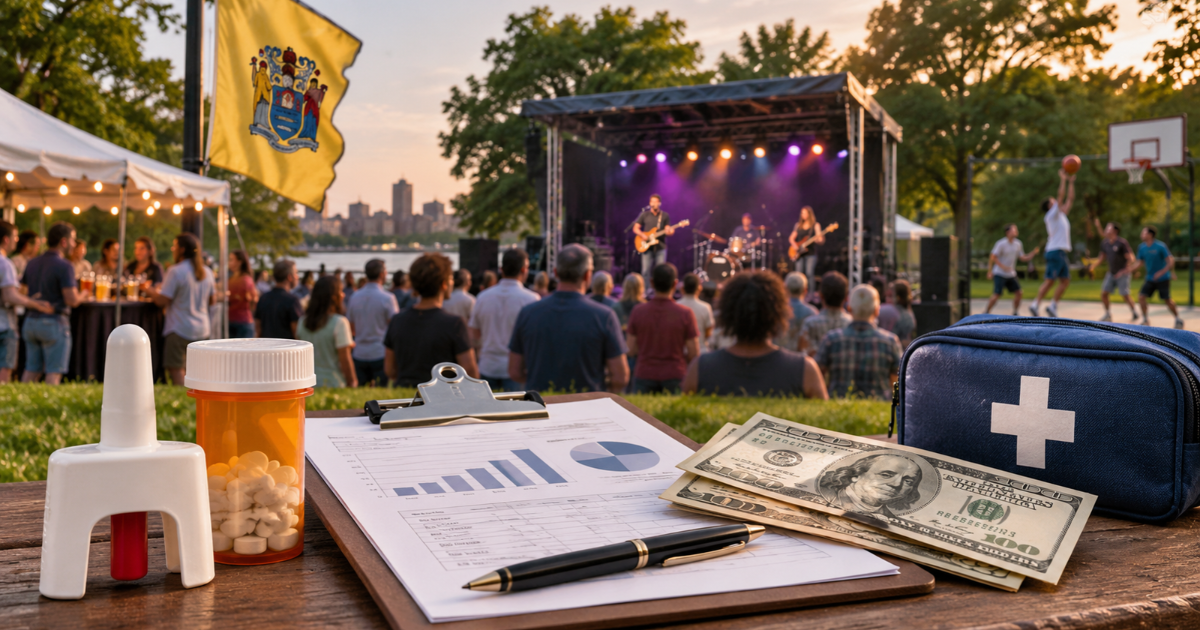
TRENTON, NJ — November 18, 2026 — Millions of dollars intended to address New Jersey’s opioid epidemic have been spent on concerts, festivals, graduation parties, recreational activities and school programs, raising concerns among addiction advocates about how local governments are managing funds meant to prevent overdoses and support recovery.
An investigation published Wednesday by the New Jersey Monitor examined spending reports filed by counties and municipalities receiving money from national settlements with pharmaceutical manufacturers, distributors and retailers.
New Jersey and its local governments are expected to receive approximately $1.1 billion through 2038 to address the damage caused by the opioid crisis.
The money is intended to support prevention, treatment, harm reduction and recovery services. However, some communities have interpreted those categories broadly, financing activities whose direct connection to opioid addiction has been questioned.
Concerts, Parties and School Programs
According to the investigation, local governments spent nearly $2.5 million during the fiscal year ending June 30, 2026, on community programs, events, summer camps and services described as addiction prevention or education.
Another approximately $1 million went toward school presentations, educational programs, scholarships and after-school activities.
Some presentations addressed addiction directly, while others focused on subjects such as cyberbullying, leadership, mental health, vaping and general life skills.
Among the expenditures identified:
- Plainfield: Nearly $232,000 for a house music festival attended by approximately 6,000 people.
- Paramus, Bergen County: $4,200 for a free opioid awareness concert, according to earlier spending records.
- Rahway: $12,000 for a sixth-grade school assembly featuring food, a photo booth and an inflatable brain.
- Passaic County: $70,000 for yoga classes intended to help 108 people receiving addiction treatment manage anxiety.
- Camden County: More than $23,000 for a recovery-oriented recreational program involving sports, arts and other activities.
At least four communities also spent a combined $21,000 on high school graduation celebrations.
Officials Defend Recovery Activities
Some local officials argue that recreational and social programs can serve a legitimate role in helping people maintain sobriety.
Camden County spokesman Dan Keashen defended the county’s Recovery Encouragement Athletic/Activity League, saying the activities provide social support to people who have overcome addiction and may remain vulnerable to relapse.
County officials said an addiction awareness task force, including public health professionals and people with personal experience of substance use disorders, helps determine how settlement funds are allocated.
Passaic County officials similarly defended their yoga program, explaining that complementary activities can help people remain engaged in treatment alongside counseling and medication.
These explanations highlight an important distinction: not every recreational or community activity is necessarily an improper expense, but its connection to opioid prevention or recovery should be clear and measurable.
Families and Advocates Demand Accountability
Addiction prevention advocates argue that funds should prioritize services with demonstrated benefits, including overdose-reversal medication, treatment access, fentanyl test strips and community outreach.
Bre Azanedo, a harm reduction worker, told the New Jersey Monitor that organizations working directly with people affected by addiction often struggle to obtain funding despite their experience preventing overdose deaths.
Tonia Ahern, whose 29-year-old son Rory died from an opioid overdose in 2021, questioned whether paying for entire concerts is justified simply because naloxone is distributed at the event.
Her concerns reflect a broader demand for transparency over how the settlement money is spent and whether programs produce measurable results.
State Lawmakers Consider Stronger Oversight
The controversy follows earlier findings involving Irvington, where state investigators criticized the use of more than $600,000 in opioid settlement money for two awareness concerts.
Several New Jersey lawmakers have proposed legislation to strengthen reporting requirements and oversight.
One proposal would require recipients to spend settlement funds within 18 months unless they receive approval for a longer-term project.
Advocates also want clearer public accounting, stronger auditing procedures and greater involvement from people directly affected by addiction.
The debate is not simply about whether concerts, educational presentations or recreational programs have community value.
It is about whether money obtained to address one of New Jersey’s deadliest public health crises is reaching the people and services it was intended to support.
As additional settlement payments arrive over the coming years, local officials will face increasing pressure to demonstrate that every expenditure contributes meaningfully to preventing addiction, reducing overdoses or supporting recovery.
Sources: New Jersey Monitor, Dana DiFilippo, November 18, 2026; New Jersey Office of the State Comptroller; New Jersey Opioid Settlement Fund Spending Reports; New Jersey Legislature.
By NJ RADAR Team