


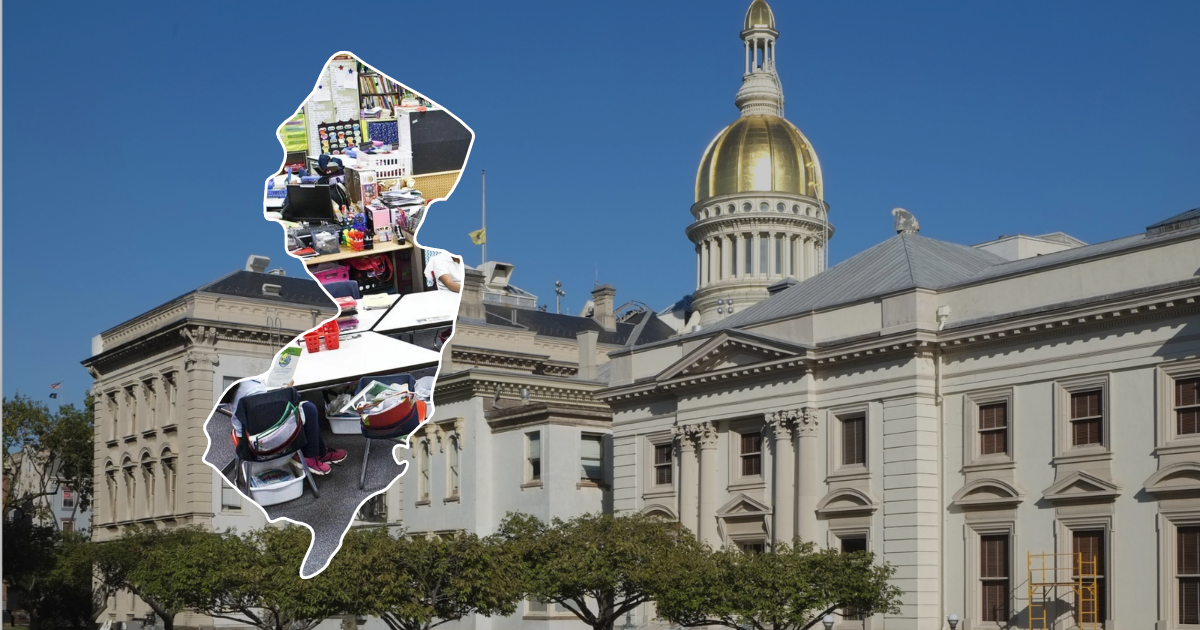
TRENTON, NJ — November 18, 2026 — New Jersey may need to hold a constitutional convention to address longstanding problems with public school funding and the state’s heavy reliance on property taxes, according to Assembly Majority Leader Lou Greenwald, a Democrat representing Camden County.
Speaking Wednesday at the New Jersey League of Municipalities’ annual conference, Greenwald suggested that voters should have a direct role in approving a new school funding system once state officials develop a comprehensive reform proposal.
The discussion comes as Gov. Mikie Sherrill’s administration reviews the state’s school funding formula, which has generated years of disputes over educational resources, rising local taxes and unequal financial pressures on school districts.
Why New Jersey’s School Funding System Is Under Review
New Jersey’s current school funding formula, enacted in 2008, determines how much money school districts need to provide students with an adequate education.
The state considers factors including student enrollment, educational needs, household income and local property values when calculating financial assistance.
Districts are expected to contribute a local share, largely through property taxes, while state aid helps cover the remaining costs.
However, the system has produced significant financial challenges.
Some communities struggle to raise enough local revenue, while others have experienced substantial reductions in state aid. The state’s general 2% limit on annual property tax levy increases adds another complication for districts facing rising operating expenses.
Changes introduced in 2018 also began phasing out certain funding protections, causing substantial shifts in the amount of state aid received by individual districts.
Property Taxes at the Center of the Debate
School funding reform is closely connected to one of New Jersey’s most persistent affordability concerns: property taxes.
According to figures cited by the New Jersey Monitor, the state’s average annual property tax bill reached a record $10,570 in 2025.
New Jersey also tied with Illinois for the nation’s highest effective property tax rate in 2024, according to the Tax Foundation.
Because public schools depend heavily on local property tax revenue, changes to education funding could have consequences for homeowners, municipalities and school budgets.
Greenwald argued that addressing school funding requires examining the broader tax system rather than changing the distribution of state education aid alone.
Could Voters Decide the Future of School Funding?
Greenwald proposed that once a new funding formula is developed, New Jersey could convene a constitutional convention and involve voters in the approval process.
A constitutional convention would provide a formal mechanism for considering changes to the state’s constitutional framework, although the precise scope and procedures of any proposed convention have not been determined.
The idea remains a proposal. No constitutional convention has been approved or scheduled as a result of Wednesday’s remarks.
There are also unresolved legal questions about how constitutional changes to school funding might interact with court rulings requiring New Jersey to provide students with a thorough and efficient public education.
What Happens Next?
The Sherrill administration began gathering public input on school funding reform in August 2026.
The New Jersey Department of Education is reviewing issues including special education costs, student transportation, enrollment, local financial capacity and the distribution of state aid.
Officials have indicated that public consultations will continue at least through December.
Senate Majority Leader Teresa Ruiz, a Democrat from Essex County, has also indicated that she does not expect a completed reform proposal before the end of the current fiscal year in June 2027.
For now, the future of New Jersey’s school funding system remains uncertain.
What is clear is that the debate extends beyond education budgets. Any major overhaul could reshape how communities finance public schools, how state resources are distributed and how much residents contribute through property taxes.
The central challenge will be finding a system that provides adequate educational opportunities for students while addressing the financial pressures facing New Jersey taxpayers.
Sources: New Jersey Monitor (November 18, 2026) | New Jersey Department of Education (September and October 2026) | The Philadelphia Inquirer (October 6, 2026)
By NJ RADAR Team