


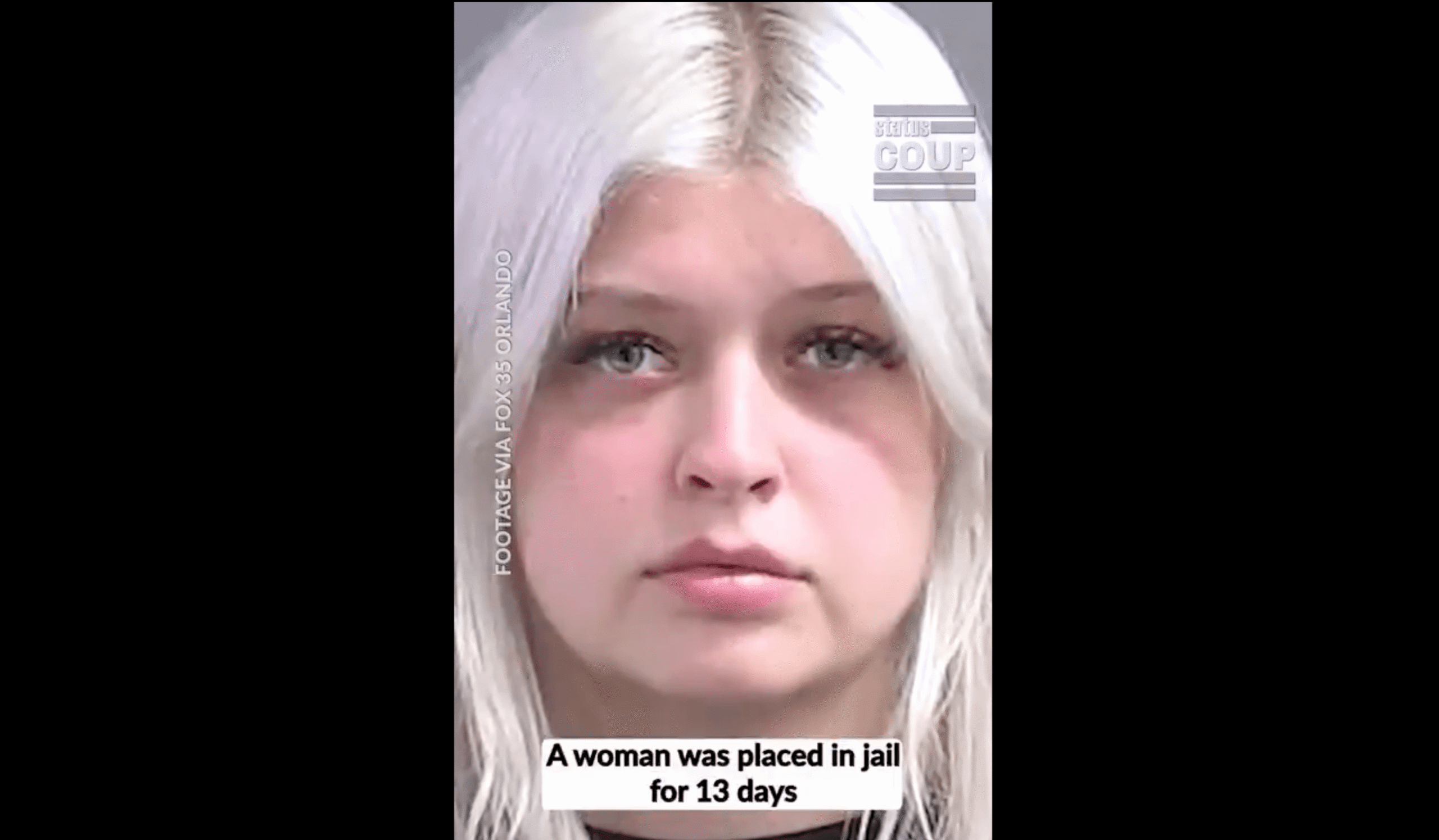
VOLUSIA COUNTY, FL — A 23-year-old Florida woman spent 13 days in jail, faced serious criminal charges and says she still receives death threats over a deadly crash she did not cause.
Her name is Lindsey Isaacs, and her case has become one of the clearest examples yet of what can happen when surveillance technology, witness statements and police assumptions all point in the wrong direction.
The case began after a deadly crash on Interstate 4 in Volusia County in October 2025. Three people were killed and another person was seriously injured.
Witnesses described the vehicle involved as a Dodge Durango and initially said it appeared to be black. Investigators then found a black Dodge Durango registered to Isaacs appearing on nearby Flock license-plate cameras around the time of the crash.
That became a crucial part of the investigation.
Months later, Isaacs was arrested.
She was accused of being behind the wheel of the vehicle that caused the fatal crash and spent 13 days in jail before prosecutors ultimately declined to pursue the charges.
But the car investigators were looking for was not hers
According to later court records, investigators eventually concluded that the vehicle involved in the crash was actually a maroon Dodge Durango, not Isaacs’ black SUV.
The crash happened on a dark, poorly lit section of Interstate 4, and investigators later determined that witnesses could have mistaken the maroon vehicle for a black one.
A new investigation eventually focused on another woman, Alisa Lee Montalvo, 47, who is now facing multiple charges, including three counts of vehicular homicide and three counts of leaving the scene of a crash involving death.
But by then, Isaacs had already been arrested, jailed and publicly connected with a crash that killed three people.
Her lawsuit says police ignored evidence
Isaacs has now filed a federal civil-rights lawsuit against the Florida Highway Patrol.
The lawsuit accuses investigators of ignoring evidence that should have raised serious doubts about whether she was the driver.
According to reporting on the lawsuit, investigators relied in part on damage they believed they saw on Isaacs’ vehicle, even though the vehicle eventually linked to the crash was a different color.
Her case therefore raises an important distinction.
The Flock camera did not itself arrest Lindsey Isaacs.
It recorded her vehicle near the area.
The problem, according to her lawsuit, was what happened after that information entered the investigation.
Investigators allegedly focused on her vehicle despite other evidence that could have pointed them elsewhere.
Thirteen days in jail, but the consequences did not end there
After her release, Isaacs described the lasting impact of being publicly accused of causing a fatal crash.
She said she continues to receive death threats and hateful messages, even though prosecutors dropped the charges against her.
Her attorney has also said the experience caused severe emotional harm and that she is receiving medical care as a result.
For Isaacs, being cleared did not simply erase what had happened.
Her name had already been associated with three deaths.
Her photograph had already circulated.
And she had already spent nearly two weeks behind bars.
The bigger question surrounding Flock cameras
Flock cameras are automated license-plate readers capable of recording vehicles as they travel through communities. Police departments use the system to search for stolen cars, suspects and vehicles connected with investigations.
But the Isaacs case shows why the information produced by surveillance technology still requires careful human verification.
A camera can tell investigators that a particular vehicle passed a particular location.
It cannot, by itself, establish who was driving, why the vehicle was there or whether that vehicle actually committed a crime.
In this case, the vehicle captured by Flock was similar enough to the one witnesses described that investigators focused on its owner.
That owner turned out to be innocent.
And that may be the most troubling part of this story.
Technology can produce enormous amounts of information in seconds.
But when that information is treated as an answer instead of a clue, the consequences can fall on a real person.
For Lindsey Isaacs, those consequences meant 13 days in jail for a deadly crash she did not cause — and a reputation she says she is still struggling to recover.
Sources: WKMG News 6 / ClickOrlando, court records and reporting on Isaacs’ federal civil-rights lawsuit.
By NJ RADAR Team