


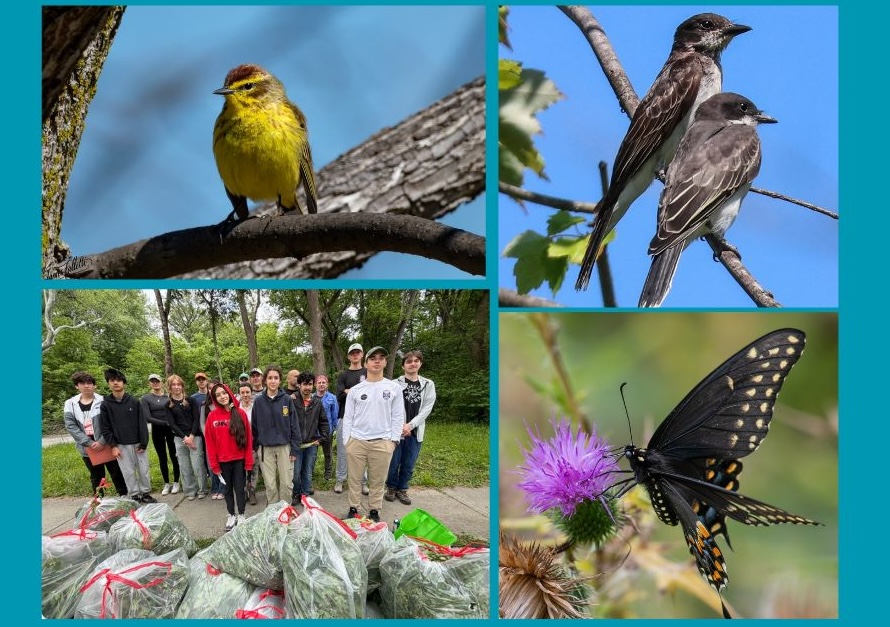
TEANECK, N.J. — Just about 10 miles from Midtown Manhattan, surrounded by highways and some of the most densely developed communities in Bergen County, lies a 46-acre landscape that tells an unusual story of environmental recovery.
Today, Teaneck Creek Park is home to freshwater wetlands, woodland, walking trails, wildlife and environmental art. But the green landscape visitors see today looks very different from the property that community members set out to rescue a quarter-century ago.
An area once intended to become a landfill and later used for decades as an unofficial dumping ground has been transformed into an urban nature sanctuary — including 20 acres of restored and newly created freshwater wetlands.
It Was Once Supposed to Become a Landfill
The story begins more than a century ago.
In the early 1900s, the 46-acre property was intended to become a landfill. According to Bergen County, clay was placed over portions of the site to serve as a base liner.
The landfill itself was never built, but the clay remained.
In 1951, the Township of Teaneck transferred the property to Bergen County for use as a public park and recreation area.
But the land continued to suffer.
Teaneck Creek Conservancy says the area later became an unofficial dumping ground for nearly half a century. Old refrigerators and tires could be found partly buried among piles of broken concrete and asphalt. The site had also been used as a staging area during construction around the intersection of Routes 80 and 95.
Years of development, altered drainage, stormwater runoff and invasive plants further damaged the wetlands. Bergen County describes the property as having become a fragmented wetland heavily affected by invasive species, including Phragmites and Japanese knotweed.
A Community Decided the Land Could Be Saved
The modern transformation began in 2001.
Teaneck Creek Conservancy was established as a nonprofit organization to steward the 46-acre section of Bergen County’s Overpeck County Park.
Founder Perry Rosenstein brought together environmentalists, artists and educators with a different vision for the neglected property. Working alongside community leaders and the Bergen County Parks Department, volunteers began reclaiming the landscape.
The work wasn’t simply about cleaning up garbage.
It developed into a much larger effort involving ecological restoration, stormwater management, native plants, wildlife habitat, public trails, education and art.
By 2006, after years of community meetings and thousands of volunteer hours, Teaneck Creek Park had emerged with more than 1.3 miles of maintained trails, an outdoor classroom and ecological art installations.
Meanwhile, scientists were studying how to restore the damaged wetlands themselves.
In 2003, Teaneck Creek, a tributary of the Hackensack River, was identified as a priority restoration site by the New York-New Jersey Harbor & Estuary Program.
Research into the site’s hydrology and vegetation eventually led to a conceptual wetland restoration plan approved in 2008, followed by a final restoration plan completed for Bergen County in 2015.
Twenty Acres of Freshwater Wetlands Restored
The most ambitious phase came decades after the original community effort began.
After approximately two years of major ecological work, Bergen County completed the restoration project in 2022. The park fully reopened in April 2023 after newly planted vegetation was given time to establish itself.
The results were substantial.
Approximately 20 acres of freshwater wetlands were restored or created, debris was removed from publicly accessible areas, invasive vegetation was addressed and native grasses, shrubs and trees were introduced.
Crews also worked to restore the way water naturally moves through the property.
One particularly interesting feature was the use of Regenerative Stormwater Conveyance, an approach designed to slow and spread stormwater rather than allowing it to rush through the landscape and cause erosion.
The system helps protect trails and other infrastructure while simultaneously improving wetland habitat and ecological function.
The Conservancy describes the transformation simply: land that was once slated to become a dump now contains some of New Jersey’s newest freshwater wetlands.
The Birds Are Coming Back
Perhaps the most visible evidence of the transformation has wings.
Birds that use wetland environments now provide visitors with a living indication of what the restored habitat can support.
The Conservancy says Great Egrets have become a common sight following the creation of freshwater wetlands, while its continuing research programs monitor how restoration has affected habitat quality for wildlife.
Another visitor is the Solitary Sandpiper (Tringa solitaria), a migratory shorebird that stops at inland wetlands during its seasonal journeys.
Local wildlife photographer James Falletti has documented a Solitary Sandpiper returning to Teaneck Creek during its spring migration, describing the bird as a familiar migrant that has appeared at these wetlands for several years.
His photographs and other observations from the park provide a glimpse of the wildlife now using a landscape that, not so long ago, was filled with discarded tires, concrete and other debris.
The Conservancy says the restoration has increased the diversity of plants and animals at the site, and community-science monitoring has been underway since summer 2023 to measure the results.
Where Nature and Art Meet
Teaneck Creek is unusual for another reason: restoration here has never been only about ecology.
Art has been incorporated into the landscape since the early years of the project.
Environmental installations, some involving reclaimed materials, appear along trails and throughout the park, connecting the history of the damaged landscape with its transformation.
In 2025, for example, the Conservancy created the Woodland Peace Garden, expanded native plantings and continued invasive-species management while artists and volunteers used reclaimed materials for public works celebrating the natural and cultural history of the Creek.
That combination of wetlands, trails, wildlife, environmental education and art has helped turn Teaneck Creek into something quite different from a traditional county park.
Twenty-Five Years Later
This year gives the story additional significance.
Teaneck Creek Conservancy is celebrating its 25th anniversary in 2026.
The organization marked the milestone this summer by recognizing the volunteers, community organizations and government partners that helped transform the property over a quarter-century.
The Conservancy says native vegetation has steadily returned, while new microhabitats are supporting a growing number and variety of migratory birds. Since the major wetland restoration reopened, thousands of people have also participated in nature programs, educational activities and community events at the park.
The work is not entirely finished. Future improvements to damaged trails and footbridges are proposed for 2027 or later, according to the Conservancy’s restoration plans.
But the transformation already completed at Teaneck Creek is striking.
A piece of Bergen County land once prepared for a landfill, later scarred by dumping, construction debris and environmental degradation, now contains 20 acres of restored freshwater wetlands where native vegetation is returning and migratory birds stop during journeys that stretch far beyond New Jersey.
And perhaps that is what makes Teaneck Creek’s story unusual.
It isn’t simply the story of a park being built.
It is the story of a landscape that a community decided was worth bringing back.
Sources: Teaneck Creek Conservancy; Bergen County Department of Parks; New York-New Jersey Harbor & Estuary Program. Additional wildlife imagery/observations: James Falletti (X).