

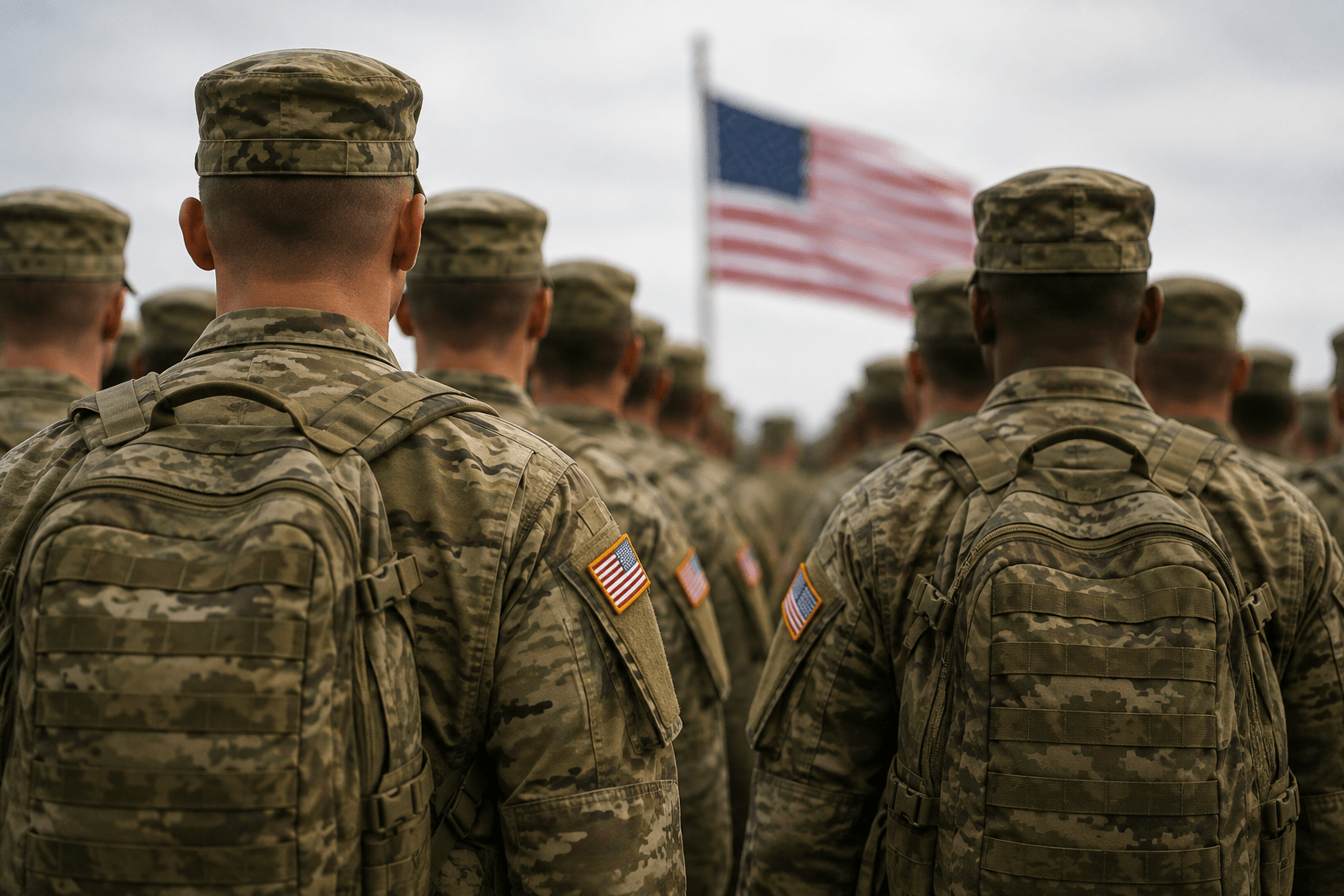
Beginning December 18, 2026, most young men in the United States who are legally required to register with the Selective Service System will no longer need to do so themselves. Instead, the federal government will automatically register eligible individuals using information already available in federal databases.
The change was mandated in December 2025, when President Donald Trump signed into law the National Defense Authorization Act (NDAA) for Fiscal Year 2026, and represents the biggest overhaul of the Selective Service registration process since self-registration was introduced decades ago. The measure was included in the bill with strong bipartisan support in both the House and Senate, and its timeline has no connection to the ongoing conflict with Iran — it was passed months before that conflict began.
What is changing?
Until now, most men between the ages of 18 and 26 were required by law to register with the Selective Service shortly after turning 18. Those who failed to register could face consequences affecting certain federal benefits and employment opportunities. According to the Selective Service System’s own reporting, roughly one in five eligible men has remained unregistered under the current self-registration system.
Under the new system, eligible men will be automatically registered within 30 days of their 18th birthday — the same window currently used for self-registration — using existing federal records, eliminating the need for them to submit a registration themselves. They will then receive written notice confirming their registration, along with information on how to contest it if they belong to a group that qualifies for exemption.
Men who are not required to register — for example, those with certain medical conditions or those present in the country on nonimmigrant visas — will still have a process available to remove themselves from the rolls.
It’s also worth noting that automatic registration isn’t an entirely new concept: 46 states and territories already operate similar systems at the state level. The December rule simply extends the practice to the federal government for the first time.
Does this mean the U.S. is bringing back the military draft?
No.
The new law does not reinstate mandatory military service. The United States continues to rely on an all-volunteer military, a policy unchanged since the last draft induction order expired in February 1973, following the Vietnam War.
Automatic registration simply changes how eligible men are entered into the Selective Service System. A military draft could only occur if authorized by a separate act of Congress and signed by the President, most likely during a national emergency.
Democratic Rep. Chrissy Houlahan, who sponsored the automatic registration language in the NDAA, said the change “saves taxpayer dollars by eliminating the need to advertise” and “finally ensures that young men are not unknowingly penalized” for missing the registration deadline. She stressed that the measure enjoys bipartisan support.
Who will be affected?
The automatic registration requirement generally applies to male U.S. citizens and many male permanent residents (green card holders) between the ages of 18 and 26, replacing the previous self-registration requirement.
For millions of young Americans, the practical effect is simple: instead of registering themselves, the process will now happen automatically through the federal government beginning in December 2026.
Sources: Military Times; CNN; TIME; Roll Call; Selective Service System (SSS.gov).