


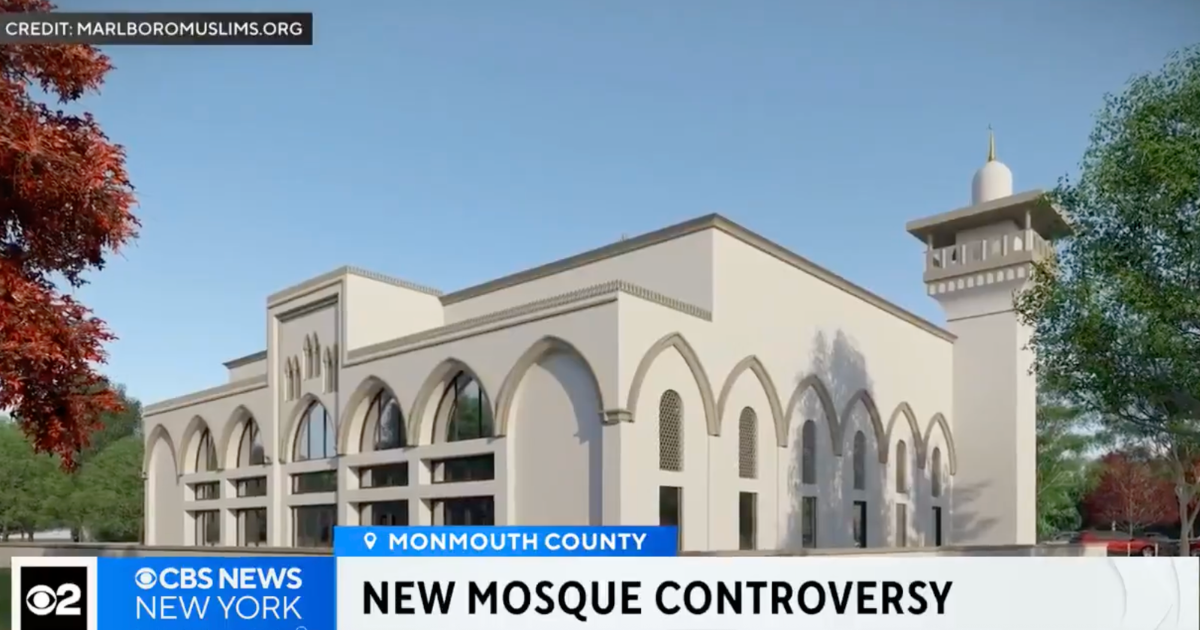
The rejection of plans to build the first mosque in Marlboro, New Jersey, has once again drawn public attention to a question that extends far beyond one local community: Can opposition from some residents justify denying a religious minority its constitutionally protected rights?
After nearly five years of trying to obtain approval to build its own place of worship, Marlboro’s Muslim community filed a federal lawsuit against local authorities on September 28, 2026, alleging religious discrimination and violations of its constitutional rights. The lawsuit names municipal authorities, including the Zoning Board of Adjustment, the Township Council and the mayor. The plaintiffs are seeking to overturn the decision, obtain permission to move forward with construction and recover damages.
The case resurfaced on social media after Ryan Fournier shared a CBS News New York television report on X. In his post, Fournier stated that residents had opposed a proposed 20,000-square-foot mosque, that the zoning board had rejected the application over traffic, parking and other concerns, and that the Muslim community was now suing in federal court over alleged discrimination. He concluded that residents deserve to have their legitimate zoning concerns heard.
However, the stated size of the proposed mosque does not match Marlboro’s official municipal records, which indicate that the revised project called for a 13,127-square-foot building.
Residents’ right to be heard is not in dispute. There is, however, a fundamental difference between the right of citizens to participate in public hearings and the authority of local governments to make decisions affecting the constitutional rights of others.
Five Years of Waiting for Approval
Marlboro’s Muslim community first submitted an application in 2021 to build a mosque at 449 Tennent Road. Throughout the lengthy approval process, the applicants hired architects, engineers and traffic specialists, repeatedly revising their plans in response to requests from local officials.
One particularly significant detail is that the Muslim community had to initiate legal proceedings in 2025 to compel the Zoning Board of Adjustment to fulfill its legal obligation to hold hearings and reach a decision on the application.
According to CAIR-NJ, the board repeatedly canceled scheduled hearings during this period, placing additional financial and emotional burdens on the applicants.
According to the federal complaint, New Jersey Superior Court Judge Scott Arnette issued an order on March 26, 2026, requiring the board to complete its hearings and reach a decision no later than July 14, 2026.
Four special hearings followed, on April 28, May 5, May 12 and June 23.
The CBS News New York report from May 2026, which has recently resurfaced on social media, refers to July as the deadline for the board to make its decision.
However, on June 23, 2026, the board unanimously rejected the application, citing concerns related to traffic, parking and the characteristics of the proposed site.
After nearly five years of waiting, numerous project revisions, additional expenses and court intervention, the Muslim community filed a federal lawsuit on September 28, 2026, alleging religious discrimination and violations of its statutory and constitutional rights.
Traffic, Parking or Opposition to Islam?
Residents certainly have the right to express concerns about increased traffic, road safety, parking availability and the impact of a new development on local infrastructure.
Such concerns should be evaluated through professional assessments and objective criteria, regardless of whether the proposed development is a mosque, a church, a synagogue or another facility intended for large gatherings.
Were the Same Parking Standards Applied to All Houses of Worship?
One of the central questions in the Marlboro mosque case is whether zoning requirements were applied consistently to the Muslim community and other religious communities.
Under Section 220-105 A(7) of Marlboro’s municipal code, churches, synagogues and other houses of worship must provide one parking space for every three seats or every 72 inches of bench length. For houses of worship without fixed seating or benches, the requirement is one parking space for every 24 square feet of floor area.
The revised mosque proposal provided for a maximum capacity of 264 worshippers, with 176 prayer spaces on the main level and 88 on the mezzanine.
A particularly noteworthy detail appears in the official minutes of the zoning board’s May 12, 2026, hearing. Township engineer Laura Neumann stated that, based on the standard of one parking space for every three worshippers, 88 parking spaces would be required. The proposal included 107 — 19 more than that calculation called for.
According to the federal complaint, Kevin Chen, the traffic expert retained by the zoning board itself, gave an even lower figure of 80 required parking spaces during the final hearing on June 23, confirming that the proposed development included 107.
In other words, the project provided between 19 and 27 more parking spaces than the figures cited by experts retained by local authorities.
Nevertheless, parking remained one of the issues in dispute.
The board raised concerns about parking space dimensions, access to the property, the possibility that the parking lot could fill before the mosque reached its maximum capacity, and potential growth in the congregation.
The Muslim community proposed holding two separate Friday prayer services if the first reached maximum capacity, assigning parking attendants and managing vehicle access to the property.
These figures do not establish that every parking and traffic concern had been resolved. They do, however, demonstrate that the proposed number of parking spaces was not below the figures cited by experts during the hearings.
What Do the Board’s Previous Decisions Reveal?
The dimensions of individual parking spaces are another significant issue. Marlboro’s municipal regulations require parking spaces measuring 10 by 20 feet, while the Muslim community proposed spaces measuring 9 by 18 feet.
According to the federal complaint, experts explained during the hearings that the proposed dimensions were consistent with commonly accepted parking design standards.
Nevertheless, the board did not grant the requested exception.
The federal complaint states that in October 2021, the same zoning board approved modifications to an existing synagogue, the Center for Jewish Life, even though its parking spaces measured exactly 9 by 18 feet.
According to the plaintiffs, the board granted a total of 14 variances in that case, including exceptions related to property dimensions, building setbacks and landscaped buffers.
The complaint also points to previous decisions by Marlboro’s Planning Board, which granted conditional approval to the Hindu American Temple and Cultural Center in 2008 and to the Church in Marlboro in 2020.
In both cases, approval was granted subject to obtaining the necessary authorizations from Monmouth County at a later stage.
These examples do not, by themselves, establish discrimination, as they involve different projects and circumstances. They do, however, provide a concrete basis for examining whether zoning regulations have been applied consistently across different religious communities.
A similar issue was at the center of a federal lawsuit against Bernards Township, in which differing parking standards formed one of the key arguments presented by the U.S. Department of Justice. That case, discussed in greater detail below, ended in a 2017 settlement that allowed the construction of a mosque.
The central question in Marlboro, therefore, is not simply whether legitimate zoning concerns existed, but whether the same concerns, standards and requirements were applied equally to all religious communities.
Anti-Muslim Comments on Social Media
The debate surrounding the Marlboro mosque was not limited to zoning issues.
On its official website, the Muslim community documented examples of comments posted on social media during the opposition to the project. CAIR-NJ has cited similar examples, including comments posted beneath a social media announcement by the mayor concerning zoning hearings.
Among the reported comments were:
- “Erase Islam from USA.”
- “Keep the Muslims out.”
- “A violent religious cult.”
- “Islam does not belong in this country, time to ban it.”
- “They have space in the Middle East for mosques, Marlboro is out of space.”
Such statements have nothing to do with parking availability, traffic volume or zoning standards. They express hostility toward a particular religion and its followers.
It is important to note, however, that these were social media comments, and their authors were not necessarily Marlboro residents or members of the zoning board.
In the CBS News New York television report, one interviewee also suggested that some of the opposition stemmed from resistance to the very idea of having a mosque, referring to anti-Muslim sentiment in the United States following the terrorist attacks of September 11, 2001.
Twenty-five years after those attacks, associating American Muslims with the actions of terrorists and assigning collective responsibility to an entire religious community remains a form of religious prejudice.
Marlboro’s Muslim residents bear no responsibility for the actions of terrorists, nor should their constitutional rights be restricted on the basis of such prejudices.
Statements made by individual residents do not, by themselves, establish that the zoning board acted unlawfully. One of the key questions before the federal court will be whether such sentiment influenced the board’s official decision.
The Position of Marlboro’s Local Authorities
Local authorities have cited zoning and safety concerns in explaining their decision, including the characteristics of the proposed site, traffic volume, parking and the need for exceptions to existing regulations.
The proposed site encompasses approximately five acres of land that, according to the federal complaint, is heavily wooded, including along its property boundaries.
Although the property is classified within the R-80 zoning district, Marlboro’s municipal code permits houses of worship in such districts under certain conditions. Tennent Road, where the proposed site is located, is specifically listed among the roads from which religious facilities may have direct access.
The zoning classification itself, therefore, does not mean that the construction of a religious facility is prohibited at that location.
The existence of special zoning requirements is not, in itself, evidence of discrimination. Local authorities have the right to regulate land use and make decisions concerning public safety and infrastructure development.
They are, however, legally obligated to apply the same or comparable standards without discrimination based on religious affiliation.
Records of previous approvals for other religious facilities, expert assessments, hearing minutes and the board’s stated reasons for rejecting the application will be important in determining whether its decision was justified.
What Does U.S. Law Say?
The First Amendment to the U.S. Constitution guarantees religious freedom, while the Fourteenth Amendment guarantees equal protection under the law.
In addition, Congress enacted the Religious Land Use and Institutionalized Persons Act (RLUIPA) in 2000, specifically protecting religious communities from discrimination in land-use and zoning decisions.
Under this federal law, local authorities may not:
- Discriminate against a religious community on the basis of religion or religious denomination.
- Treat religious assemblies or institutions less favorably than comparable nonreligious assemblies or institutions.
- Completely exclude religious assemblies from a municipality.
- Unreasonably restrict religious assemblies or institutions within a municipality.
- In circumstances covered by the law, impose a substantial burden on religious exercise unless doing so serves a compelling governmental interest and is the least restrictive means of furthering that interest.
The law does not give religious communities an unrestricted right to build a place of worship at any location, regardless of zoning regulations. It does, however, require that those regulations be applied fairly and without religious discrimination.
If local authorities permit the construction of churches, synagogues and other religious facilities under certain conditions, applications to build mosques must be evaluated under equally fair standards.
What Must the Plaintiffs Prove?
Unlike certain claims involving intentional discrimination, some provisions of RLUIPA do not require plaintiffs to establish that zoning board members acted out of hostility toward a particular religion.
Depending on the provision under which a claim is brought, plaintiffs may establish a violation by demonstrating that a religious community was treated less favorably than comparable organizations or that a government decision imposed a substantial burden on its religious exercise without sufficient legal justification.
These claims, however, are not necessarily easy to prove, and the outcome is far from predetermined. The court will evaluate the evidence, including how the board handled comparable applications from other religious and nonreligious organizations.
A Similar Case Has Already Occurred in New Jersey
Marlboro is not the first New Jersey municipality to face a federal lawsuit over the rejection of a proposed mosque.
In 2012, the Islamic Society of Basking Ridge submitted an application to the Bernards Township Planning Board. The board rejected the application on January 19, 2016.
The Islamic Society filed a private lawsuit in March 2016, and on November 22 of that year, the U.S. Department of Justice filed its own lawsuit against Bernards Township.
The Justice Department alleged that local authorities had applied different standards and procedures to the Muslim community than those applied to other religious and nonreligious organizations.
The clearest example involved parking. The proposed mosque included 50 parking spaces, based on the standard of one space for every three worshippers that was applied to other houses of worship. The board, however, required 107 spaces.
According to the lawsuit, the mosque was also subjected to more stringent requirements concerning stormwater drainage and fire access lanes than other facilities.
The township denied allegations of discrimination, maintaining that its decision was based on legitimate zoning and safety concerns that the applicants had been unwilling to address.
The case ended in a settlement on May 30, 2017, under which local authorities agreed to allow the construction of the mosque. As part of the settlements, the township also agreed to pay $3.25 million.
Local authorities further agreed not to impose different parking standards on mosques than those applied to other houses of worship.
The Bernards Township case represents an important example of how federal religious land-use protections operate in New Jersey and demonstrates that decisions made by local zoning and planning boards are subject to federal judicial review.
Where Are the Limits of Democratic Decision-Making?
In a democratic society, citizens have the right to participate in decisions concerning the development of their local communities. Public hearings are an important part of that process.
However, the wishes of the majority cannot be the sole determining factor in decisions affecting the rights of minorities.
Fournier’s post rightly emphasizes that residents deserve to be heard. However, it describes the proposed mosque as a 20,000-square-foot building rather than the 13,127-square-foot structure specified in official records for the revised project. That discrepancy gives readers the impression of a considerably larger development than the one the board was considering.
The post also fails to mention that the Muslim community had to seek court intervention simply to obtain a vote, that the approval process lasted nearly five years, or that some of the opposition included statements entirely unrelated to zoning.
His description of the lawsuit as a religious discrimination case is accurate, but the allegations remain subject to judicial review.
Residents have the right to be heard, but they do not have the right to veto the constitutional rights of their neighbors. Public hearings cannot supersede the Constitution or federal law.
The responsibility of local authorities is not merely to respond to the demands of the majority, but also to protect the rights of those who belong to minority communities.
Conclusion: Islamophobia and Parking as a Pretext?
In the Marlboro case, the federal court will have to determine whether the zoning concerns were legitimate and consistently applied or whether opposition to a particular religion influenced the rejection of the mosque application.
In the author’s view, the circumstances outlined above provide serious grounds for questioning whether Islamophobia was an underlying factor in this case and whether traffic and parking concerns may have been used as a pretext:
- The approval process lasted nearly five years, and the Muslim community had to seek court intervention simply to obtain a vote.
- The proposed number of parking spaces exceeded the figures cited by experts retained by local authorities by 19 and 27 spaces, respectively.
- According to the federal complaint, the same zoning board had previously approved parking spaces for another religious community with dimensions identical to those proposed by the Muslim community.
- Public opposition to the project included openly hostile comments directed at Islam and Muslims that had nothing to do with zoning.
- A similar pattern involving allegations of stricter standards for a mosque than for other houses of worship previously formed the basis of a federal lawsuit brought by the U.S. Department of Justice against Bernards Township.
This assessment is based on the available circumstances, not on a judicial finding that the zoning board engaged in discrimination.
Residents have the right to express concerns about traffic and public safety, but the validity of those concerns must be assessed through professional evaluations and objective standards applied equally to all religious communities. At the same time, social media comments alone do not establish the motives of zoning board members.
That is precisely why the federal court is the appropriate forum for determining whether zoning regulations were applied consistently or were used as a means of discriminating against the Muslim community.
Regardless of the eventual outcome of this litigation, the fundamental constitutional principle remains unchanged.
Democracy is not only about the right of the majority to make decisions; it is also about the obligation to protect the rights of minorities. Constitutionally guaranteed rights are not subject to a vote, public sentiment or personal preferences. Marlboro’s Muslim residents have the same constitutional rights as their neighbors of other faiths.
Sources: U.S. Department of Justice, AALDEF, CAIR-NJ, Marlboro Muslim Center, Federal Court Records, Marlboro Township Zoning Board of Adjustment – Official Minutes of May 12, 2026, and Previous Hearings, Marlboro Township Municipal Code, CBS News New York, News 12 New Jersey, NPR, NBC News, Baptist News Global, Ryan Fournier – X.
Aziza Smailovic